
'%3e%3cpath%20d='M25.8906%2030.68L16.0006%2025L6.14062%2030.68V4.55C6.14063%203.75435%206.4567%202.99129%207.0193%202.42868C7.58191%201.86607%208.34498%201.55%209.14063%201.55H22.8906C23.6863%201.55%2024.4493%201.86607%2025.0119%202.42868C25.5746%202.99129%2025.8906%203.75435%2025.8906%204.55V30.68ZM9.14063%203.55C8.87541%203.55%208.62105%203.65536%208.43352%203.84289C8.24598%204.03043%208.14063%204.28478%208.14063%204.55V27.23L16.0006%2022.72L23.8806%2027.23V4.55C23.8806%204.28478%2023.7753%204.03043%2023.5877%203.84289C23.4002%203.65536%2023.1458%203.55%2022.8806%203.55H9.14063Z'%20fill='white'/%3e%3cpath%20d='M9.14063%202.55H22.8906C23.4211%202.55%2023.9298%202.76071%2024.3048%203.13579C24.6799%203.51086%2024.8906%204.01957%2024.8906%204.55V8.62H7.14062V4.55C7.14063%204.01957%207.35134%203.51086%207.72641%203.13579C8.10148%202.76071%208.61019%202.55%209.14063%202.55Z'%20fill='%238A3301'/%3e%3cpath%20d='M25.8906%209.62H6.14062V4.55C6.14063%203.75435%206.4567%202.99129%207.0193%202.42868C7.58191%201.86607%208.34498%201.55%209.14063%201.55H22.8906C23.6863%201.55%2024.4493%201.86607%2025.0119%202.42868C25.5746%202.99129%2025.8906%203.75435%2025.8906%204.55V9.62ZM8.14063%207.62H23.8906V4.55C23.8906%204.28478%2023.7853%204.03043%2023.5977%203.84289C23.4102%203.65536%2023.1558%203.55%2022.8906%203.55H9.14063C8.87541%203.55%208.62105%203.65536%208.43352%203.84289C8.24598%204.03043%208.14063%204.28478%208.14063%204.55V7.62Z'%20fill='white'/%3e%3cpath%20d='M16%2020.25C15.7348%2020.25%2015.4804%2020.1446%2015.2929%2019.9571C15.1054%2019.7696%2015%2019.5152%2015%2019.25V14.07C15%2013.8048%2015.1054%2013.5504%2015.2929%2013.3629C15.4804%2013.1754%2015.7348%2013.07%2016%2013.07C16.2652%2013.07%2016.5196%2013.1754%2016.7071%2013.3629C16.8946%2013.5504%2017%2013.8048%2017%2014.07V19.25C17%2019.5152%2016.8946%2019.7696%2016.7071%2019.9571C16.5196%2020.1446%2016.2652%2020.25%2016%2020.25Z'%20fill='white'/%3e%3cpath%20d='M18.5999%2017.66H13.4199C13.1547%2017.66%2012.9004%2017.5546%2012.7128%2017.3671C12.5253%2017.1796%2012.4199%2016.9252%2012.4199%2016.66C12.4199%2016.3948%2012.5253%2016.1404%2012.7128%2015.9529C12.9004%2015.7654%2013.1547%2015.66%2013.4199%2015.66H18.5999C18.8651%2015.66%2019.1195%2015.7654%2019.307%2015.9529C19.4946%2016.1404%2019.5999%2016.3948%2019.5999%2016.66C19.5999%2016.9252%2019.4946%2017.1796%2019.307%2017.3671C19.1195%2017.5546%2018.8651%2017.66%2018.5999%2017.66Z'%20fill='white'/%3e%3c/g%3e%3cdefs%3e%3cclipPath%20id='clip0_29353_35'%3e%3crect%20width='32'%20height='32'%20fill='white'/%3e%3c/clipPath%3e%3c/defs%3e%3c/svg%3e) Wishlist
Wishlist
Tiny bullet, serious speed. Here’s what 15.5, 17 and 20 grain .17 HMR ammo actually does, how far it can realistically shoot, and how to choose the right load.
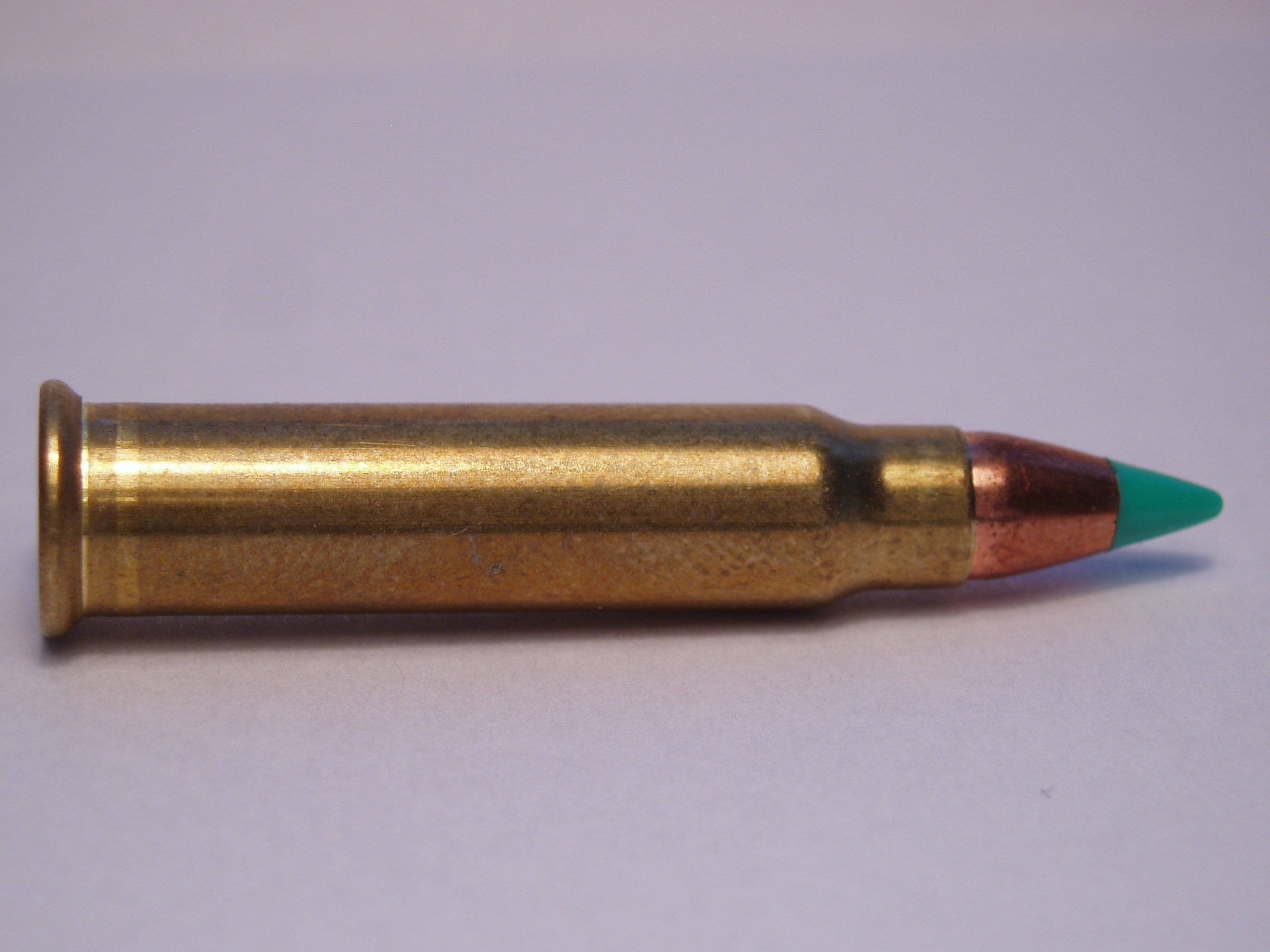
The .17 HMR is one of those cartridges that does not look particularly impressive until you see what happens after the trigger is pulled. The cartridge is tiny. The bullets are incredibly light. Recoil is minimal. Yet a typical .17 HMR load can send a 17 grain bullet out of the muzzle at roughly 2,550 feet per second. That puts it in an entirely different performance category from the traditional rimfire cartridges many shooters grew up using.
That speed is really the secret behind the .17 HMR. Instead of trying to make a rimfire hit harder by using a much heavier bullet, the cartridge takes the opposite approach. It launches a very small .172 inch bullet extremely fast. The result is a rimfire with a relatively flat trajectory, impressive accuracy and enough reach to make 100 yard shots feel completely ordinary.
But buying .17 HMR ammo can be more confusing than it initially appears. You'll find 15.5 grain, 17 grain and 20 grain loads. Some use polymer tipped bullets while others use hollow points or expanding designs. Two boxes of .17 HMR can therefore behave differently even though the caliber printed on the front is identical.
So which one should you actually buy?
That depends on what you expect the little cartridge to do.
Quick Answer: Which .17 HMR Bullet Weight Should You Choose?
For most shooters, 17 grain .17 HMR ammo is the best place to start. It represents the classic balance that made the cartridge popular in the first place: very high velocity, flat trajectory and explosive performance from lightweight varmint bullets.
The lighter 15.5 grain loads push the velocity focused concept even further. These can be particularly interesting when maximum speed or a lead free projectile is important.
Move up to 20 grains and the personality changes slightly. You give up some muzzle velocity, but the heavier projectile can offer a different balance of retained energy and terminal performance. Bullet construction becomes especially important here, so choosing between 17 and 20 grains should involve more than simply assuming heavier is better.
If you just bought a .17 HMR and have no idea what to feed it, start with a quality 17 grain load and see how your rifle shoots it. Rimfire rifles can show noticeable ammunition preferences, so the load that looks best on paper is not necessarily the load your particular rifle will group best.
How the .17 HMR Turned a Magnum Rimfire Into Something Completely Different
The .17 HMR is relatively young compared with cartridges such as the .22 LR. Hornady introduced the .17 Hornady Magnum Rimfire in 2002, and its design starts with another familiar rimfire cartridge: the .22 Winchester Magnum Rimfire.
Rather than developing an entirely new case from scratch, the .22 WMR case was necked down to accept a much smaller .172 inch projectile. That combination created a bottleneck rimfire cartridge capable of pushing extremely light bullets at velocities that were unusual for rimfire ammunition at the time.
The concept worked remarkably well. Shooters now had a rimfire that offered a much flatter trajectory than they might have expected from something this small. That made the .17 HMR particularly interesting for small game, varmints and recreational shooting where accuracy at 100 yards and beyond mattered.
It also created one of the cartridge's defining characteristics. The .17 HMR depends heavily on velocity.
You can see that just by looking at the bullets. A 17 grain projectile is extraordinarily light compared with most centerfire rifle bullets. Even compared with the common 40 grain bullets associated with .22 LR ammunition, it is tiny. The .17 HMR compensates by launching that projectile extremely fast.
That combination of a lightweight bullet and high velocity explains both what the cartridge does exceptionally well and where its limitations begin to appear.
15.5 vs 17 vs 20 Grain .17 HMR Ammo
A difference of a few grains sounds almost meaningless if you're accustomed to centerfire ammunition. With .17 HMR, it isn't.
Going from 15.5 grains to 20 grains represents a significant percentage change in projectile weight, which means the loads can produce noticeably different velocity and terminal characteristics.
15.5 Grain: Maximum Speed From a Tiny Projectile
The 15.5 grain category sits at the lightweight end of commonly available .17 HMR ammunition.
Hornady, for example, offers a 15.5 grain NTX load. The NTX is a lead free projectile, which makes this category particularly useful to shooters who need nonlead ammunition. Its lightweight construction also allows it to take full advantage of the velocity potential of the cartridge.
This is the side of .17 HMR that emphasizes speed. A very light projectile launched at extremely high velocity produces the flat shooting character people associate with the caliber.
There is a tradeoff, though. Lightweight bullets do not magically ignore physics. As distance increases they shed velocity and energy, and wind becomes increasingly important. That matters with all .17 HMR ammunition, but it becomes especially noticeable when you're dealing with projectiles this small.
Think of 15.5 grain ammunition as the specialized lightweight end of the spectrum rather than automatically assuming it is the "best" .17 HMR simply because it can be fast.
17 Grain: The .17 HMR Sweet Spot
If there is one bullet weight that defines .17 HMR, it is 17 grains.
Hornady's 17 grain V MAX is an excellent example of why. Hornady publishes a muzzle velocity of 2,550 fps from its 24 inch test barrel, producing 245 foot pounds of muzzle energy. At 100 yards, Hornady lists the bullet at 1,902 fps with 137 foot pounds of energy.
Those numbers tell an interesting story.
A projectile weighing only 17 grains is still traveling around 1,900 fps after covering an entire football field. That speed is a major reason the cartridge feels so different from more traditional rimfires at distance.
The V MAX bullet also uses a polymer tip and is designed for rapid expansion. That combination of high velocity and an expanding varmint projectile makes the 17 grain category particularly well suited to the role for which .17 HMR became famous.
But 17 grain ammunition isn't only attractive because of terminal performance. It also tends to provide an excellent balance of velocity and trajectory. For someone who wants to punch paper at 100 yards, shoot reactive targets or use the cartridge for appropriate small varmints, there is a good reason 17 grain loads are everywhere.
If I could choose only one bullet weight to represent what .17 HMR is supposed to be, 17 grains would be it.
20 Grain: Slower, but With a Different Purpose
Then we get to the 20 grain loads.
At first glance, they don't seem dramatically different. Three grains hardly sounds like enough to transform a cartridge. But remember how small these projectiles are. Going from 17 grains to 20 grains increases bullet weight by nearly 18 percent.
Hornady's 20 grain XTP load provides a good example. Its published muzzle velocity is 2,375 fps, compared with 2,550 fps for the company's 17 grain V MAX. Yet Hornady lists muzzle energy at 250 foot pounds, slightly higher than the 245 foot pounds of its faster 17 grain load. At 100 yards, both are listed at 137 foot pounds in Hornady's published ballistic data.
This is why simply looking at muzzle velocity can be misleading.
The 17 grain bullet wins the speed contest, while the 20 grain projectile puts more mass behind the shot. Bullet construction also changes how that energy is delivered. A rapidly expanding varmint bullet and a 20 grain XTP are not interchangeable just because both cartridges say .17 HMR on the case.
For shooters choosing ammunition for a specific purpose, bullet design can matter just as much as bullet weight.
Just How Flat Does .17 HMR Shoot?
This is where .17 HMR earns much of its reputation.
Hornady's published data for its 17 grain V MAX shows a muzzle velocity of 2,550 fps. With the trajectory data based on a 100 yard zero, the same load is listed at 8.5 inches low at 200 yards.
That's impressive for a rimfire cartridge.
It also explains why .17 HMR can be so enjoyable on the range. At moderate distances, the shooter doesn't have to compensate for the dramatic rainbow shaped trajectory associated with slower rimfire ammunition.
But there's an important distinction between saying that .17 HMR can reach 200 yards and saying that every 200 yard shot is easy.
It isn't.
At 200 yards Hornady's same 17 grain V MAX has slowed to a published 1,379 fps and carries just 72 foot pounds of energy.
And there is another problem that trajectory charts don't immediately show.
Wind.
A 17 grain bullet simply does not have much mass. As the distance grows, crosswinds can move that tiny projectile enough to matter considerably. This is one reason .17 HMR can be incredibly fun at longer distances. Reading the wind becomes part of the challenge.
A calm 150 yard shot and a windy 150 yard shot can feel like two completely different propositions.
What Is the Effective Range of .17 HMR?
There isn't one magic number.
For casual target shooting, steel and other appropriate recreational targets, you can stretch .17 HMR farther simply because missing does not carry the same consequence as taking a shot at an animal.
For hunting and varmint use, the question becomes much more complicated. Target size, bullet construction, remaining energy, wind, shooter ability and the accuracy of the rifle and ammunition combination all matter.
That's why I would be skeptical of anyone who declares that .17 HMR is simply a "200 yard cartridge" without explaining the context.
The cartridge certainly has the trajectory to make shooting at extended rimfire distances interesting. Hornady itself publishes ballistic information through 200 yards for its 17 grain V MAX. But the numbers also show how quickly the little projectile loses energy as distance increases.
For many shooters, roughly 100 to 150 yards is where .17 HMR really shines. You still benefit enormously from the cartridge's velocity and flat trajectory without asking a 17 grain projectile to perform miracles.
Beyond that, conditions and shooter skill become increasingly important.
And that is actually part of the appeal.
The .17 HMR gives you enough reach to make rimfire shooting genuinely challenging without turning every trip to the range into a centerfire long range session.
.17 HMR Ammo Types Matter More Than You Might Think
Walk into a store and the boxes may all say .17 HMR, but what's inside can be designed for very different behavior.
Polymer tipped varmint bullets are among the most recognizable .17 HMR loads. Hornady's V MAX is a classic example. The polymer tip contributes to the bullet's aerodynamic profile and initiates rapid expansion on impact. These loads take advantage of the cartridge's velocity and are a major reason .17 HMR developed such a strong reputation as a varmint round.
Hollow point and expanding bullets offer another approach. Depending on construction, these may prioritize penetration and controlled expansion differently from the lightweight varmint bullets.
There are also lead free options, such as Hornady's NTX, for shooters who want them or who are subject to local ammunition restrictions.
This is why shopping by caliber alone doesn't tell the whole story. Two .17 HMR loads of similar weight can produce different results because the projectile itself was designed to behave differently.
When comparing .17 HMR ammunition, look at bullet weight, bullet construction and intended use together.
Is .17 HMR Better Than .22 LR?
Not universally.
The .17 HMR's major advantage is performance at distance. Its higher velocity and flatter trajectory make it much easier to deal with longer shots without large amounts of elevation correction.
The .22 LR has advantages of its own. Ammunition selection is enormous, and the cartridge works exceptionally well for inexpensive recreational shooting and a huge range of other rimfire applications.
So asking whether .17 HMR is "better" than .22 LR misses the more useful question:
Better for what?
If your priority is flat trajectory and extended rimfire distances, .17 HMR becomes extremely attractive. If you're spending an afternoon shooting targets at relatively short distances, the additional performance may not matter nearly as much.
There's enough to this comparison that it deserves its own article rather than squeezing the entire argument into a few paragraphs here.
What About .17 HMR vs .22 Magnum?
This comparison is even more interesting because the cartridges are relatives.
The .17 HMR was developed from the .22 WMR case, but necking that case down and using a dramatically smaller projectile created two cartridges with noticeably different personalities.
The .17 HMR generally emphasizes velocity and flat trajectory with extremely lightweight bullets. The .22 WMR uses larger, heavier projectiles and offers a different balance of energy and terminal performance.
Again, neither cartridge wins every category.
If you're primarily interested in flat shooting rimfire performance, the .17 HMR has a compelling argument. If projectile weight and the characteristics of a larger diameter bullet matter more for your intended use, the .22 Magnum deserves serious consideration.
We'll tackle that comparison separately because there's enough search interest and enough difference between the cartridges to justify a full breakdown.
So, Which .17 HMR Ammo Should You Buy?
For someone buying their first few boxes, I would keep things simple.
Start with a quality 17 grain load. It gives you the classic .17 HMR experience and sits right in the middle of what makes this cartridge interesting. From there, try a few different loads and pay attention to what your rifle prefers.
If maximum velocity or lead free construction matters, look at the lighter 15.5 grain category.
If you want a heavier projectile and different terminal characteristics, explore the 20 grain loads.
But don't choose based on grain weight alone.
A 17 grain polymer tipped varmint bullet and a 20 grain expanding bullet were built with different goals. Understanding those differences will tell you much more than simply choosing the heaviest or fastest number printed on the box.
Final Thoughts
The .17 HMR is a great example of what happens when ammunition designers take a familiar idea and push it in a completely different direction.
Instead of relying on a larger projectile, it uses an extremely small bullet and a lot of velocity. The result is a rimfire that can make 100 yard shooting feel effortless when the conditions cooperate, while still offering enough challenge at greater distances to keep things interesting.
The 17 grain loads are the heart of the cartridge and probably the best starting point for most shooters. The lighter 15.5 grain options push the speed concept further, while 20 grain ammunition trades some velocity for additional projectile weight and different terminal characteristics.
But the biggest takeaway isn't that one bullet weight is universally best.
It's that .17 HMR ammo is more varied than it looks.
Choose the bullet for what you're actually trying to accomplish, test several loads in your own rifle, and don't underestimate what wind can do to a projectile that weighs less than half as much as a typical .22 LR bullet.
Tiny cartridge. Tiny bullet.
Not so tiny performance.
Information provided by AmmoBrowser is for general informational and educational purposes only. Ammunition specifications, ballistics, performance, pricing, and availability can vary by manufacturer, load, firearm, barrel length, and other conditions. While we strive to provide accurate and current information, AmmoBrowser makes no guarantee regarding its completeness or accuracy. Always follow firearm and ammunition manufacturer instructions, verify that ammunition is compatible with your firearm, and follow all applicable laws and safe firearm handling practices.