
'%3e%3cpath%20d='M25.8906%2030.68L16.0006%2025L6.14062%2030.68V4.55C6.14063%203.75435%206.4567%202.99129%207.0193%202.42868C7.58191%201.86607%208.34498%201.55%209.14063%201.55H22.8906C23.6863%201.55%2024.4493%201.86607%2025.0119%202.42868C25.5746%202.99129%2025.8906%203.75435%2025.8906%204.55V30.68ZM9.14063%203.55C8.87541%203.55%208.62105%203.65536%208.43352%203.84289C8.24598%204.03043%208.14063%204.28478%208.14063%204.55V27.23L16.0006%2022.72L23.8806%2027.23V4.55C23.8806%204.28478%2023.7753%204.03043%2023.5877%203.84289C23.4002%203.65536%2023.1458%203.55%2022.8806%203.55H9.14063Z'%20fill='white'/%3e%3cpath%20d='M9.14063%202.55H22.8906C23.4211%202.55%2023.9298%202.76071%2024.3048%203.13579C24.6799%203.51086%2024.8906%204.01957%2024.8906%204.55V8.62H7.14062V4.55C7.14063%204.01957%207.35134%203.51086%207.72641%203.13579C8.10148%202.76071%208.61019%202.55%209.14063%202.55Z'%20fill='%238A3301'/%3e%3cpath%20d='M25.8906%209.62H6.14062V4.55C6.14063%203.75435%206.4567%202.99129%207.0193%202.42868C7.58191%201.86607%208.34498%201.55%209.14063%201.55H22.8906C23.6863%201.55%2024.4493%201.86607%2025.0119%202.42868C25.5746%202.99129%2025.8906%203.75435%2025.8906%204.55V9.62ZM8.14063%207.62H23.8906V4.55C23.8906%204.28478%2023.7853%204.03043%2023.5977%203.84289C23.4102%203.65536%2023.1558%203.55%2022.8906%203.55H9.14063C8.87541%203.55%208.62105%203.65536%208.43352%203.84289C8.24598%204.03043%208.14063%204.28478%208.14063%204.55V7.62Z'%20fill='white'/%3e%3cpath%20d='M16%2020.25C15.7348%2020.25%2015.4804%2020.1446%2015.2929%2019.9571C15.1054%2019.7696%2015%2019.5152%2015%2019.25V14.07C15%2013.8048%2015.1054%2013.5504%2015.2929%2013.3629C15.4804%2013.1754%2015.7348%2013.07%2016%2013.07C16.2652%2013.07%2016.5196%2013.1754%2016.7071%2013.3629C16.8946%2013.5504%2017%2013.8048%2017%2014.07V19.25C17%2019.5152%2016.8946%2019.7696%2016.7071%2019.9571C16.5196%2020.1446%2016.2652%2020.25%2016%2020.25Z'%20fill='white'/%3e%3cpath%20d='M18.5999%2017.66H13.4199C13.1547%2017.66%2012.9004%2017.5546%2012.7128%2017.3671C12.5253%2017.1796%2012.4199%2016.9252%2012.4199%2016.66C12.4199%2016.3948%2012.5253%2016.1404%2012.7128%2015.9529C12.9004%2015.7654%2013.1547%2015.66%2013.4199%2015.66H18.5999C18.8651%2015.66%2019.1195%2015.7654%2019.307%2015.9529C19.4946%2016.1404%2019.5999%2016.3948%2019.5999%2016.66C19.5999%2016.9252%2019.4946%2017.1796%2019.307%2017.3671C19.1195%2017.5546%2018.8651%2017.66%2018.5999%2017.66Z'%20fill='white'/%3e%3c/g%3e%3cdefs%3e%3cclipPath%20id='clip0_29353_35'%3e%3crect%20width='32'%20height='32'%20fill='white'/%3e%3c/clipPath%3e%3c/defs%3e%3c/svg%3e) Wishlist
Wishlist
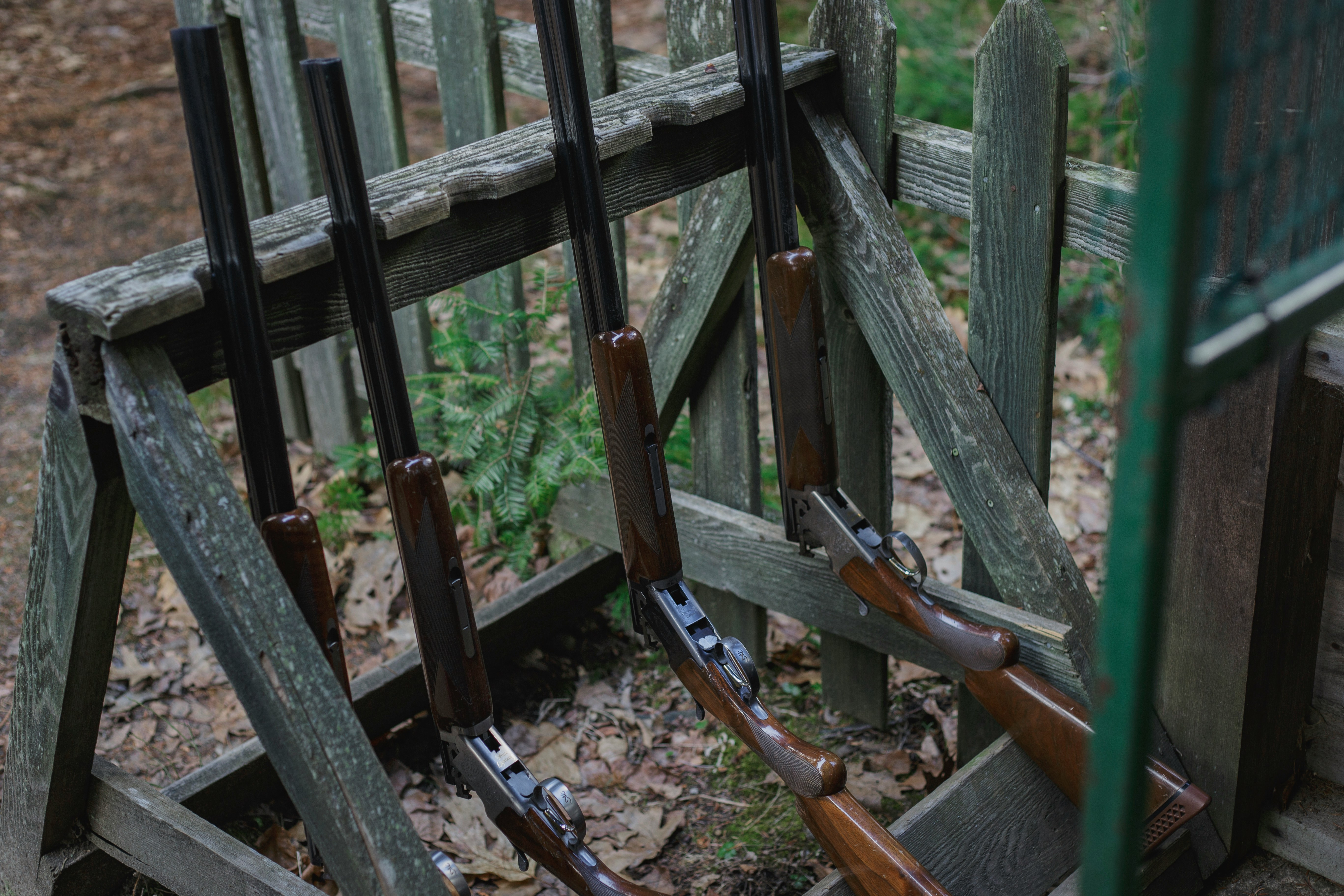
Walk into an ammo aisle looking for 20 gauge shells and the first thing you notice is that simply knowing the gauge doesn't narrow things down very much. One box might contain light target loads filled with hundreds of tiny pellets. Another might hold heavier birdshot intended for hunting. A third contains buckshot, while another launches a single slug. Then there are different shot numbers, payload weights, velocities and shell lengths printed across the boxes.
That's what makes shotgun ammunition confusing if you're accustomed to rifle or handgun cartridges. "20 gauge" tells you the gauge of shotgun the ammunition is designed for, but it doesn't tell you what that ammunition is designed to accomplish.
Fortunately, you don't need to memorize every load on the shelf. Once you understand the differences between birdshot, buckshot and slugs, and what shell length, shot size and payload actually mean choosing 20 gauge ammunition becomes much easier.
Quick Answer: Which 20 Gauge Shell Should You Use?
For target shooting and clay sports, lighter target loads with relatively small birdshot are generally the logical choice. They're designed to break clay targets without the heavier payloads associated with many hunting loads.
For upland birds and small game, birdshot is still the answer, but shot size and payload should be matched to the game you're pursuing. A shell appropriate for quail doesn't necessarily make the most sense for a larger bird.
For turkey and waterfowl, hunters generally move toward specialized hunting loads designed to provide adequate pellet count and downrange performance. Modern ammunition has made the 20 gauge considerably more capable in these roles than its smaller shell might suggest. MeatEater notes that advances such as tungsten-based TSS loads have helped narrow some of the performance gap between 20 and 12 gauge for turkey hunting.
For applications requiring larger pellets, buckshot is available in 20 gauge, although the selection and payload possibilities aren't as broad as they are with 12 gauge.
And for deer and other appropriate hunting applications, slugs replace the cloud of shot with a single large projectile. Some modern 20 gauge sabot slugs are surprisingly capable at distance when fired from the appropriate shotgun and barrel.
The important point is that there isn't one "best 20 gauge shell." The right shell depends on what you're trying to do.
What Does 20 Gauge Actually Mean?
Unlike rifle cartridges, shotgun gauge isn't simply a measurement of bullet diameter.
The traditional gauge system is based on how many round lead balls of the shotgun's bore diameter would equal one pound. With a 20 gauge, twenty lead balls matching the bore diameter would weigh approximately one pound. A 20 gauge bore is roughly .615 inch in diameter, compared with approximately .729 inch for a 12 gauge.
That helps explain one of the fundamental differences between the two.
A 20 gauge shell has less room for shot than a comparable 12 gauge shell. That doesn't necessarily mean the pellets coming out of the 20 gauge are dramatically slower. In fact, equivalent pellets from typical 12 and 20 gauge loads can travel at similar velocities.
The 12 gauge's advantage is primarily capacity. Its larger shell can accommodate heavier payloads and, depending on the load, more or larger pellets. MeatEater points out that this payload advantage not simply greater velocity is a major reason the 12 gauge has greater ballistic potential.
The 20 gauge makes a different trade.
You generally give up some payload capacity in exchange for a smaller gauge that can work very well in lighter shotguns and, with comparable types of loads, often produces more manageable recoil.
That's a big reason the 20 gauge has survived despite the enormous popularity of the 12 gauge.
Birdshot: The Most Common Kind of 20 Gauge Shell
If you've ever opened a shotgun shell and found it packed with a large number of small round pellets, you're looking at birdshot.
Instead of launching one projectile like a rifle cartridge, a birdshot shell sends a pattern of pellets toward the target. That's why birdshot is so useful for moving targets such as clay pigeons and birds.
The confusing part is the numbering system.
With birdshot, a larger shot number generally means a smaller individual pellet. That means #8 shot is smaller than #6 shot, while #4 shot is larger than both.
The tradeoff is straightforward.
Smaller pellets allow manufacturers to fit more pellets into a given payload. That can create a dense pattern, which is useful when trying to hit a relatively small moving target.
Larger pellets reduce the pellet count but give each individual pellet more mass and therefore greater downrange capability.
That's why there isn't a single birdshot size that makes sense for everything.
A shooter breaking clay targets has different requirements from someone hunting pheasant, and a pheasant hunter has different requirements from someone pursuing larger or tougher birds.
This is one reason the information printed on the box matters much more than simply seeing 20 GA on the label.
Payload Weight Matters Too
Shot size tells you how large the individual pellets are.
Payload weight tells you how much shot the shell contains.
This is another area where new shotgun shooters can easily overlook an important difference between two boxes of ammunition.
A heavier payload can put more shot downrange, but that doesn't automatically make it the better choice. More payload can also mean greater recoil, and a lighter target load may be far more pleasant for shooting a long round of sporting clays than a heavy hunting load.
Traditional 20 gauge ammunition includes loads around the one-ounce mark, while heavier hunting loads can carry more shot. The NSSF's shooting education material describes a standard one-ounce 20 gauge load as capable for a wide range of upland hunting and notes heavier 2¾-inch and 3-inch options for more demanding hunting situations.
This is why comparing shotgun ammunition only by velocity can be misleading.
Two shells traveling at similar speeds can feel and perform differently if one is throwing considerably more shot.
Already know what kind of 20 gauge ammo you need? Compare current ammunition listings from trusted online retailers on AmmoBrowser before you buy.
2¾-Inch vs. 3-Inch 20 Gauge Shells
Another number you'll encounter on a box is shell length.
Two of the common lengths for modern 20 gauge ammunition are 2¾ inches and 3 inches.
The longer 3-inch shell provides manufacturers with additional capacity that can be used for heavier hunting-oriented loads. That can be useful when additional payload is desirable, but it doesn't mean a 3-inch shell is automatically "better" ammunition.
For target shooting or many upland applications, a 2¾-inch shell may do exactly what the shooter needs with less ammunition and potentially less recoil than a heavier magnum-style load.
A 3-inch shell becomes more interesting when the additional capacity contributes to the performance required for a particular hunting application.
But there's a much more important issue than performance:
Your shotgun has to be chambered for the shell you're using.
A shotgun's chamber marking specifies the maximum shell length it is designed to accept. A shorter shell can generally be used in a chamber designed for that gauge and a longer shell length, but you should never fire a shell longer than the chamber is rated for. NSSF specifically warns that doing so can create dangerous pressure.
Always check the markings on the firearm and follow the shotgun and ammunition manufacturers' instructions rather than assuming a shell is compatible because it says "20 gauge" on the box.
What About 20 Gauge Buckshot?
Buckshot works on the same general principle as birdshot, but the individual pellets are dramatically larger.
Instead of sending a large cloud of tiny pellets toward the target, buckshot fires a much smaller number of substantially larger projectiles.
That changes what the ammunition is suited for.
It also highlights one of the 20 gauge's limitations compared with 12 gauge: there simply isn't as much room inside the shell.
A 12 gauge can accommodate a wider range of heavy buckshot configurations. MeatEater notes that 20 gauge buckshot offerings top out at smaller sizes than some 12 gauge options, illustrating the larger gauge's capacity advantage.
That doesn't make 20 gauge buckshot useless. It simply means ammunition selection becomes more important, and shoppers shouldn't assume that everything readily available in 12 gauge will have an equivalent 20 gauge option sitting next to it.
This is also one place where actual pattern testing matters. Shotguns and loads don't necessarily produce identical patterns, so the useful performance of a buckshot load can't be determined from the number printed on the box alone.
Slugs Turn the 20 Gauge Into Something Completely Different
Slugs are where the conversation changes dramatically.
Instead of multiple pellets spreading after leaving the barrel, a slug is essentially one large projectile.
That allows a shotgun to be used in situations where the shooter wants a single projectile rather than a shot pattern, particularly in certain types of big-game hunting.
There are also different kinds of shotgun slugs, and that distinction matters.
Traditional rifled-style slugs and modern sabot slugs aren't interchangeable concepts from a performance standpoint. Sabot loads paired with the appropriate rifled barrel can deliver accuracy and range that surprises shooters who think of shotguns strictly as short-range firearms.
Hornady's 20 gauge SST is a good example. Its 250-grain projectile is designed specifically for fully rifled barrels, and Hornady reports 1,200 ft-lbs of energy at 100 yards along with sub-two-inch 100-yard accuracy under its stated testing and performance claims.
That doesn't mean every 20 gauge slug or every shotgun firing one is suddenly a 200-yard hunting setup.
MeatEater's examination of shotgun slugs makes that distinction especially clear. Their comparison notes that the same Hornady 250-grain 20 gauge SST falls to about 983 ft-lbs at 150 yards and 815 ft-lbs at 200 yards, while traditional rifled slug loads can lose energy considerably faster.
So when someone asks:
"What's the effective range of a 20 gauge?"
there really isn't one responsible number to give them.
A light birdshot load, a buckshot load, a traditional rifled slug and a modern sabot slug are doing fundamentally different jobs.
The ammunition matters enormously.
How Far Is a 20 Gauge Effective?
For exactly that reason, it's better to think about effective range by application rather than by gauge.
For upland hunting, many opportunities occur at relatively modest distances. NSSF notes that much upland game is taken inside roughly 30 yards and considers the 20 gauge more than adequate in that environment.
Waterfowl can present a different challenge.
Ducks Unlimited found the 20 gauge very capable within its limitations, particularly with modern ammunition. In one discussion of steel loads, the author considered roughly 35 yards his practical maximum with the specific 20 gauge loads and choke tested. Other hunters cited in the same article reported success around 35–40 yards using premium ammunition and appropriate setups.
Again, those aren't universal limits. They illustrate how much load, shot material, choke, pattern and target affect the answer.
Slugs are a completely different category. Modern sabot slug systems can extend useful distances considerably beyond what we'd associate with birdshot.
So a better rule is:
Don't ask how far a 20 gauge shoots. Ask how far your particular 20 gauge, ammunition and setup perform reliably for the job you're asking them to do.
Why Hunters Still Choose the 20 Gauge
If a 12 gauge can hold more shot and offers a broader ammunition selection, it's reasonable to wonder why someone would deliberately choose the smaller 20.
The answer isn't that the 20 gauge secretly outperforms the 12.
It's that maximum performance isn't always the thing that matters most.
A 20 gauge shotgun can be lighter and easier to carry. For an upland hunter walking miles through fields and brush, shaving weight from the shotgun isn't trivial.
Recoil can also be more manageable with typical 20 gauge loads.
That can matter for younger shooters, smaller-framed shooters, people who are recoil sensitive and experienced hunters who simply prefer a lighter-shooting shotgun.
There's also an accuracy component that gets overlooked. A more powerful shotgun doesn't help much if the shooter dislikes firing it enough to develop a flinch or avoids practicing with it.
MeatEater describes the 20 gauge's shootability as one of its major advantages, particularly because typical hunting loads use smaller payloads and the shotguns themselves can be lighter and easier to carry.
Modern ammunition has made that tradeoff even more attractive.
Premium non-lead shot materials and specialized hunting loads can give hunters performance that would have been much harder to achieve from a 20 gauge in the past. That's one reason the gauge has remained popular for everything from upland birds to turkey and waterfowl.
Does a 20 Gauge Always Have Less Recoil Than a 12 Gauge?
No and this is an important misconception.
Gauge alone doesn't determine recoil.
Payload weight, velocity, shotgun weight and firearm design all influence what the shooter feels.
In one recoil comparison using equal seven-pound shotguns, a common 20 gauge target load produced about 11 ft-lbs of calculated recoil energy, compared with approximately 18 ft-lbs for the representative 12 gauge target load. But those loads weren't throwing identical payloads—the 20 gauge's payload was lighter.
That's the key.
A lightweight 20 gauge firing a heavy 3-inch hunting load can kick surprisingly hard. Meanwhile, a heavier 12 gauge firing a mild target load can be quite comfortable.
So saying "20 gauge has less recoil" is generally reasonable when comparing typical loads and shotguns designed for similar purposes.
Saying "every 20 gauge kicks less than every 12 gauge" isn't.
This distinction matters when shopping for ammunition. If lower recoil is one of the reasons you own a 20 gauge, buying the heaviest and fastest shell available may work against the very reason you chose the smaller gauge.
20 Gauge vs. 12 Gauge: What Do You Give Up?
The 12 gauge remains the dominant all-around shotgun gauge for good reason.
It has more internal capacity, can accommodate heavier payloads, has an enormous ammunition selection and offers more options at the upper end of shotgun performance.
But that doesn't make the 20 gauge an inferior version of the same thing.
Think of it as a different compromise.
With the 20 gauge, you're generally trading some payload capacity for a platform that can be lighter, easier to carry and more comfortable to shoot. For clay shooting, upland hunting and many other applications, the extra capacity of a 12 gauge may not provide much practical benefit to a shooter who already performs well with a 20.
For demanding waterfowl, turkey or other hunting applications, the 12 gauge's greater payload capacity can become more meaningful. Even there, modern 20 gauge ammunition has narrowed the gap considerably in some situations.
The better question isn't:
"Is a 20 gauge as powerful as a 12 gauge?"
It's:
"Do I actually need what the 12 gauge gives me for what I'm doing?"
For plenty of shooters, the answer is no.
How to Read a Box of 20 Gauge Shells
Once you understand the basics, the information on a box becomes much less intimidating.
Before buying, look for four things:
Gauge and shell length. First make sure the ammunition is actually compatible with your shotgun.
Shot type and size. Determine whether you're buying birdshot, buckshot or a slug and, for shot loads, what pellet size you're getting.
Payload weight. This tells you how much shot the shell carries and helps explain why two loads of the same gauge and shot size may perform and recoil differently.
Velocity. Velocity is useful, but don't treat the highest number as automatically best. More speed can come with tradeoffs, and the appropriate balance depends on the application.
After that, look at what the manufacturer says the load was actually designed to do.
A box marketed for inexpensive clay shooting and a premium turkey load might both say 20 gauge, 3-inch somewhere on the packaging, but they're not substitutes for one another.
So, Which 20 Gauge Shells Should You Buy?
Start with the job rather than the brand.
If you're going to the range to break clays, look for a target load appropriate for your shotgun and shooting discipline. There's usually no reason to absorb the cost and recoil of heavy hunting ammunition just to punch paper or break clay targets.
For birds and small game, choose birdshot with a pellet size and payload appropriate for the species and conditions you're hunting. As the target gets larger or tougher, hunters often move toward larger pellets or more specialized loads rather than simply buying whatever 20 gauge shell happens to be available.
For waterfowl and turkey, pay close attention to the shot material, payload and manufacturer's intended application. Modern premium loads can extract impressive performance from a 20 gauge, but they can also cost substantially more than ordinary ammunition.
For situations requiring buckshot, select a purpose-appropriate 20 gauge load and verify how it patterns from your particular shotgun.
And if you're hunting with slugs, the distinction between the slug design and the type of barrel it is intended for becomes especially important. A modern sabot slug designed for a fully rifled barrel should not simply be treated as interchangeable with every other slug because they're both marked 20 gauge. Hornady, for example, explicitly specifies fully rifled barrels for its SST slug.
In other words, don't buy 20 gauge ammunition by gauge alone.
Final Takeaway
The biggest mistake you can make when shopping for 20 gauge shells is assuming they're all variations of essentially the same ammunition.
They're not.
A light target load, upland bird load, heavy turkey shell, buckshot load and sabot slug can all carry 20 GA on the box while being designed for completely different purposes.
That's also what makes the 20 gauge so useful.
It may not have the sheer payload capacity of a 12 gauge, but it can cover an enormous range of shooting and hunting applications while offering the lighter, more manageable shooting experience that attracts many people to the gauge in the first place.
Instead of searching for the most powerful 20 gauge shell you can find, choose the ammunition that matches what you're actually doing.
And once you know whether you need birdshot, buckshot, slugs, a target load or a specialized hunting shell, comparing your options becomes much easier.
Information provided by AmmoBrowser is for general informational and educational purposes only. Ammunition specifications, ballistics, performance, pricing, and availability can vary by manufacturer, load, firearm, barrel length, and other conditions. While we strive to provide accurate and current information, AmmoBrowser makes no guarantee regarding its completeness or accuracy. Always follow firearm and ammunition manufacturer instructions, verify that ammunition is compatible with your firearm, and follow all applicable laws and safe firearm-handling practices.