
'%3e%3cpath%20d='M25.8906%2030.68L16.0006%2025L6.14062%2030.68V4.55C6.14063%203.75435%206.4567%202.99129%207.0193%202.42868C7.58191%201.86607%208.34498%201.55%209.14063%201.55H22.8906C23.6863%201.55%2024.4493%201.86607%2025.0119%202.42868C25.5746%202.99129%2025.8906%203.75435%2025.8906%204.55V30.68ZM9.14063%203.55C8.87541%203.55%208.62105%203.65536%208.43352%203.84289C8.24598%204.03043%208.14063%204.28478%208.14063%204.55V27.23L16.0006%2022.72L23.8806%2027.23V4.55C23.8806%204.28478%2023.7753%204.03043%2023.5877%203.84289C23.4002%203.65536%2023.1458%203.55%2022.8806%203.55H9.14063Z'%20fill='white'/%3e%3cpath%20d='M9.14063%202.55H22.8906C23.4211%202.55%2023.9298%202.76071%2024.3048%203.13579C24.6799%203.51086%2024.8906%204.01957%2024.8906%204.55V8.62H7.14062V4.55C7.14063%204.01957%207.35134%203.51086%207.72641%203.13579C8.10148%202.76071%208.61019%202.55%209.14063%202.55Z'%20fill='%238A3301'/%3e%3cpath%20d='M25.8906%209.62H6.14062V4.55C6.14063%203.75435%206.4567%202.99129%207.0193%202.42868C7.58191%201.86607%208.34498%201.55%209.14063%201.55H22.8906C23.6863%201.55%2024.4493%201.86607%2025.0119%202.42868C25.5746%202.99129%2025.8906%203.75435%2025.8906%204.55V9.62ZM8.14063%207.62H23.8906V4.55C23.8906%204.28478%2023.7853%204.03043%2023.5977%203.84289C23.4102%203.65536%2023.1558%203.55%2022.8906%203.55H9.14063C8.87541%203.55%208.62105%203.65536%208.43352%203.84289C8.24598%204.03043%208.14063%204.28478%208.14063%204.55V7.62Z'%20fill='white'/%3e%3cpath%20d='M16%2020.25C15.7348%2020.25%2015.4804%2020.1446%2015.2929%2019.9571C15.1054%2019.7696%2015%2019.5152%2015%2019.25V14.07C15%2013.8048%2015.1054%2013.5504%2015.2929%2013.3629C15.4804%2013.1754%2015.7348%2013.07%2016%2013.07C16.2652%2013.07%2016.5196%2013.1754%2016.7071%2013.3629C16.8946%2013.5504%2017%2013.8048%2017%2014.07V19.25C17%2019.5152%2016.8946%2019.7696%2016.7071%2019.9571C16.5196%2020.1446%2016.2652%2020.25%2016%2020.25Z'%20fill='white'/%3e%3cpath%20d='M18.5999%2017.66H13.4199C13.1547%2017.66%2012.9004%2017.5546%2012.7128%2017.3671C12.5253%2017.1796%2012.4199%2016.9252%2012.4199%2016.66C12.4199%2016.3948%2012.5253%2016.1404%2012.7128%2015.9529C12.9004%2015.7654%2013.1547%2015.66%2013.4199%2015.66H18.5999C18.8651%2015.66%2019.1195%2015.7654%2019.307%2015.9529C19.4946%2016.1404%2019.5999%2016.3948%2019.5999%2016.66C19.5999%2016.9252%2019.4946%2017.1796%2019.307%2017.3671C19.1195%2017.5546%2018.8651%2017.66%2018.5999%2017.66Z'%20fill='white'/%3e%3c/g%3e%3cdefs%3e%3cclipPath%20id='clip0_29353_35'%3e%3crect%20width='32'%20height='32'%20fill='white'/%3e%3c/clipPath%3e%3c/defs%3e%3c/svg%3e) Wishlist
Wishlist
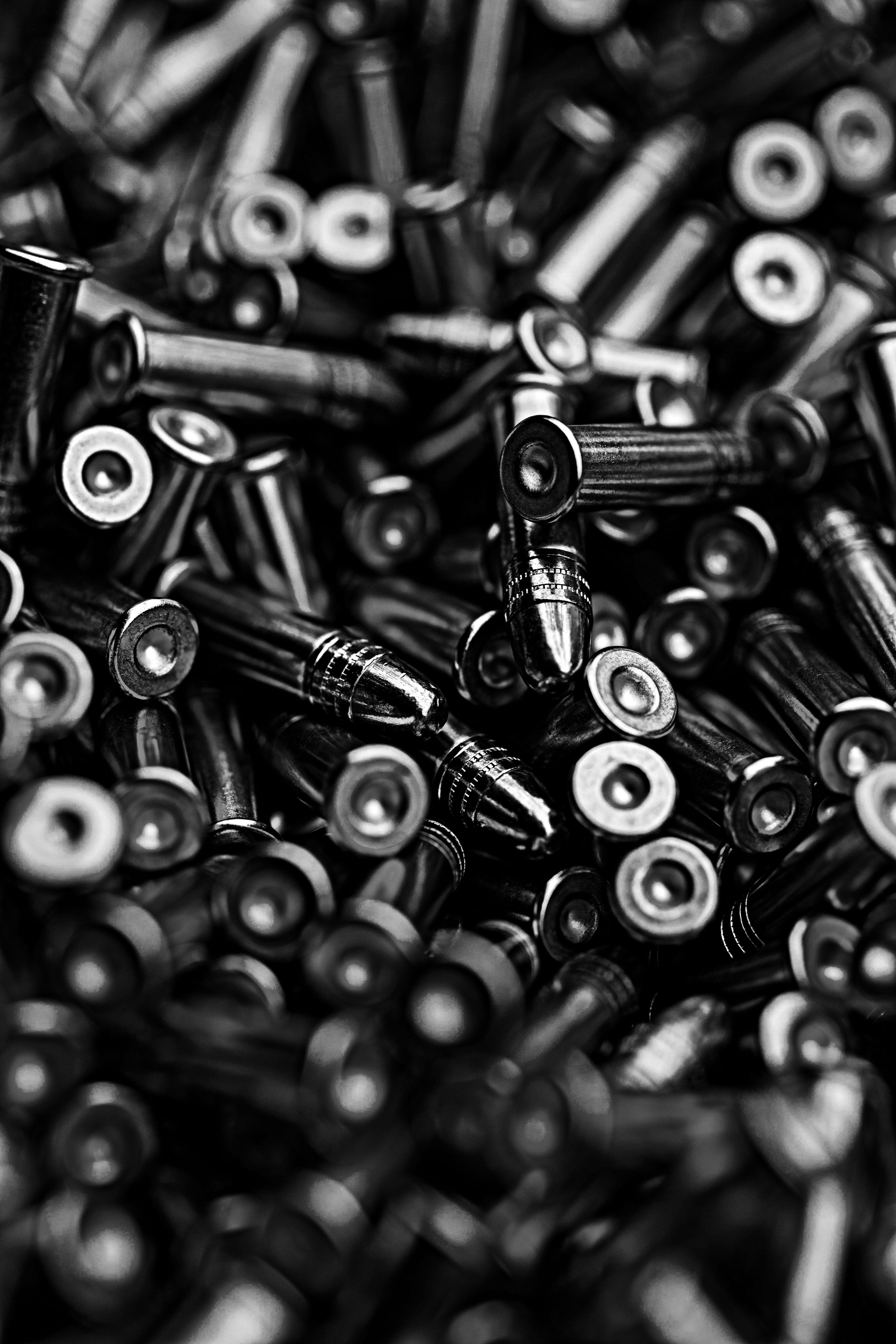
The .22 LR and .22 Magnum are two of the most popular rimfire cartridges ever made, but they offer very different performance. Here’s how they compare in power, accuracy, recoil, cost, hunting, target shooting, and everyday use.
The .22 Long Rifle and .22 Magnum might look like close relatives, but choosing between them isn't as simple as picking the more powerful cartridge.
For generations, .22 LR has been the cartridge people learn to shoot with. It's inexpensive, produces almost no recoil, works in everything from small handguns to precision rifles, and is responsible for countless afternoons spent punching holes in paper, knocking over cans, and hunting small game.
Then there's the .22 Magnum, officially known as the .22 Winchester Magnum Rimfire or .22 WMR. It looks similar at first glance, but it delivers considerably more velocity and energy and extends what a rimfire cartridge can realistically accomplish.
That naturally makes the .22 Magnum sound like the obvious winner.
But it isn't.
More power comes with tradeoffs. .22 Magnum ammunition generally costs considerably more, produces more noise, and doesn't offer the enormous ammunition selection available with .22 LR. For someone who wants an inexpensive rifle for shooting hundreds of rounds at the range, those differences matter far more than another hundred foot-pounds of energy.
The better cartridge depends on what you're asking it to do.
And that's what makes .22 LR vs. .22 Magnum such an interesting comparison.
Compare current .22 LR and .22 Magnum ammo prices at AmmoBrowser
The Short Answer
For inexpensive target shooting, plinking, training new shooters, and small-game hunting at relatively close distances, .22 LR is extremely difficult to beat. Ammunition is inexpensive, recoil is minimal, firearms and loads are available everywhere, and a good .22 LR rifle can be remarkably accurate.
The .22 Magnum is the better choice when you need more velocity, more energy, a flatter trajectory, or better performance at greater distances. It gives hunters and outdoorsmen considerably more capability while preserving the low recoil and compact firearms that make rimfire cartridges so appealing.
If you're buying a rimfire primarily because you want to shoot a lot, I'd lean toward .22 LR.
If you're buying one because you want to get the most performance possible from a rimfire, I'd lean toward .22 Magnum.
There is one thing that needs to be made very clear before we go any further: .22 LR and .22 Magnum are not interchangeable ammunition. A .22 Magnum cartridge is physically larger and will not properly chamber in a .22 LR firearm. Never attempt to fire ammunition in a firearm that isn't specifically chambered for it. Always verify the caliber marked on the firearm and follow the manufacturer's instructions.
Now let's look at why these two cartridges are so different.
What Is .22 LR?
Few cartridges have had the staying power of the .22 Long Rifle.
Introduced in the late 1800s, .22 LR has survived more than a century of changes in firearms technology and remains enormously popular. There are faster cartridges, more powerful cartridges, and much newer designs, yet .22 LR continues to occupy a place in gun safes around the world.
Its longevity isn't difficult to understand. A .22 LR rifle is inexpensive to shoot, easy to control, relatively quiet compared with centerfire rifles, and useful for everything from recreational shooting to competition and small-game hunting. The cartridge is also available in an enormous variety of loads, ranging from inexpensive bulk ammunition to specialized subsonic and premium match ammunition.
That versatility is arguably .22 LR's greatest advantage.
Someone can spend an afternoon shooting inexpensive bulk ammunition through a semi-automatic rifle, while a competitive shooter can use carefully manufactured match ammunition capable of impressive precision. A hunter can choose hollow points intended for small game, while suppressed shooters can select subsonic ammunition designed around completely different priorities.
And all of those cartridges are still .22 LR.
That enormous ecosystem is something .22 Magnum simply can't match.
What Is .22 Magnum?
The .22 Winchester Magnum Rimfire arrived much later. Winchester introduced the cartridge in 1959 as a more powerful rimfire option, giving shooters substantially more velocity and energy without requiring them to step all the way up to a centerfire rifle.
You'll see the cartridge called several different things.
.22 Magnum, .22 Mag, and .22 WMR are the most common names, and for practical purposes they're referring to the same cartridge.
At first glance, it looks like someone simply stretched a .22 LR case. But the differences go deeper than appearance. The .22 Magnum uses a longer and wider case and was designed from the beginning to operate as a substantially more powerful cartridge.
That additional case capacity allows .22 Magnum ammunition to push similarly sized projectiles considerably faster than typical .22 LR ammunition. Out of a rifle barrel, some lightweight .22 WMR loads can exceed 2,000 feet per second, while conventional .22 LR ammunition generally operates at much lower velocities.
That difference completely changes the personality of the cartridge.
Instead of being primarily a close-range plinking and small-game round, .22 Magnum begins approaching the territory between traditional rimfires and small centerfire cartridges. It remains easy to shoot, but it gives hunters considerably more reach and energy than .22 LR.
.22 LR vs. .22 Magnum: The Biggest Difference Is Power
If you fire these cartridges side by side, the difference becomes obvious quickly.
The .22 Magnum is considerably more powerful.
That's not marketing. It's simply the result of pushing a projectile of similar diameter much faster.
Independent testing published by Target Barn illustrates how large the difference can become from rifles. Their 40-grain .22 LR test load averaged 1,179 feet per second and 123 foot-pounds of muzzle energy from a 16.5-inch barrel. A 40-grain .22 Magnum load from an 18-inch rifle averaged 1,937 feet per second and 333 foot-pounds. Different firearms and loads prevent that from being a perfect apples-to-apples laboratory comparison, but it illustrates just how much additional performance .22 WMR can provide.
That's not a small difference.
The .22 Magnum is operating in an entirely different performance window.
The additional velocity means a flatter trajectory, substantially more muzzle energy, and more retained performance as distance increases. For someone hunting varmints or small game where shots may stretch beyond typical .22 LR distances, those characteristics can be extremely useful.
But here's where specifications can become misleading.
More powerful does not automatically mean better.
If you're shooting paper targets at 50 yards, the extra energy doesn't accomplish much. You're still putting a .22-caliber hole through a piece of paper. If one cartridge allows you to shoot several times as much ammunition for the same money, suddenly the less powerful cartridge starts looking pretty attractive.
That's the fundamental tradeoff between these two.
Velocity and Trajectory
Velocity is where .22 Magnum really begins separating itself from .22 LR.
Standard and high-velocity .22 LR loads offer plenty of speed for their intended purpose, but .22 WMR was designed specifically to push rimfire performance farther. Depending on bullet weight and barrel length, many .22 Magnum rifle loads approach or exceed 2,000 feet per second.
That higher velocity gives the cartridge a flatter trajectory.
At shorter distances, this advantage isn't particularly important. A shooter plinking at 25 or 50 yards can have tremendous success with either cartridge, and a quality .22 LR rifle is capable of exceptional accuracy.
Stretch the distance, however, and the difference becomes increasingly noticeable.
Gravity begins pulling both bullets downward the moment they leave the barrel, but the faster projectile reaches the target sooner. That means there's less time for gravity to act on it, which translates into less drop over a comparable distance.
Wind matters too.
Small, lightweight rimfire bullets can be surprisingly sensitive to crosswinds. Anyone who has spent time shooting .22 LR at extended distances knows how quickly a mild breeze can move a bullet away from the point of aim. The additional velocity offered by .22 Magnum can make longer shots somewhat more forgiving, although it certainly doesn't make the cartridge immune to wind.
For close-range recreational shooting, none of this gives .22 Magnum an overwhelming advantage.
For hunting and longer-range rimfire shooting, it starts to matter quite a bit.
What About Accuracy?
This is where the comparison becomes more interesting because more velocity doesn't automatically produce more accuracy.
The .22 LR has an enormous following in precision shooting. Entire competition disciplines have developed around the cartridge, and premium match ammunition from manufacturers such as Eley, Lapua, SK, RWS, and others can produce remarkable groups from a quality rifle.
In other words, don't assume that buying a .22 Magnum automatically buys you a more accurate rifle.
What the Magnum gives you is a trajectory advantage. Because the bullet travels faster and generally drops less over distance, estimating holdover becomes somewhat easier as the target gets farther away. That's different from the mechanical accuracy of the rifle and ammunition combination itself.
A quality .22 LR firing ammunition it likes can be extraordinarily precise.
A quality .22 Magnum can be extraordinarily precise too.
As we've discussed with other calibers, individual rimfire rifles can also be surprisingly picky about ammunition. One rifle may shoot beautifully with one load and produce mediocre groups with another load that costs twice as much. That's especially noticeable with .22 LR because there are so many different loads available.
The best approach is the same one that works with centerfire rifles: test several reputable loads from a stable shooting position and let the groups tell you what the rifle prefers.
Recoil and Shooting Experience
Neither cartridge is going to punish your shoulder.
That's one of the great things about rimfire shooting.
The .22 LR produces extremely little recoil, which is one reason it has introduced generations of people to shooting. New shooters can concentrate on sight alignment, trigger control, breathing, and safe firearm handling without developing bad habits from anticipating heavy recoil.
The .22 Magnum produces noticeably more energy, but recoil remains very mild compared with centerfire rifle cartridges. Target Barn likewise characterizes both as soft-shooting, with .22 LR having the recoil and noise advantage.
Where you'll probably notice the difference more is sound.
A .22 Magnum rifle has considerably more bark than most .22 LR rifles. If someone is expecting the quiet report associated with a typical .22, their first shot from a .22 Magnum can be surprising.
Both still require proper hearing protection.
For someone specifically looking for the softest, easiest, most economical shooting experience possible, .22 LR wins this category comfortably.
For someone who wants more performance without graduating to the recoil of a centerfire rifle, .22 Magnum occupies a very appealing middle ground.
The Price Difference Matters More Than You Might Think
This may ultimately be the biggest argument in favor of .22 LR.
A huge part of the appeal of rimfire shooting is being able to shoot a lot.
With .22 LR, a trip to the range can involve several hundred rounds without making you regret opening your ammunition cabinet. Bulk packs are widely available, and the popularity of the cartridge creates enormous competition among manufacturers.
.22 Magnum is a different story.
It's still rimfire ammunition, but it generally costs substantially more per round than .22 LR. Target Barn likewise notes that .22 LR has the clear price and availability advantage, with .22 WMR typically offering fewer choices and considerably higher ammunition costs.
That changes the economics of owning the firearm.
Imagine two shooters.
One wants a rifle primarily for shooting steel, introducing friends to firearms, and spending entire afternoons at the range.
The other wants a lightweight rifle for property use and small-game or varmint hunting where each shot matters considerably more than ammunition cost.
The first shooter will probably appreciate .22 LR much more.
The second may happily pay extra for .22 Magnum.
That's why comparing these cartridges purely by ballistic performance misses half the story.
The .22 Magnum wins the power contest.
The .22 LR wins the shoot-more-for-your-money contest, and for a tremendous number of shooters, that's the category that matters most.
Which Is Better for Small-Game Hunting?
This is one area where both cartridges have a legitimate place, but they don't necessarily fill the same role. .22 LR has been used for small-game hunting for generations, and there's a reason it remains so popular. It's inexpensive, accurate, easy to shoot, and more than capable of handling traditional small game when used within appropriate distances and with suitable ammunition.
For rabbits, squirrels, and similar small game, the additional power of .22 Magnum isn't always necessary. In fact, depending on the ammunition and shot placement, the Magnum's extra velocity can result in more damage to edible game than a conventional .22 LR load. Shooting Times makes a similar observation, noting that .22 Magnum's greater velocity makes it an excellent varmint cartridge but can also make it more destructive on edible small game.
That's an important distinction because "more powerful" and "better for hunting" don't always mean the same thing. If you're hunting squirrels at relatively close distances and want to preserve as much meat as possible, a good .22 LR load may be exactly what you want. It provides plenty of capability without delivering significantly more energy than the job requires.
Where .22 Magnum begins separating itself is when the distance increases or the target becomes larger and tougher. Its higher velocity, flatter trajectory, and additional energy give the shooter more capability than .22 LR can provide. Target Barn similarly characterizes .22 LR as particularly well suited to smaller game such as rabbits and squirrels, while .22 Magnum extends the practical capabilities of a rimfire for larger varmints and longer shots.
For someone buying a rimfire rifle almost exclusively for traditional small-game hunting, I'd still have a difficult time arguing against .22 LR. But if the rifle needs to cover a wider range of outdoor jobs, .22 Magnum becomes considerably more attractive.
What About Varmint and Pest Control?
This is arguably where .22 Magnum makes the strongest case for itself.
The cartridge was introduced as a higher-performance rimfire, and that additional performance makes a meaningful difference when you're dealing with varmints around farms, ranches, and larger properties. Winchester introduced .22 WMR in 1959, and varmint control was one of the roles it was intended to fill.
A .22 LR is certainly capable of pest-control work within its limitations. For smaller pests and relatively close shots, it remains inexpensive and effective. There's also something to be said for keeping a rifle around that you can practice with constantly without worrying about the cost of every trigger pull.
The Magnum gives you considerably more breathing room. Its flatter trajectory makes range estimation somewhat less critical, and its additional energy provides greater capability when the animal or distance begins pushing beyond what you'd normally ask of a .22 LR.
This is one reason .22 Magnum has survived even though modern shooters have access to cartridges such as .17 HMR and a huge selection of small centerfires. It occupies a useful middle ground. You get substantially more performance than traditional .22 LR without stepping all the way into a centerfire varmint rifle.
Shooting Times makes essentially the same case, describing the Magnum's higher velocity as a major advantage for varmint hunting while acknowledging the additional noise and ammunition cost that come with it.
For a dedicated range rifle, I'd probably choose .22 LR.
For a rimfire rifle that spends much of its life on rural property, I'd seriously consider .22 Magnum.
.22 LR vs. .22 Magnum in a Rifle
Most of the ballistic differences we've discussed become especially apparent when these cartridges are fired from rifles.
A rifle-length barrel allows many .22 Magnum loads to take much greater advantage of their larger case capacity. In Target Barn's testing, for example, a 40-grain .22 WMR load averaged 1,937 fps from an 18-inch rifle, while a 40-grain .22 LR load averaged 1,179 fps from a 16.5-inch rifle. Those aren't identical firearms or loads, so the numbers shouldn't be treated as a controlled head-to-head test, but they illustrate the substantial performance gap that can exist between the cartridges.
That additional velocity changes how the Magnum feels as a rifle cartridge. It still has the mild recoil you'd expect from a rimfire, but its trajectory and energy make it much more capable when distances begin stretching beyond traditional .22 LR territory.
On the other hand, a .22 LR rifle may be one of the most useful firearms a shooter can own. It's inexpensive to feed, excellent for teaching fundamentals, useful for small game, and capable of surprising accuracy with the right ammunition. There's a reason so many shooters who own far more powerful rifles still keep one or several .22 LR rifles in the safe.
If I were choosing one rifle strictly for inexpensive recreational shooting, .22 LR wins easily.
If I were choosing one rimfire rifle primarily for outdoor utility and varmint hunting, the additional performance of .22 Magnum would be difficult to ignore.
What About Handguns?
The comparison changes somewhat when you move from rifles to handguns.
Shorter barrels generally reduce velocity, which means neither cartridge delivers the same performance from a compact handgun that it can produce from a rifle. The Magnum still maintains a significant performance advantage, but you shouldn't look at rifle velocity figures and assume you'll get the same numbers from a revolver or pistol.
Target Barn's chronograph results illustrate this clearly. Its tested .22 WMR loads gained substantial velocity when moving from a roughly 4-inch handgun barrel to an 18-inch rifle barrel, and the .22 LR loads also benefited from the longer rifle barrel.
There is another interesting reason these cartridges are often discussed together in handguns: convertible revolvers. Some revolvers have been offered with separate cylinders for .22 LR and .22 Magnum, allowing the same firearm to use either cartridge after installing the correct cylinder. The important word there is correct. The cartridges themselves are not interchangeable in the same chamber.
That flexibility can make a convertible revolver particularly useful as an outdoor or "kit gun." You can practice inexpensively with .22 LR and switch to .22 Magnum when you specifically want the additional performance. American Rifleman has explored this exact .22 LR-versus-.22 WMR kit-gun concept.
For pure recreational handgun shooting, however, I'd still favor .22 LR. Ammunition cost matters even more when you're spending an afternoon working through box after box, and the already-tiny recoil makes .22 LR an exceptionally enjoyable handgun cartridge.
Can You Shoot .22 LR in a .22 Magnum?
This deserves its own section because the cartridges look similar enough that a new shooter could reasonably assume they're interchangeable.
They are not.
A .22 Magnum cartridge is longer and wider than a .22 LR cartridge, so it will not properly chamber in a firearm designed only for .22 LR. A .22 LR cartridge may physically fit into some .22 Magnum chambers, but firing it that way is unsafe because the cartridges use different case dimensions. Target Barn specifically warns against attempting this.
The exception is a firearm specifically designed to use both cartridges through separate chambers or cylinders, such as certain convertible revolvers. In those firearms, you physically change to the cylinder designed for the ammunition you're using.
If there's ever any uncertainty, look at the caliber marking on the firearm and consult the owner's manual. Don't assume that two cartridges are interchangeable simply because they share the same bullet diameter or have similar names.
Ammunition Selection: Another Big Win for .22 LR
One advantage of .22 LR that doesn't show up on a ballistic chart is the sheer variety of ammunition available.
There are inexpensive bulk loads intended for casual plinking, standard-velocity loads, high-velocity loads, hyper-velocity ammunition, hollow points for small game, subsonic ammunition, loads optimized for suppressed firearms, and extremely consistent match ammunition designed for precision competition.
That variety lets you dramatically change the personality of a .22 LR firearm simply by changing ammunition.
Someone who owns a quality bolt-action .22 LR might shoot inexpensive bulk ammunition one weekend, premium match ammunition the next, and a completely different small-game load during hunting season. Few cartridges give shooters that much flexibility at such a low cost.
.22 Magnum ammunition has become much more diverse than it once was. Modern options include traditional 40-grain loads as well as lighter, faster varmint bullets and heavier specialty projectiles. Shooting Times notes how the cartridge evolved beyond its original 40-grain offerings, with lighter 30-grain loads pushing the velocity envelope and heavier options filling other roles.
Still, .22 LR wins when it comes to sheer variety.
And because rimfire rifles can sometimes show strong preferences for particular ammunition, having more choices is genuinely useful rather than simply convenient.
Is .22 Magnum Worth the Extra Money?
This might be the most important question in the entire comparison.
The answer depends on whether you'll actually use the performance you're paying for.
If your typical shooting session involves paper targets at 25 or 50 yards, steel targets at the local range, or introducing friends and family to shooting, probably not. The .22 LR accomplishes those jobs exceptionally well while allowing you to shoot considerably more ammunition for the same amount of money.
The answer changes if you're buying the rifle primarily for hunting or outdoor utility. In those situations, you're probably not firing hundreds of rounds in an afternoon. Ammunition cost becomes less important, while velocity, trajectory, and energy become more valuable.
That's where the Magnum starts making sense.
Think about it this way: if you fire 300 rounds during a range trip, ammunition price is a major part of the experience. If you fire three rounds during a day of hunting, the difference in ammunition cost is almost irrelevant.
That's why neither cartridge can really replace the other.
They solve different problems.
Which One Is Better for a New Shooter?
For someone learning to shoot, .22 LR would be my recommendation almost every time.
The extremely light recoil allows a new shooter to concentrate on the fundamentals rather than anticipating the shot. Trigger control, sight alignment, breathing, follow-through, and safe firearm handling are much easier to learn when recoil and muzzle blast aren't distracting the shooter.
There's also a financial advantage that shouldn't be overlooked. Learning to shoot requires repetition. The more quality practice someone gets, the more comfortable and consistent they become. Cheap ammunition makes that practice easier to afford.
The .22 Magnum is still extremely mild compared with centerfire cartridges, so there's nothing inherently wrong with learning on one. But unless the shooter specifically needs the Magnum's additional performance, .22 LR simply provides more practice for the money.
That's one of the reasons .22 LR has remained a gateway into shooting for well over a century.
So Which One Should You Buy?
After comparing the two cartridges, I think the decision becomes surprisingly straightforward.
Choose .22 LR if you want an inexpensive rifle or handgun that you can shoot constantly. It's my choice for plinking, teaching new shooters, casual target shooting, many forms of small-game hunting, and anyone who wants the enormous ammunition selection that comes with the world's most established rimfire cartridge.
Choose .22 Magnum if you're willing to pay more per shot in exchange for substantially greater ballistic performance. Its higher velocity, flatter trajectory, and additional energy make it particularly attractive for varmint hunting, property use, and shooters who want to stretch the practical capabilities of a rimfire.
And if you enjoy rimfire shooting enough?
There's a pretty good argument for owning both.
A .22 LR handles inexpensive practice and recreational shooting beautifully, while a .22 Magnum gives you another level of performance when the situation calls for it. They overlap enough to invite comparison, but they're different enough that neither makes the other obsolete.
Final Thoughts
If this comparison were decided entirely by velocity and muzzle energy, .22 Magnum would win easily. It is the more powerful cartridge, and its additional speed gives it a flatter trajectory and greater capability as distances increase. That's exactly why it has remained a respected hunting and varmint cartridge for decades.
But ammunition isn't chosen on ballistic performance alone.
The extraordinary appeal of .22 LR comes from the entire package. It's inexpensive, extremely mild to shoot, remarkably versatile, widely available, and capable of excellent accuracy. You can shoot hundreds of rounds during a range trip, teach a brand-new shooter with it, compete with it, hunt small game with it, and spend years experimenting with different ammunition without exhausting the possibilities.
That's why I wouldn't call .22 Magnum a "better .22 LR."
It's a different tool.
If inexpensive shooting and versatility are the priorities, I'd take .22 LR.
If maximizing the performance of a rimfire cartridge is the priority, I'd take .22 Magnum.
The right answer depends on what happens after you pull the trigger—and what you expect the cartridge to accomplish when the bullet gets there.
Before stocking up on either cartridge, you can compare .22 LR and .22 Magnum ammunition prices from trusted online retailers on AmmoBrowser and see which loads offer the best value for the type of shooting you actually do.
Frequently Asked Questions
Is .22 Magnum more powerful than .22 LR?
Yes. .22 Magnum generally produces substantially greater velocity and muzzle energy than .22 LR, particularly when both are fired from rifles. The exact difference depends on bullet weight, ammunition, and barrel length, but .22 WMR clearly occupies a higher performance class.
Is .22 Magnum more accurate than .22 LR?
Not automatically. Premium .22 LR ammunition can be exceptionally accurate, which is one reason the cartridge is so heavily represented in precision rimfire shooting. .22 Magnum's advantage is primarily its higher velocity and flatter trajectory rather than an inherent guarantee of smaller groups.
Is .22 Magnum good for small-game hunting?
Yes, although whether it's preferable to .22 LR depends on the game and distance. .22 LR remains excellent for traditional small game at appropriate distances, while .22 Magnum's extra velocity and energy make it particularly useful when more reach or power is desired.
Is .22 Magnum louder than .22 LR?
Generally, yes. Both cartridges have mild recoil, but the higher-performance .22 Magnum typically produces noticeably more muzzle blast. Shooting Times identifies additional noise as one of the tradeoffs that comes with the Magnum's greater performance.
Can you fire .22 LR ammunition in a .22 Magnum rifle?
Not unless the firearm is specifically designed to accommodate both cartridges through the appropriate separate chamber or cylinder. Standard .22 LR and .22 WMR chambers are dimensionally different, and the ammunition should not be treated as interchangeable. Always use the cartridge specified by the firearm manufacturer.
Is .22 Magnum worth buying if I already own a .22 LR?
It can be. If your .22 LR already handles everything you need for target shooting and close-range small-game hunting, you may not gain much from another rimfire. But if you want more velocity, a flatter trajectory, and more capability for varmint or outdoor use without moving to a centerfire rifle, .22 Magnum fills a useful gap.
Which is cheaper to shoot, .22 LR or .22 Magnum?
.22 LR is generally considerably cheaper and is available in a much larger variety of loads. That's one of its biggest advantages for high-volume practice and recreational shooting.