
 Wishlist

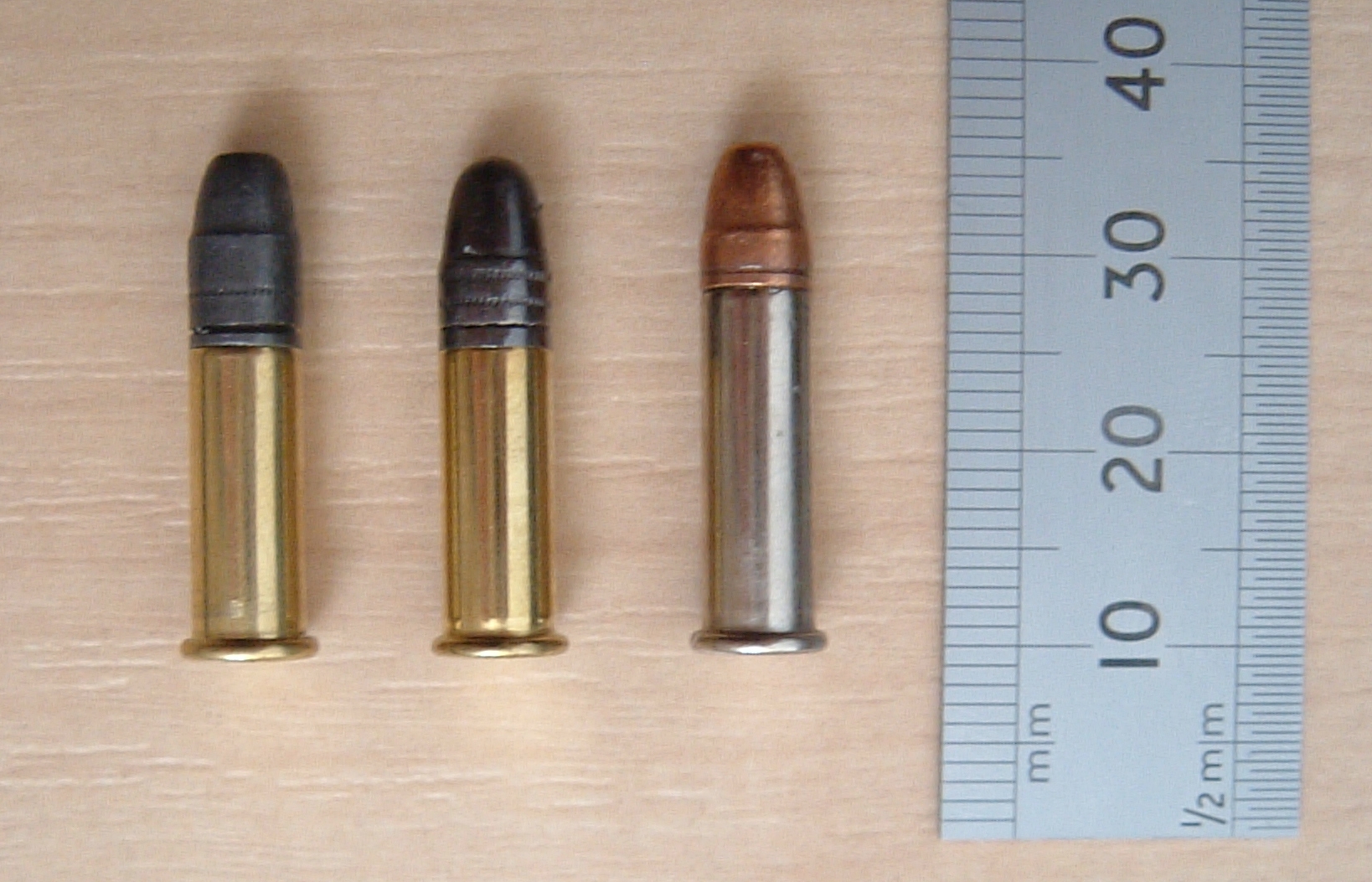
The difference between subsonic and high velocity 22LR comes down to one number: the speed of sound. Subsonic loads stay under it, usually with heavier 38 to 45 grain bullets, and high velocity loads blow past it with lighter, faster 36 to 40 grain bullets. That one change affects noise, wind drift, drop, energy, accuracy and whether your rifle will even cycle the round.
If you’re shopping, you can check out current prices on 22LR ammo while you read. This guide explains what each type does, how bullet weight fits in, and which loads suit which job, using test data from several published sources.
The quick version
- Subsonic: under roughly 1,100 to 1,125 fps. Typically 38 to 45 grain. Quieter, no supersonic crack, less wind deflection, but more drop and less energy.
- Standard velocity: around 1,070 to 1,170 fps. Usually a 40 grain bullet. A common choice for plinking and target work.
- High velocity: roughly 1,200 to 1,400 fps. Usually 36 to 40 grain copper-plated hollow points. Flatter trajectory and more energy.
- Hyper velocity: above about 1,400 fps on the box. Light 21 to 32 grain bullets built for varmints. Fastest at the muzzle, but they lose energy quickly downrange.
- No single best load. The right pick depends on your rifle, whether you shoot suppressed, how far you shoot and what you’re shooting at.
What “subsonic” and “high velocity” actually mean
Sound travels at about 1,125 feet per second at sea level. Other sources round it slightly differently: Field & Stream says 1,127 fps and Savage Arms says about 1,100 fps. Temperature and altitude move the real number, which is why subsonic ammo is usually loaded with a margin below it.
Target Barn groups 22LR velocities into four bands:
- Subsonic: under 1,100 fps
- Standard velocity: under 1,125 fps
- High velocity: 1,200 to 1,400 fps
- Hyper velocity: over 1,400 fps
AmmoForSale puts high velocity at 1,200 to 1,310 fps and standard velocity at 1,120 to 1,135 fps. Target Barn itself notes that manufacturers and shooters don’t always agree on these boundaries, so treat them as rough guides rather than hard rules.
Box speed isn’t real-world speed
Published velocities usually come from rifle-length test barrels, and most loads fall short of their advertised numbers in real guns. In Target Barn’s tests with a 16.5 inch rifle:
- CCI Stinger (32 grain): advertised 1,640 fps, averaged 1,385 fps
- Aguila SuperMaximum (30 grain): advertised 1,700 fps, averaged 1,553 fps in the rifle and only 1,280 fps from a 4.6 inch pistol barrel
- CCI Velocitor (40 grain): advertised 1,435 fps, averaged 1,371 fps
- CCI Mini-Mag Varmint (36 grain): advertised 1,260 fps, averaged 1,269 fps
- Winchester Super-X Power Point (40 grain): advertised 1,280 fps, averaged 1,282 fps
Those last two were the only loads in the test that met or beat their box numbers. Barrel length matters, so expect your own results to differ.
A note on pistols
Target Barn warns that not every 22LR pistol can safely fire high velocity ammo. Check your pistol’s manual or contact the manufacturer before running hotter loads through it.
22LR bullet weights: 21, 32, 36, 40 and 45 grain
Bullet weight is what separates the speed classes. A lighter bullet is easier to push fast, so hyper and high velocity loads use light bullets. A heavier bullet needs less powder to hit the same pressure and stays under the speed of sound more easily, which is why subsonic loads run heavy. Savage Arms describes subsonic loads as typically achieved with heavier bullets, smaller powder charges, or both.
21 grain: the hyper-velocity extreme
- CCI Copper-22 (21 grain hollow point): advertised 1,850 fps, averaged 1,521 fps from a rifle in Target Barn’s test. Target Barn notes it may be discontinued.
- Trade-off: very fast at the muzzle, but at 100 yards Ammunition To Go lists it at only 890 fps and 37 ft-lbs.
30 to 32 grain: varmint loads
- CCI Stinger (32 grain copper-plated hollow point): advertised 1,640 fps, with a teardrop-shaped cavity for rapid expansion. Rifle average was 1,385 fps in Target Barn’s test.
- Federal Small Game Hyper-Velocity (31 grain): advertised 1,430 fps, averaged 1,387 fps from a rifle.
- Aguila SuperMaximum (30 grain): advertised 1,700 fps, averaged 1,553 fps from a rifle.
- Best for: varmints at moderate range, where fast expansion matters more than long-range energy.
36 to 38 grain: the classic high velocity weight
- CCI Mini-Mag Varmint (36 grain): advertised 1,260 fps, averaged 1,269 fps.
- Federal Small Game High Velocity (38 grain): advertised 1,260 fps, averaged 1,248 fps.
- Winchester 36 grain hollow point: 1,280 fps and 131 ft-lbs at the muzzle per Ammunition To Go.
- Subsonic versions at 38 grain: Eley Subsonic Hollow and Remington 22 Subsonic both fall in this weight class and ran just over 1,000 fps in Guns & Ammo’s test.
- Best for: small game and general hunting, with a good balance of speed and energy.
40 grain: the standard bullet
- Standard velocity: CCI Standard Velocity (40 grain lead round nose) runs about 1,070 fps and 102 ft-lbs at the muzzle.
- High velocity: CCI Mini-Mag (40 grain) is rated at 1,235 fps and 135 ft-lbs. Federal Champion and Remington Thunderbolt run around 1,200 to 1,255 fps.
- Fast 40 grain: CCI Velocitor (40 grain copper-plated hollow point) is rated at 1,435 fps and 183 ft-lbs.
- Subsonic: CCI Subsonic (40 grain hollow point) averaged 1,039 fps in Guns & Ammo’s test. CCI Quiet-22 uses the same 40 grain bullet at just 710 fps.
- Best for: the all-round choice. It’s the one weight offered in nearly every speed class.
45 grain: the heavy subsonic bullet
- Federal American Eagle Suppressor (45 grain): averaged 934 fps.
- Winchester Super Suppressed (45 grain): averaged 1,051 fps with about 119 ft-lbs.
- Winchester M-22 Subsonic (45 grain): rated at 1,090 fps and designed for semi-autos, per Field & Stream.
- Best for: suppressed shooting and quiet small-game hunting. The extra weight helps it hold energy at speeds below the sound barrier.
What weight costs you in energy
Typical figures from Field & Stream put a standard 22LR at about 1,200 fps and 140 ft-lbs, and a typical subsonic at about 1,050 fps and 100 ft-lbs. AmmoForSale says a subsonic bullet may transfer around 70 percent as much energy as a standard velocity bullet. For small game at close range, that’s usually enough. For anything farther or tougher, it’s the main limit.
Common 22LR loads, tested
Subsonic loads
Guns & Ammo tested five subsonic loads from a Ruger 10/22 at 30 yards, with five five-shot groups per load. Velocity was measured at 10 yards. None had feeding problems in the rifle or in a High Standard Sport King semi-auto pistol.
- Federal American Eagle Suppressor (45 grain copper-plated round nose): 934 fps, average group 0.92 inch, best 0.72 inch. Uses clean-burning powder to limit baffle fouling in suppressors.
- CCI Subsonic (40 grain hollow point): 1,039 fps, average group 0.82 inch, best 0.52 inch. Guns & Ammo marked it “Recommended” and says it’s popular with varmint hunters.
- Eley Subsonic Hollow (38 grain hollow point): 1,037 fps and 96.2 ft-lbs, average group 0.72 inch. It showed very little velocity variation (standard deviation of 11 fps) and has a nongreasy coating for semi-auto reliability.
- Remington 22 Subsonic (38 grain lead hollow point): 1,041 fps, average group 0.91 inch.
- Winchester Super Suppressed (45 grain black copper-plated round nose): 1,051 fps, about 119 ft-lbs, average group 0.96 inch. The black copper plating is said to reduce fouling in suppressors.
All five averaged under one inch at 30 yards. Subsonic doesn’t mean inaccurate.
High velocity loads
From Target Barn’s rifle test (16.5 inch barrel, five-shot averages):
- CCI Mini-Mag Varmint (36 grain): 1,269 fps. Met its box speed.
- Winchester Super-X Power Point (40 grain): 1,282 fps. Originally developed for rabbit control in the Australian outback. Suits small varmints and target shooting.
- Federal Small Game High Velocity (38 grain): 1,248 fps.
- Federal Champion (40 grain lead round nose): 1,224 fps.
- Remington Thunderbolt (40 grain lead round nose): 1,209 fps. A budget plinking option sold in 500-round boxes.
- CCI Velocitor (40 grain): 1,371 fps.
Hyper velocity loads
- CCI Stinger (32 grain): 1,385 fps average, but the rifle spread ran from 1,217 to 1,514 fps. Rapid expansion, large gap versus the box number.
- Federal Small Game Hyper-Velocity (31 grain): 1,387 fps. Aimed at varmint hunting.
- Aguila Interceptor (40 grain copper-plated solid point): 1,377 fps from the rifle.
- Aguila SuperMaximum (30 grain): 1,553 fps from the rifle.
Accuracy and expansion
Gun Mag Warehouse shot 10-shot groups at 100 feet with 13 loads.
- Best hollow point: CCI Mini-Mag (36 grain), with a 0.540 inch group and reliable expansion.
- Best expansion: Winchester Ballistic Silvertip, which segmented and fragmented. It also measured about 1,260 fps against an advertised 1,060.
- Consistent mushrooming: CCI Stinger, though it grouped low on target.
- Worst accuracy: Remington Golden Bullet, at nearly two inches.
- Little to no expansion: Federal Champion.
- Tightest solid: CCI Standard Velocity, at 0.54 inch. CCI AR Tactical had the most consistent velocity.
- Largest group overall: CCI Quiet-22, at 1.65 inches and about 700 fps. The ultra-quiet loads give up the most accuracy.
22LR ballistics: velocity, energy and drop
This is where the trade-off between subsonic and high velocity shows up. Ammunition To Go publishes 24 inch barrel data for dozens of loads. Each load in its chart is zeroed differently, so compare velocity and energy rather than its drop column.
Velocity and energy at 100 yards
- CCI Velocitor (40 grain): 1,435 fps and 183 ft-lbs at the muzzle, down to 1,084 fps and 104 ft-lbs at 100 yards.
- CCI Mini-Mag (40 grain): 1,235 fps and 135 ft-lbs at the muzzle, down to 998 fps and 88 ft-lbs at 100 yards.
- CCI Stinger (32 grain): 1,640 fps and 191 ft-lbs at the muzzle, down to 1,066 fps and just 81 ft-lbs at 100 yards.
- Winchester subsonic (45 grain): 1,090 fps and 119 ft-lbs at the muzzle, down to 967 fps and 93 ft-lbs at 100 yards.
- Remington Subsonic (38 grain): 1,050 fps and 93 ft-lbs at the muzzle, down to 903 fps and 69 ft-lbs at 100 yards.
- CCI Standard Velocity (40 grain): 1,070 fps and 102 ft-lbs at the muzzle, down to 908 fps and 73 ft-lbs at 100 yards.
- CCI Quiet (40 grain): 710 fps and 45 ft-lbs at the muzzle, down to 640 fps and 36 ft-lbs at 100 yards.
Two things stand out. The light, fast Stinger starts with the most energy of the group but ends up with less than the Velocitor, Mini-Mag and even the heavy 45 grain subsonic by 100 yards.
Heavy bullets hold their energy better, which narrows the gap at distance.
Bullet drop
In Lucky Gunner’s test (Savage Mark II, 16 inch barrel, zeroed at 50 yards):
- 100 yards: subsonic loads dropped more than 7 inches. The CCI Stinger dropped about 2 inches.
- 150 yards: the Eley subsonic dropped 30 inches. The Stinger dropped just under 11 inches.
- 200 yards: the Stinger dropped about 30 inches. The Eley dropped about 54 inches.
The author keeps most shots on small game under 50 yards with subsonic ammo and a suppressor. He wouldn’t comfortably shoot small game at an unknown distance beyond about 100 yards with a simple duplex reticle, and sees 200 yards as the practical limit. Ammunition To Go puts the 22LR’s effective range at about 150 yards.
Wind and zero
- Wind drift: Field & Stream says subsonic 22LR shows about 37 percent less wind deflection than supersonic 22s. AmmoForSale calls subsonic loads technically more accurate for the same reason, while noting high velocity is easier to aim thanks to its flatter trajectory.
- Re-zero when you switch: both Savage Arms and Field & Stream warn that switching between standard and subsonic loads changes your point of impact. Recheck your zero out to about 100 yards.
- Subsonic zero tip: the Lucky Gunner author’s 50 yard subsonic zero stays within about half an inch of the point of aim from 15 to 50 yards.
Suppressors, semi-auto cycling and accuracy
Noise and suppressors
- No supersonic crack. Subsonic bullets eliminate the crack downrange and somewhat reduce muzzle noise, according to Field & Stream. Paired with a suppressor, noise can drop to a very quiet level.
- Still not silent. The same article says an unsuppressed rifle won’t sound like “mouse feet on felt.”
- Real numbers. Field & Stream puts CCI Subsonic HP at roughly 68 dB, about half the noise of a normal high velocity 22LR. Guns & Ammo says CCI Quiet-22, which uses the same 40 grain bullet as Mini-Mag, makes about half the noise.
- Suppressor-specific loads. Federal American Eagle Suppressor uses clean-burning powder to limit baffle fouling. Winchester Super Suppressed uses black copper plating that is said to reduce fouling.
- Legality. Field & Stream says suppressors are legal in 39 states. Check your state and federal rules before you buy one.
Will it cycle your semi-auto?
This is the most common problem with subsonic 22LR. Less powder means less gas, and some actions need that gas to cycle.
- Savage Arms says some semi-autos have trouble cycling subsonic ammo and recommends testing your firearm before relying on it.
- AmmoForSale says weaker subsonic rounds may not fully cycle many semi-automatic rimfire guns.
- In Guns & Ammo’s test, all five subsonic loads ran without a malfunction in a Ruger 10/22 and a High Standard Sport King pistol.
- Winchester’s M-22 Subsonic is designed specifically for semi-autos, and Eley’s nongreasy coating is meant to help reliability in varied weather.
- Practical advice: buy one box of any new subsonic load and run it through your own gun before you buy a brick.
Accuracy: it depends on the rifle and the load
- In Guns & Ammo’s test, all five subsonic loads averaged between 0.72 and 0.96 inch at 30 yards.
- In Gun Mag Warehouse’s test, group sizes across 13 loads ranged from 0.54 inch to nearly two inches at 100 feet.
- Rifles show preferences for particular loads, and the quality of the specific load matters more than whether it’s labeled subsonic or high velocity.
- Keep a log. Norma recommends a DOPE diary (data on previous engagements) that records your load, weather and results, since conditions affect elevation.
- Test before you commit. Shoot a few five-shot groups with two or three loads before you buy in bulk.
Hunting and small game
Always check your local hunting regulations, and make sure the load is right for your firearm.
Subsonic for small game
- Savage Arms calls small game probably the best hunting use for subsonic ammo, because 22LR subsonics are widely available and small game is usually taken close.
- With a suppressor, a quiet shot may not spook other game, which allows a follow-up shot.
- Savage puts the effective range of subsonic ammo in hunting at about 100 to 200 yards, and the practical range for 22LR subsonic is much shorter.
- Field & Stream says rimfire subsonic loads keep enough energy for small game.
- Guns & Ammo calls CCI Quiet-22 “still plenty lethal” on squirrels at 20 yards, and says CCI Subsonic is popular with varmint hunters.
High velocity and hyper velocity for varmints
- Flatter trajectory. Lucky Gunner notes that faster loads like the Stinger reduce drop and make range estimation less critical on small targets.
- Fast-expanding bullets. CCI Stinger is built for rapid expansion, and Winchester Super-X Power Point was developed for rabbit control.
- Don’t count on long-range energy. The Stinger drops to 81 ft-lbs at 100 yards in the Ammunition To Go chart, less than a Mini-Mag.
- Expansion varies a lot. In Gun Mag Warehouse’s test, Winchester Ballistic Silvertip was the best expander and Federal Champion showed virtually no expansion.
Regulations and ethics
- Savage notes some states require expanding-type bullets for big game, and some set minimum energy thresholds. Check the box and your state’s rules before you hunt.
- Norma makes the point that being able to reach a target is not a reason to hunt with the round. Ethical hunting means a humane shot at a realistic distance.
A note on tracers
Tracer rounds are a separate category from the loads covered here. Many ranges and public lands restrict them because of the fire risk, so ask before you buy or use them.
Which 22LR should you buy?
Match the load to the job. Here’s how the test data lines up:
- Cheap plinking: a 40 grain standard or high velocity lead round nose. Remington Thunderbolt and Federal Champion are the budget options in the tests above.
- Target accuracy: CCI Standard Velocity had the tightest solid group in Gun Mag Warehouse’s test (0.54 inch), and CCI Mini-Mag was the most accurate hollow point. Eley Subsonic Hollow averaged 0.72 inch with very consistent velocity.
- Suppressed shooting: 40 to 45 grain subsonic loads such as Federal American Eagle Suppressor, Winchester Super Suppressed, CCI Subsonic and Eley Subsonic Hollow.
- Small game, quiet and close: a 38 to 40 grain subsonic hollow point under about 50 yards.
- Small game, general use: a 36 to 40 grain high velocity hollow point. CCI Mini-Mag, Winchester Super-X Power Point and Federal Small Game High Velocity are the examples tested.
- Varmints at longer range: a 31 to 32 grain hyper velocity load, with the caveat that by 100 yards it has less energy than heavier 40 grain loads.
- Kids and new shooters: subsonic loads are quieter and have less recoil. Avoid the very quiet 700 fps loads for accuracy-focused practice, since they grouped the worst in testing.
- Semi-autos: try a single box first and confirm the gun cycles it.
Once you know which loads your rifle likes, compare current 22LR prices across retailers to find the best deal per round.
FAQ
- What speed is subsonic 22LR? Under the speed of sound, about 1,100 to 1,125 fps. Savage Arms says subsonic boxes often list around 1,050 fps or lower.
- Is subsonic 22LR accurate? It can be. All five loads in Guns & Ammo’s test averaged under one inch at 30 yards. The exception in Gun Mag Warehouse’s test was CCI Quiet-22, which averaged 1.65 inches.
- Will subsonic ammo cycle in my semi-auto? Not always. Less gas can mean failure to cycle, so test a box in your own rifle first.
- What bullet weight is best for 22LR? There’s no single best. Subsonic loads run 38 to 45 grain, high velocity loads usually 36 to 40 grain, and hyper velocity loads 21 to 32 grain.
- Is high velocity ammo safe in any 22LR? Not necessarily. Target Barn warns that not every 22LR pistol can safely fire high velocity ammo, so check your manual.
- Do I need to re-zero when I switch loads? Yes. Savage Arms and Field & Stream both say point of impact changes between standard and subsonic loads.
- How quiet is subsonic 22LR? Field & Stream puts CCI Subsonic HP at about 68 dB, around half the noise of a normal high velocity round. It’s still not silent without a suppressor.
- How far can a 22LR shoot? Ammunition To Go puts the effective range at about 150 yards. Most small-game shots are much closer.
Ballistic figures are based on representative published factory ammunition specifications and calculated muzzle-energy values. Actual velocities and trajectories vary with barrel length, rifle, ammunition lot, and environmental conditions. Always check your local hunting regulations before you hunt, and make sure the load you choose is right for your firearm. Follow firearm and ammunition manufacturer guidance, and confirm your rifle's compatibility with the ammunition selected.