
 Wishlist

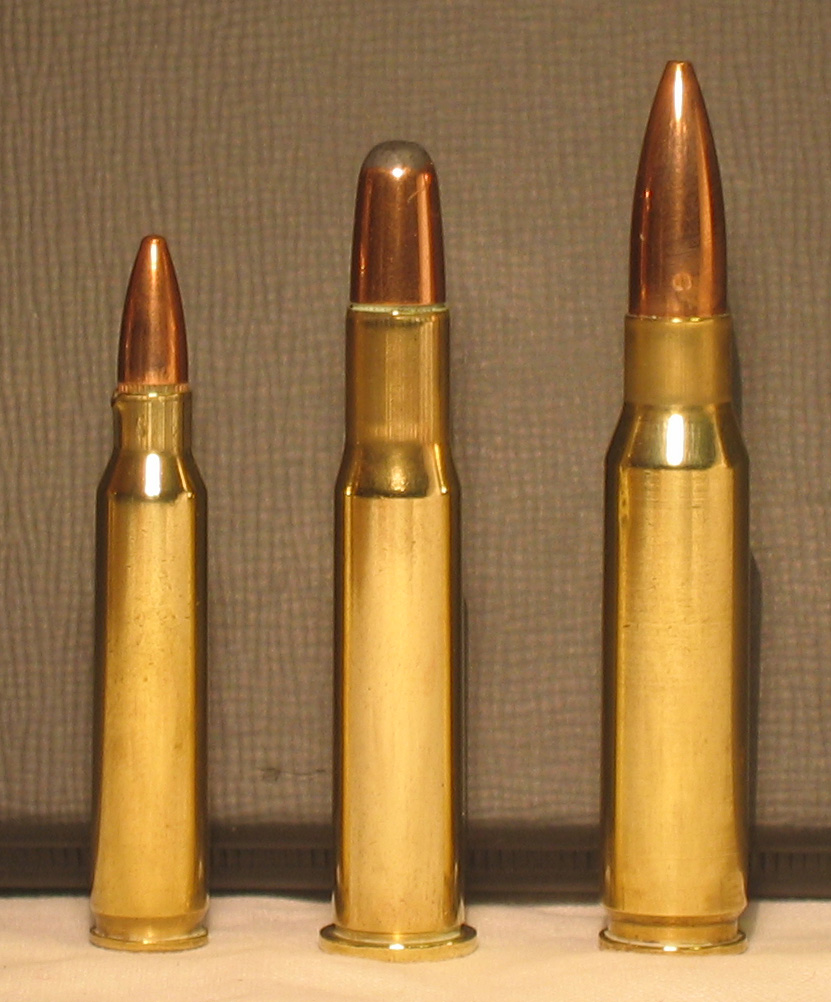
The .30-30 Winchester has been putting venison in freezers since 1895, and it is still one of the most popular deer cartridges in America. It is also one of the few rifle rounds where picking the right bullet weight is a real decision, because the .30-30 is loaded in a surprisingly narrow range of weights, and each one behaves differently.
Should you shoot 150 grain or 170 grain? Is the 160-grain Hornady LeverRevolution worth the extra money? And what do those numbers actually mean at 100, 200 and 300 yards? This guide compares .30-30 bullet weights using published factory ballistics, explains why the old flat-nose designs behave the way they do, and helps you match a load to your hunt. If you are shopping for ammo, you can check out current .30-30 ammo prices across retailers on Ammo Browser while you read.
The Short Answer
- 150 grain (about 2,390 fps) is the lighter, faster, flatter-shooting choice. It is a great deer load inside 150 yards, and it has the least recoil.
- 170 grain (about 2,200 fps) is the traditional all-around load. It starts slower, but it has a better ballistic coefficient and carries slightly more energy at 200 yards. It is the better choice when you want deeper penetration.
- 160 grain Hornady LeverRevolution is the modern option. Its pointed, flexible-tip bullet shoots much flatter and keeps far more energy at 200 to 300 yards than either traditional load.
- For most deer hunters, a 150 or 170 grain soft point does everything the .30-30 needs to do inside 150 yards. If you hunt open country, the LeverRevolution stretches your useful range.
- Neither weight changes the cartridge’s limits. All .30-30 loads are best suited to shots inside 200 yards.
Why .30-30 Bullet Weight Is Different
Most rifle cartridges can use any bullet shape. The .30-30 cannot, for one practical reason: it was built for lever-action rifles with tubular magazines. In a tube magazine, cartridges are stacked nose to tail, so the tip of each bullet sits against the primer of the cartridge in front of it. A pointed bullet could set off that primer under recoil, which is dangerous. That is why traditional .30-30 loads use flat-nose or round-nose bullets.
The trade-off is aerodynamics. Flat-nose bullets have a low ballistic coefficient, which means they lose speed and energy quickly. American Hunter’s Philip Massaro explains that because the cartridge also starts out at modest velocity, its energy drops off fast. It is a big part of why the .30-30 is considered a short-range round, with most sources putting its effective range around 200 yards.
That is also why bullet weight matters less than in a cartridge like the .308 or .30-06. The difference between a 150 and a 170 is real, but small. Bullet design, particularly whether the bullet has a pointed polymer tip, often matters more than weight.
.30-30 Cartridge Basics
- Introduced: 1895, in the Winchester Model 1894 lever-action rifle
- Parent case: .38-55 Winchester, necked down
- Bullet diameter: .308 to .309 inch
- Case length: 2.039 inches
- Overall length: 2.550 inches
- Case capacity: about 45 grains of water
- SAAMI max pressure: 42,000 psi
The original loading used a 160-grain bullet at about 1,970 fps. A 170-grain version arrived a year later and became the standard. The 150-grain load became the other popular weight, and those two have dominated .30-30 ammo ever since.
.30-30 150 Grain: The Fast, Flat Option
The 150-grain .30-30 is the lighter of the two traditional loads, and it is usually the faster. Typical factory loads leave the muzzle at about 2,390 fps with about 1,900 ft-lbs of energy.
Here is the published ballistic data for the Federal Power-Shok 150 grain JSP from a 24-inch test barrel, with a 200-yard zero:
- Muzzle: 2,390 fps, 1,902 ft-lbs
- 100 yards: 2,019 fps, 1,358 ft-lbs, +3.6 inches
- 200 yards: 1,686 fps, 947 ft-lbs, on zero
- 300 yards: 1,399 fps, 652 ft-lbs, -15.9 inches
- 400 yards: 1,179 fps, 463 ft-lbs, -50.1 inches
- 500 yards: 1,037 fps, 358 ft-lbs, -109.8 inches
The ballistic coefficient is only about 0.218, which explains the steep decline. By 300 yards the bullet is down to about 650 ft-lbs, and by 400 yards it is close to the speed of sound.
Strengths of the 150 grain:
- Less drop. It shoots a little flatter than the 170 out to 200 yards.
- More energy at close range. It has the higher muzzle energy, and it is on par with the 170 at 100 yards.
- Higher impact velocity. The bullet arrives faster, which helps expansion on deer-sized game.
- Lighter recoil. AmmoToGo puts a 150-grain .30-30 at about 10 ft-lbs of free recoil, roughly 7 ft-lbs less than a .30-06 with the same bullet.
Weaknesses:
- Less penetration potential. A lighter bullet carries less momentum.
- Falls behind past 200 yards. The 170 catches up in energy by that point.
.30-30 170 Grain: The Traditional All-Rounder
The 170-grain bullet has been the standard .30-30 load for well over a century. It starts slower, at about 2,200 fps and about 1,830 ft-lbs, but the heavier bullet has a slightly better ballistic coefficient of about 0.254 to 0.258.
Ballistic data for the Federal Power-Shok 170 grain soft point, from a 24-inch test barrel with a 200-yard zero:
- Muzzle: 2,200 fps, 1,827 ft-lbs
- 100 yards: 1,894 fps, 1,354 ft-lbs, +4.2 inches
- 200 yards: 1,619 fps, 990 ft-lbs, on zero
- 300 yards: 1,380 fps, 719 ft-lbs, -17.4 inches
- 400 yards: 1,191 fps, 535 ft-lbs, -53.5 inches
- 500 yards: 1,060 fps, 424 ft-lbs, -114.4 inches
Notice what happens compared to the 150. At 100 yards the two loads carry nearly identical energy. By 200 yards the 170 has pulled ahead (990 ft-lbs versus 947), and at 300 yards the gap is bigger (719 versus 652). The heavier bullet gives up speed at the muzzle but holds onto its energy better.
Strengths of the 170 grain:
- Better retained energy past 150 yards.
- More penetration. More mass and a slower impact velocity usually means deeper penetration, which is useful for larger or tougher game.
- Huge selection. It is the original standard weight, so nearly every manufacturer offers it, including premium bonded loads.
Weaknesses:
- More drop. American Hunter gives the classic 170 a drop of about 8.5 inches at 200 yards with a 100-yard zero, versus about 7.2 inches for the 150 in another published comparison.
- A bit more recoil than the 150 grain.
.30-30 160 Grain: The LeverRevolution Exception
Because tube magazines forbid hard pointed bullets, Hornady developed the LeverRevolution. It uses a soft, flexible polymer tip (called FTX) that cannot set off a primer, which allows a pointed, aerodynamic bullet to be loaded in a tube-fed rifle. American Hunter notes that it is built around a 160-grain spitzer boat-tail launched at about 2,400 fps.
Published ballistic data for the Hornady LeverRevolution 160 grain FTX, from a 24-inch test barrel with a 200-yard zero:
- Muzzle: 2,400 fps, 2,047 ft-lbs
- 100 yards: 2,150 fps, 1,643 ft-lbs, +3.0 inches
- 200 yards: 1,917 fps, 1,305 ft-lbs, on zero
- 300 yards: 1,700 fps, 1,027 ft-lbs, -12.5 inches
- 400 yards: 1,504 fps, 804 ft-lbs, -37.2 inches
- 500 yards: 1,332 fps, 630 ft-lbs, -77.2 inches
The difference is dramatic. Its ballistic coefficient is about 0.330, compared with about 0.22 for the traditional 150 and 0.25 for the 170. At 300 yards it is still moving at 1,700 fps with about 1,027 ft-lbs, while the 150-grain flat-nose is down to 1,399 fps and 652 ft-lbs. At 400 yards it drops about 37 inches, while the traditional loads drop 50 to 54.
Hornady also loads a 140-grain MonoFlex version with a copper bullet and polymer tip, which Hornady lists at about 2,465 fps with a 0.277 ballistic coefficient. At 300 yards it carries about 831 ft-lbs, which is still well above the traditional loads.
The LeverRevolution also changes your zero. American Hunter notes that hitting 3 inches high at 100 yards gives you a 200-yard zero, which means a hunter who uses a scope or a ghost-ring sight does not have to think about holdover inside 200 yards.
The downside is price. LeverRevolution is typically more expensive than traditional soft points, and, as Hunting Gear Guy points out, it needs to shoot accurately in your particular rifle to be worth it. Test it before the season.
150 vs 170 Grain: Head to Head
Here is how the two traditional loads compare, using Federal Power-Shok factory data:
- Velocity at the muzzle: 150 grain is faster (2,390 fps versus 2,200 fps).
- Velocity at 100 yards: 150 grain still leads (2,019 fps versus 1,894 fps).
- Velocity at 200 yards: the gap narrows to 1,686 fps versus 1,619 fps.
- Bullet drop: the 150 grain is flatter. With a 100-yard zero, it drops about 7.2 inches at 200 yards versus about 8.4 inches for the 170.
- Energy at the muzzle: 150 grain wins, with 1,902 ft-lbs versus 1,827 ft-lbs.
- Energy at 100 yards: a tie, at 1,358 ft-lbs versus 1,354 ft-lbs.
- Energy at 200 yards: 170 grain wins, with 990 ft-lbs versus 947 ft-lbs.
- Ballistic coefficient: 170 grain wins (about 0.254 versus 0.218).
- Penetration: the 170 should penetrate deeper, because heavier, slower bullets generally do.
- Recoil: the 150 grain is a little lighter.
The takeaway is that these two loads are closer than most people think. Hunting Gear Guy concludes that the 150 grain has a slight edge for deer, since it is a bit flatter and hits harder at close range. The 170 grain offers more penetration when you need it, such as when a rib or shoulder gets in the way.
Which .30-30 Bullet Weight Is Best for Deer?
For whitetail and similar deer, any of the common weights works when you do your part. American Hunter’s Massaro points out that with velocities between 2,200 and 2,400 fps, nearly any jacketed bullet of decent construction will do the job, because the bullet is not under the stress that a magnum cartridge creates. Federal Power-Shok, Hornady InterLock, Remington Core-Lokt and Winchester Power Point are all proven choices.
Here is how to choose:
- Shots inside 150 yards (thick woods, brush, food plots): 150 or 170 grain soft point. Both are effective, and most .30-30 deer are taken at these ranges. The lighter 150 has less recoil and hits slightly harder up close, while the 170 gives you more penetration.
- Shots out to 200 yards: either traditional weight still works, but energy falls to roughly 950 to 990 ft-lbs at 200 yards, which is near the 1,000 ft-lbs many hunters use as a rule of thumb for deer. This is the practical limit for flat-nose bullets.
- Shots to 250 or 300 yards (open fields, power lines, cutovers): consider the 160-grain LeverRevolution, which keeps more than 1,000 ft-lbs out to about 300 yards.
As always, the shooter matters more than the bullet. Shot placement, a steady rest and an honest assessment of your range are more important than a 20-grain difference in bullet weight.
.30-30 for Black Bear, Hogs, Elk and Moose
The .30-30 has taken a lot of game beyond deer, and American Hunter notes that hunters have tested its limits on elk and moose since the early days. But it is not the ideal choice for the biggest animals.
- Black bear and hogs: the .30-30 is a good short-range choice. The heavier 170 grain is a sensible pick for the extra penetration through thick hide and fat, and bonded bullets make a good option.
- Elk and moose: Hunting Gear Guy recommends the 170 grain for bigger animals because penetration matters when you hit a rib or shoulder. Even so, the .30-30 is marginal for these animals, and shots need to be close and carefully placed. If you hunt elk or moose regularly, a more powerful cartridge makes sense.
If you go after larger game with a .30-30, choose a premium bonded bullet, like Federal’s Nosler Partition in 170 grain or Winchester’s Power Max Bonded in 150 or 170 grain, and keep shots close. Always follow your state’s regulations for legal cartridges.
Bullet Types: Soft Point, Bonded, Lead-Free and Polymer Tip
Bullet weight is only part of the picture. The construction matters as much, and .30-30 ammo comes in several varieties:
- Standard soft point: the classic, affordable choice. Federal Power-Shok, Remington Core-Lokt and Winchester Power Point are the common names. They are very effective on deer.
- Bonded soft point: a premium design that holds together better for deeper penetration. Winchester’s Power Max Bonded and Federal’s Nosler Partition are examples, and Massaro calls the 170-grain Nosler Partition a favorite of his.
- Lead-free: options such as Federal’s Trophy Copper and Barnes VOR-TX are good choices where lead is restricted or where you prefer copper.
- Polymer-tip (LeverRevolution FTX and MonoFlex): the flatter-shooting option for hunters who want better long-range performance without giving up the tube magazine.
The .30-30’s gentle velocity is easy on bullets, so even a plain, inexpensive soft point can perform well on deer.
How Far Can You Shoot a .30-30?
Most sources agree that effective range is about 200 yards. AmmoToGo calls the .30-30 an entry-level big game round that is effective on deer and black bear but loses effectiveness beyond about 200 yards with most factory loads. American Hunter agrees, calling it very effective inside 200 yards.
The data shows why. With a traditional 150 or 170 grain load, energy falls below about 1,000 ft-lbs at 200 yards and drops sharply after that. Drop also increases quickly: 15 to 17 inches at 300 yards and 50 inches or more at 400 with a 200-yard zero.
Your zero distance affects all of this:
- 100-yard zero: the classic setup. A traditional 170-grain load prints about 0.3 inch high at 50 yards and about 8.5 inches low at 200 yards, according to American Hunter. Because most .30-30 shots were taken inside 125 yards, holdover rarely mattered.
- 200-yard zero: a good choice for scoped rifles with the LeverRevolution, since it keeps you within about 3 inches high at 100 yards.
Whichever you choose, confirm it on paper at the range and learn your holdovers before you hunt.
.30-30 Recoil
One of the biggest reasons hunters love the .30-30 is its mild recoil. AmmoToGo puts a 150-grain load at roughly 10 ft-lbs of free recoil, which is about 7 ft-lbs lighter than a .30-06 firing a bullet of the same weight. American Hunter describes it as having about half the recoil of the .30-06.
Bullet weight changes recoil only slightly. The 170 grain kicks a little more than the 150, but both are easy to shoot, which makes the .30-30 a popular choice for young hunters and anyone sensitive to recoil.
Best .30-30 Ammo by Use
- Budget deer hunting: a standard 150 or 170 grain soft point from Federal Power-Shok, Remington Core-Lokt, Winchester Power Point or Hornady InterLock.
- Close-range brush hunting: a 150 grain soft point for the flatter trajectory and lighter recoil, or a 170 for more penetration.
- Bear, hogs and tougher game: 170 grain bonded loads, such as Federal’s Nosler Partition or Winchester’s Power Max Bonded.
- Lead-free hunting: Federal Trophy Copper or Barnes VOR-TX.
- Longer shots out to 250 to 300 yards: Hornady LeverRevolution 160 grain FTX, if it shoots well in your rifle.
Prices for .30-30 ammo vary by brand, bullet type and quantity, and they can change from week to week. You can compare .30-30 ammo prices by load and price per round on Ammo Browser before you buy.
Verdict: Which .30-30 Bullet Weight Should You Shoot?
For most hunters, the answer is simple. Pick the load your rifle shoots best, because the 150 and 170 grain are closer in performance than the numbers suggest.
- Choose 150 grain if you hunt deer inside 150 yards and want the flattest trajectory and lightest recoil from a traditional load.
- Choose 170 grain if you want the traditional all-around load, more penetration for bear or hogs, or slightly better energy at 200 yards.
- Choose 160 grain LeverRevolution if you hunt open country or simply want the best ballistics your lever gun can deliver.
The .30-30 is not a long-range cartridge, and no bullet weight makes it one. What it does is deliver reliable, low-recoil performance on deer-sized game inside 200 yards, and it has done that for 130 years.
When you are ready to stock up, compare current .30-30 ammo prices and find the right load for your rifle.
.30-30 Bullet Weight FAQ
What are the most common .30-30 bullet weights?
150 grain and 170 grain are the most popular. Some manufacturers also load 160 grain (Hornady LeverRevolution) and 140 grain (Hornady MonoFlex).
Is 150 or 170 grain better for deer?
Both work. The 150 grain is slightly faster, flatter and lighter-kicking, and it hits a bit harder at close range. The 170 grain penetrates deeper and carries slightly more energy at 200 yards.
What is the best .30-30 bullet weight for elk?
The 170 grain, ideally a bonded bullet, is the better choice for larger game because of its greater penetration. Keep shots close, and remember that the .30-30 is marginal for elk and moose.
How fast is a .30-30 bullet?
About 2,390 fps for 150 grain, about 2,200 fps for 170 grain, and about 2,400 fps for the 160-grain Hornady LeverRevolution.
How far can a .30-30 shoot?
Most sources put effective range at about 200 yards. The 160-grain LeverRevolution keeps more than 1,000 ft-lbs to about 300 yards.
Can I use pointed bullets in a lever-action .30-30?
Not hard pointed bullets in a tube magazine, because the tip can contact the primer ahead of it. Hornady’s LeverRevolution uses a flexible polymer tip designed to be safe in tube magazines.
How much recoil does a .30-30 have?
About 10 ft-lbs of free recoil with a 150-grain load, which is roughly half that of a .30-06.
What is the best .30-30 ammo for deer?
Standard soft points from Federal, Remington, Winchester or Hornady work very well. If you want flatter shooting and longer range, try the Hornady LeverRevolution.
Ballistic figures are based on representative published factory ammunition specifications and calculated muzzle-energy values. Actual velocities and trajectories vary with barrel length, rifle, ammunition lot, and environmental conditions. Always check your local hunting regulations before you hunt, and make sure the load you choose is right for your firearm. Follow firearm and ammunition manufacturer guidance, and confirm your rifle's compatibility with the ammunition selected.