
'%3e%3cpath%20d='M25.8906%2030.68L16.0006%2025L6.14062%2030.68V4.55C6.14063%203.75435%206.4567%202.99129%207.0193%202.42868C7.58191%201.86607%208.34498%201.55%209.14063%201.55H22.8906C23.6863%201.55%2024.4493%201.86607%2025.0119%202.42868C25.5746%202.99129%2025.8906%203.75435%2025.8906%204.55V30.68ZM9.14063%203.55C8.87541%203.55%208.62105%203.65536%208.43352%203.84289C8.24598%204.03043%208.14063%204.28478%208.14063%204.55V27.23L16.0006%2022.72L23.8806%2027.23V4.55C23.8806%204.28478%2023.7753%204.03043%2023.5877%203.84289C23.4002%203.65536%2023.1458%203.55%2022.8806%203.55H9.14063Z'%20fill='white'/%3e%3cpath%20d='M9.14063%202.55H22.8906C23.4211%202.55%2023.9298%202.76071%2024.3048%203.13579C24.6799%203.51086%2024.8906%204.01957%2024.8906%204.55V8.62H7.14062V4.55C7.14063%204.01957%207.35134%203.51086%207.72641%203.13579C8.10148%202.76071%208.61019%202.55%209.14063%202.55Z'%20fill='%238A3301'/%3e%3cpath%20d='M25.8906%209.62H6.14062V4.55C6.14063%203.75435%206.4567%202.99129%207.0193%202.42868C7.58191%201.86607%208.34498%201.55%209.14063%201.55H22.8906C23.6863%201.55%2024.4493%201.86607%2025.0119%202.42868C25.5746%202.99129%2025.8906%203.75435%2025.8906%204.55V9.62ZM8.14063%207.62H23.8906V4.55C23.8906%204.28478%2023.7853%204.03043%2023.5977%203.84289C23.4102%203.65536%2023.1558%203.55%2022.8906%203.55H9.14063C8.87541%203.55%208.62105%203.65536%208.43352%203.84289C8.24598%204.03043%208.14063%204.28478%208.14063%204.55V7.62Z'%20fill='white'/%3e%3cpath%20d='M16%2020.25C15.7348%2020.25%2015.4804%2020.1446%2015.2929%2019.9571C15.1054%2019.7696%2015%2019.5152%2015%2019.25V14.07C15%2013.8048%2015.1054%2013.5504%2015.2929%2013.3629C15.4804%2013.1754%2015.7348%2013.07%2016%2013.07C16.2652%2013.07%2016.5196%2013.1754%2016.7071%2013.3629C16.8946%2013.5504%2017%2013.8048%2017%2014.07V19.25C17%2019.5152%2016.8946%2019.7696%2016.7071%2019.9571C16.5196%2020.1446%2016.2652%2020.25%2016%2020.25Z'%20fill='white'/%3e%3cpath%20d='M18.5999%2017.66H13.4199C13.1547%2017.66%2012.9004%2017.5546%2012.7128%2017.3671C12.5253%2017.1796%2012.4199%2016.9252%2012.4199%2016.66C12.4199%2016.3948%2012.5253%2016.1404%2012.7128%2015.9529C12.9004%2015.7654%2013.1547%2015.66%2013.4199%2015.66H18.5999C18.8651%2015.66%2019.1195%2015.7654%2019.307%2015.9529C19.4946%2016.1404%2019.5999%2016.3948%2019.5999%2016.66C19.5999%2016.9252%2019.4946%2017.1796%2019.307%2017.3671C19.1195%2017.5546%2018.8651%2017.66%2018.5999%2017.66Z'%20fill='white'/%3e%3c/g%3e%3cdefs%3e%3cclipPath%20id='clip0_29353_35'%3e%3crect%20width='32'%20height='32'%20fill='white'/%3e%3c/clipPath%3e%3c/defs%3e%3c/svg%3e) Wishlist
Wishlist
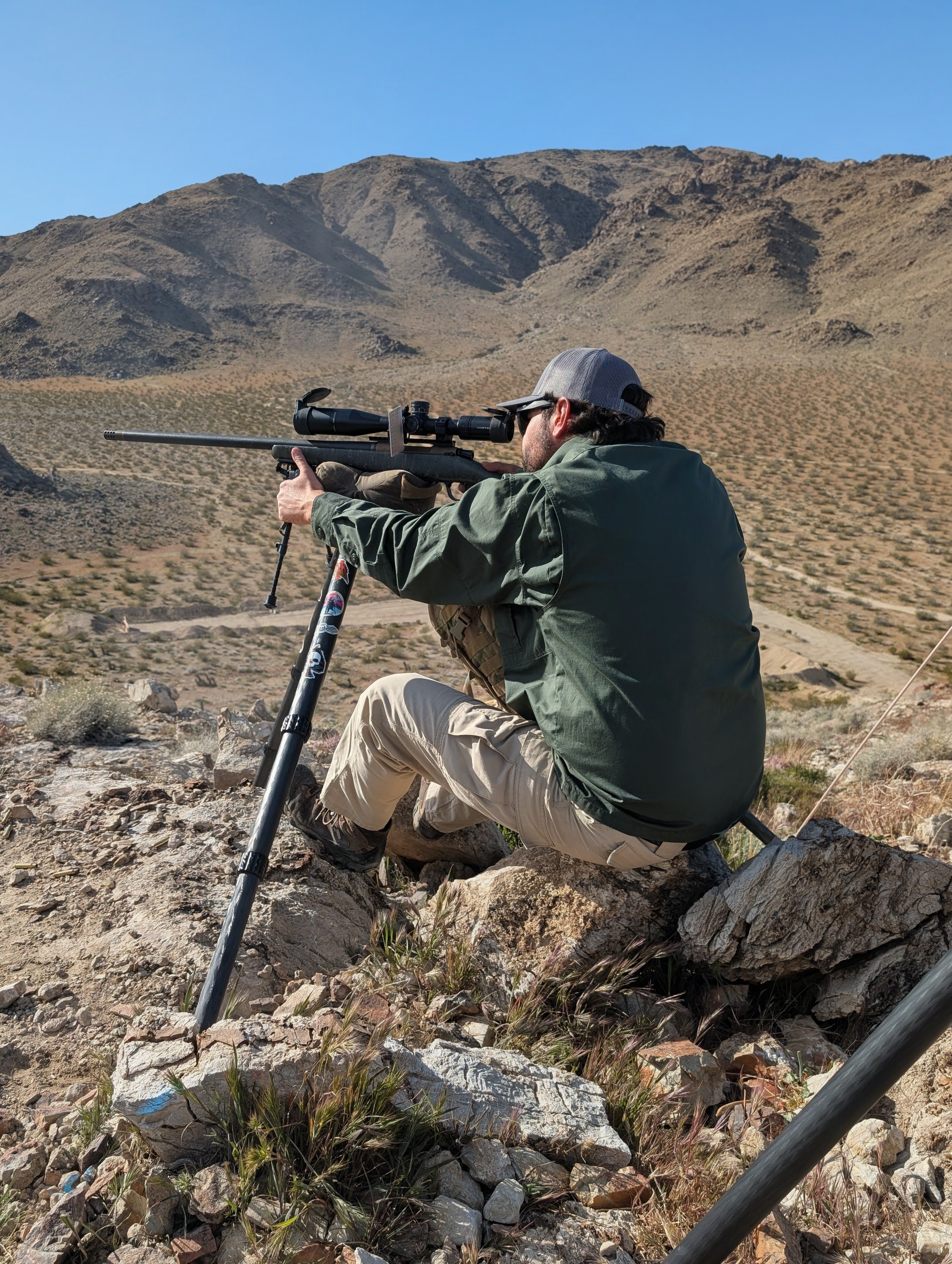
For more than half a century, the .300 Winchester Magnum has been one of the most respected hunting cartridges in the world. It has harvested everything from whitetail deer and elk to moose and some of the largest game animals in North America. It has also proven itself on military sniper rifles, competitive shooting ranges, and countless western hunts where long shots are common.
Then, in 2018, Hornady introduced the .300 Precision Rifle Cartridge, better known as the .300 PRC.
Almost immediately, shooters began asking the same question:
Has the .300 PRC replaced the .300 Win Mag?
It's an understandable question.
The .300 PRC was designed using decades of lessons learned from long-range shooting and modern bullet development. It features a more efficient case design, longer overall cartridge length, and the ability to use today's heavy, high-ballistic-coefficient bullets without many of the compromises associated with older magnum cartridges.
Because of that, many shooters have declared the .300 PRC the future of long-range magnum rifles.
Others argue that the .300 Winchester Magnum has already proven everything it needs to prove.
The truth is considerably more nuanced.
The .300 Win Mag remains one of the most versatile and widely available magnum cartridges ever created. Ammunition is sold virtually everywhere that carries hunting ammunition, rifles are available from nearly every major manufacturer, and millions of hunters continue to rely on it every season.
The .300 PRC, meanwhile, represents what happens when engineers design a cartridge specifically around modern long-range shooting rather than adapting an older design.
Neither cartridge is objectively better in every situation.
Instead, each excels in different roles.
If your goal is buying your first magnum rifle, choosing a cartridge for western big-game hunting, or deciding whether upgrading from a .300 Win Mag makes sense, this guide will walk you through every important difference.
Rather than simply comparing specifications, we'll focus on what those differences actually mean in the field and on the range.
At a Glance
Choose the .300 Win Mag if you want exceptional ammunition availability, proven hunting performance, and one of the most versatile magnum cartridges ever developed.
Choose the .300 PRC if your priority is long-range precision, modern heavy bullets, and maximizing ballistic performance beyond 600 yards.
For many hunters, either cartridge will perform exceptionally well. The right choice depends less on raw power and more on how and where you plan to shoot.
Looking for the best prices on magnum rifle ammunition?
Compare .300 Win Mag Ammo Prices
Why Are Shooters Comparing These Two Cartridges?
The .300 PRC and .300 Winchester Magnum occupy nearly the same space in the shooting world.
Both fire .30-caliber bullets.
Both are designed for long-range hunting and precision shooting.
Both generate enough energy for virtually every North American big-game animal.
Both have become favorites among shooters who demand excellent long-range performance.
Naturally, comparisons are inevitable.
The difference is that these cartridges were designed during completely different eras.
The .300 Winchester Magnum was introduced during a time when hunting ranges were much shorter and today's long, aerodynamic bullets simply didn't exist.
The .300 PRC was developed specifically for the opposite environment.
It was built for modern optics.
Modern rangefinders.
Modern precision rifles.
Modern high-ballistic-coefficient bullets.
Those different design philosophies explain almost every difference between the two cartridges.
A Brief History of the .300 Winchester Magnum
Few rifle cartridges have influenced modern hunting as much as the .300 Winchester Magnum.
Introduced by Winchester in 1963, the cartridge quickly became one of the most successful magnum rifle rounds ever developed.
Hunters appreciated its combination of flat trajectory, excellent energy, and versatility across a wide variety of game animals.
It didn't take long before guides throughout the western United States, Alaska, and Canada began recommending the cartridge for elk, moose, sheep, mountain goats, and even large bears.
Its popularity wasn't limited to hunting.
Military and law enforcement agencies also recognized its outstanding long-range capability, leading to widespread adoption in sniper rifle platforms around the world.
Today, more than sixty years after its introduction, the .300 Winchester Magnum remains one of the most widely supported rifle cartridges available.
Nearly every major rifle manufacturer chambers it.
Virtually every ammunition company loads it.
Finding ammunition almost anywhere in North America is rarely difficult.
That logistical advantage continues to be one of its greatest strengths.
The Birth of the .300 PRC
Unlike the .300 Winchester Magnum, the .300 PRC wasn't created to improve upon existing hunting cartridges.
It was created to eliminate compromises.
By the mid-2010s, long-range shooting had changed dramatically.
Shooters increasingly favored heavy bullets with exceptionally high ballistic coefficients because they retained velocity better, drifted less in the wind, and delivered more consistent performance at extreme distances.
Unfortunately, many existing magnum cartridges including the .300 Winchester Magnum weren't originally designed around those modern projectiles.
To make longer bullets fit within magazine length, reloaders often had to seat them deeper inside the case.
That reduced usable powder capacity and partially offset the benefits of the heavier bullets.
Hornady approached the problem differently.
Rather than modifying an existing cartridge, engineers designed an entirely new case optimized from the beginning for today's long, streamlined bullets.
The result was the .300 Precision Rifle Cartridge, introduced in 2018.
By giving heavy bullets additional room while maintaining excellent powder capacity, Hornady created a cartridge capable of delivering outstanding long-range performance with fewer compromises.
Although still relatively new, the .300 PRC has already gained a strong following among competitive shooters, western hunters, and precision rifle enthusiasts.
Why Was the .300 PRC Developed?
This is one of the most misunderstood aspects of the comparison.
Many people assume Hornady created the .300 PRC simply because they wanted another magnum cartridge.
That isn't really what happened.
Instead, the company identified several limitations that precision shooters had been working around for years.
Modern bullets had become significantly longer.
Optics had improved.
Laser rangefinders had become commonplace.
Precision rifles were capable of remarkable accuracy.
Yet many shooters were still using cartridge designs created decades earlier.
Hornady asked a simple question.
If we designed a .30-caliber magnum today, knowing everything we've learned over the past fifty years, what would it look like?
The answer became the .300 PRC.
Rather than chasing higher velocity alone, the focus shifted toward efficiency.
Longer bullets.
Better case geometry.
Consistent ignition.
Excellent accuracy.
Reliable feeding.
Everything was engineered around maximizing the performance of modern heavy projectiles.
Understanding that design philosophy helps explain why the cartridge performs so well at extended distances.
Cartridge Design
Although these cartridges appear similar externally, they're surprisingly different once you look closer.
The .300 Winchester Magnum traces its roots back to older belted magnum cartridges.
The belt originally served a purpose on earlier case designs, but with modern manufacturing and chamber dimensions, many shooters simply view it as a legacy feature that no longer offers significant practical advantages.
The .300 PRC eliminates the belt entirely.
Instead, it uses a modern, beltless case designed for consistent chamber alignment and efficient powder capacity.
The neck is also longer.
That longer neck provides additional support for today's long, heavy bullets while allowing them to be seated without sacrificing valuable powder space.
Combined with a carefully engineered chamber design and optimized throat dimensions, these features help explain why the cartridge has developed such a strong reputation for long-range consistency.
For the average hunter shooting inside normal hunting distances, these differences may never be noticeable.
For precision shooters stretching shots to 1,000 yards and beyond, however, they become much more significant.
Cartridge Specifications
While both cartridges fire the same .308-inch bullets, their specifications differ in several important ways.
.300 Winchester Magnum
- Bullet Diameter: .308 inch
- Common Bullet Weights: 150, 165, 180, 190, 200 grains
Typical Uses:
- Big-game hunting
- Long-range hunting
- Precision shooting
- Military and law enforcement applications
.300 PRC
- Bullet Diameter: .308 inch
- Common Bullet Weights: 190, 212, 225, and 230 grains
Typical Uses:
- Long-range precision shooting
- Extended-range hunting
- Precision rifle competition
- Modern heavy-bullet applications
One thing immediately stands out.
The .300 PRC was designed around significantly heavier bullets than those traditionally associated with the .300 Winchester Magnum.
That difference becomes increasingly important as shooting distances grow longer.
Ballistics Overview
Both cartridges are capable of remarkable performance.
Either one generates enough velocity and energy for virtually any North American big-game animal while maintaining impressive trajectories at extended distances.
The difference lies in how they maintain that performance.
The .300 Winchester Magnum achieves its reputation through decades of proven hunting success and excellent all around ballistics.
Even with traditional 180-grain hunting bullets, it delivers flat trajectories and substantial downrange energy.
The .300 PRC approaches the problem differently.
Instead of emphasizing lighter hunting bullets, it was optimized around heavier, aerodynamically efficient projectiles that retain velocity exceptionally well.
At the muzzle, the differences between the cartridges are often smaller than many shooters expect.
As distances increase, however, those heavy .300 PRC bullets begin showing why the cartridge was designed the way it was.
They retain energy more effectively.
They resist wind drift more efficiently.
They remain supersonic farther downrange.
Those characteristics have helped establish the .300 PRC as one of the premier modern long-range cartridges available.
Representative Factory Loads
Factory ammunition varies by manufacturer, but these examples illustrate the types of loads most shooters encounter.
.300 Winchester Magnum – 180 Grain Soft Point
- Approximately 2,960 fps
- One of the most common hunting loads available
- Excellent all-around choice for big game
.300 Winchester Magnum – 190 Grain Match
- Approximately 2,900 fps
- Popular among precision shooters
- Excellent long-range accuracy
.300 PRC – 212 Grain ELD-X
- Approximately 2,860 fps
- Outstanding retained energy
- Designed for extended-range hunting
.300 PRC – 225 Grain ELD Match
- Approximately 2,810 fps
- Extremely high ballistic coefficient
- Built for precision shooting at extreme distances
These numbers tell an important story.
The .300 Winchester Magnum often produces impressive velocity with lighter bullets.
The .300 PRC counters by launching heavier bullets that maintain their performance much farther downrange.
Neither approach is inherently better.
The real differences become much clearer once we begin examining wind drift, trajectory, recoil, and effective range.
Wind Drift
If there is one category where the .300 PRC consistently demonstrates its greatest advantage, it's wind drift.
Wind is one of the biggest challenges facing long-range shooters. A bullet can have excellent muzzle velocity, but if it sheds speed quickly or has a poor ballistic coefficient, even a modest crosswind can push it dramatically off target.
This is exactly what the .300 PRC was designed to improve.
Because it's optimized for long, heavy, high-ballistic-coefficient bullets like the 212-grain ELD-X and 225-grain ELD Match, the cartridge retains velocity exceptionally well throughout its flight. That means the bullet spends less time exposed to crosswinds and is pushed less before reaching the target.
The .300 Winchester Magnum certainly performs well in windy conditions, especially with modern match bullets, but many factory rifles and factory loads are still centered around traditional 165- to 180-grain hunting bullets. Those bullets remain excellent choices for hunting, but they generally don't resist wind as effectively as the heavier projectiles commonly fired by the .300 PRC.
The farther the distance increases, the more noticeable this advantage becomes.
At 300 yards, the difference is relatively small.
At 600 yards, it becomes easier to appreciate.
By the time you're shooting at 1,000 yards, the .300 PRC's ability to reduce wind drift can make accurate corrections considerably easier.
What This Means
If most of your shooting occurs inside normal hunting distances, wind drift is unlikely to influence your decision.
If you routinely shoot beyond 700 yards, the .300 PRC provides a measurable advantage that many precision shooters consider one of its biggest strengths.
Trajectory
Both cartridges are known for producing exceptionally flat trajectories.
Compared to traditional hunting cartridges like the .308 Winchester or .30-06 Springfield, either one dramatically reduces bullet drop at extended distances.
That's one reason magnum cartridges have remained so popular among western hunters.
The differences between the .300 PRC and .300 Winchester Magnum are much smaller than many shooters expect.
With comparable loads, both cartridges produce remarkably similar trajectories through normal hunting distances.
As the range increases, however, the heavier, more aerodynamic bullets commonly used in the .300 PRC begin retaining velocity more efficiently, allowing them to maintain flatter trajectories farther downrange.
The difference isn't dramatic at 300 yards.
It becomes increasingly noticeable beyond 700 yards.
For hunters, that generally isn't a deciding factor.
For competitive shooters regularly engaging steel at extreme distances, it can become much more important.
What This Means
Inside typical hunting distances, trajectory differences are minor.
At extreme ranges, the .300 PRC begins separating itself by maintaining velocity more efficiently and requiring slightly less elevation correction.
Recoil
Neither cartridge could reasonably be described as light recoiling.
Both generate substantial recoil compared to standard hunting cartridges, and both demand proper shooting technique.
The .300 Winchester Magnum has developed a reputation for stout recoil over the past six decades, yet millions of hunters have learned to shoot it effectively.
The .300 PRC produces a very similar recoil impulse.
Because many factory loads use heavier bullets, some rifles may produce slightly greater recoil than comparable .300 Winchester Magnum loads.
In practical terms, however, most shooters find the difference relatively small.
Factors such as rifle weight, stock design, muzzle brakes, suppressors, and recoil pads often influence perceived recoil more than the cartridge itself.
What This Means
If you're comfortable shooting one, you'll likely be comfortable shooting the other.
Your rifle's configuration often has a greater impact on recoil than the cartridge you choose.
Accuracy
Accuracy is one of the reasons the .300 PRC has become so popular.
From the beginning, it was engineered with precision shooting in mind.
The longer neck, modern chamber dimensions, and optimized throat geometry all contribute to excellent consistency when paired with today's long, heavy bullets.
That doesn't mean the .300 Winchester Magnum isn't accurate.
Far from it.
For decades, it has won competitions, served in military sniper rifles, and earned a reputation as one of the finest long-range hunting cartridges ever developed.
The difference is that many .300 Winchester Magnum rifles were originally designed around traditional hunting bullets rather than the extremely long projectiles popular today.
Modern rifle manufacturers have largely addressed those limitations, but the .300 PRC still enjoys a design advantage when using the heaviest available bullets.
What This Means
Both cartridges are capable of outstanding accuracy.
The .300 PRC simply makes it easier to take full advantage of today's highest-ballistic-coefficient bullets.
Effective Range
One of the biggest misconceptions surrounding this comparison is that the .300 PRC dramatically outperforms the .300 Winchester Magnum at every distance.
That's simply not true.
The practical differences depend entirely on how far you're shooting.
Inside 300 Yards
At normal hunting distances, these cartridges perform almost identically.
Both deliver excellent energy, flat trajectories, and more than enough performance for deer, elk, moose, and similar game.
Most hunters would never notice a practical difference in the field.
What This Means
For the majority of hunting situations, it's essentially a tie.
300–600 Yards
As distances increase, the .300 PRC begins demonstrating why it was developed.
Its heavy bullets retain velocity more efficiently and drift slightly less in crosswinds.
The .300 Winchester Magnum remains exceptionally capable, but the gap slowly begins to grow.
What This Means
Hunters stretching shots farther across western landscapes may begin appreciating the advantages offered by the .300 PRC.
Beyond 700 Yards
This is where the cartridges begin separating more noticeably.
The .300 PRC's modern bullet design allows it to maintain velocity, resist wind drift, and retain energy exceptionally well.
Those characteristics simplify long-range shooting by reducing correction errors and providing greater consistency.
The .300 Winchester Magnum is still fully capable at these distances.
It simply requires slightly more effort to achieve the same results.
What This Means
For dedicated long-range shooters, the .300 PRC becomes increasingly attractive as distances continue increasing.
Hunting Performance
Both cartridges have earned outstanding reputations among big-game hunters.
Whether you're pursuing mule deer, whitetails, elk, moose, black bears, or similar North American game, either cartridge provides more than enough power when paired with quality ammunition and proper shot placement.
The biggest difference isn't effectiveness.
It's specialization.
The .300 Winchester Magnum has spent decades proving itself in virtually every hunting environment imaginable. Guides, outfitters, and experienced hunters know exactly what to expect from it.
The .300 PRC offers comparable hunting performance while adding measurable advantages for hunters who routinely shoot at longer distances or prefer heavy, high-ballistic-coefficient bullets.
For many hunters, the cartridge represents the evolution of the modern western hunting rifle.
What This Means
Neither cartridge holds a meaningful advantage for ordinary hunting distances.
The .300 PRC's strengths become more apparent as ranges increase.
Ammunition Availability
This category clearly favors the .300 Winchester Magnum.
Walk into almost any sporting goods store in North America, and chances are you'll find multiple boxes of .300 Winchester Magnum ammunition.
Practice ammunition.
Premium hunting loads.
Match ammunition.
It's one of the most widely supported magnum cartridges in the world.
The .300 PRC has grown rapidly since its introduction, but it still doesn't enjoy the same level of availability.
Most larger retailers stock it regularly, especially online, but finding it in smaller local stores can still be inconsistent.
For hunters traveling across multiple states or planning remote hunting trips, that difference matters.
What This Means
If widespread ammunition availability is important to you, the .300 Winchester Magnum remains the easier cartridge to support almost anywhere.
Cost
Price is another practical consideration.
Because of its enormous popularity and decades of production, .300 Winchester Magnum ammunition is generally available across a wide range of price points.
The .300 PRC, while becoming more affordable each year, typically costs slightly more per box.
Premium long-range loads can increase that difference even further.
For occasional hunters, the added cost may be insignificant.
For shooters firing hundreds or thousands of rounds each year, ammunition costs can become an important factor.
What This Means
If budget is your primary concern, the .300 Winchester Magnum generally offers the better value.
Reloading
Both cartridges are excellent candidates for handloading.
The .300 Winchester Magnum has one major advantage.
Its popularity means brass, dies, published load data, and component availability are extensive.
The .300 PRC, however, was specifically designed with modern precision reloading in mind.
Its efficient case geometry and ability to accommodate long bullets make it particularly attractive to reloaders seeking maximum long-range performance.
What This Means
Both reward careful handloading.
The .300 Winchester Magnum offers greater component availability, while the .300 PRC provides greater design flexibility for modern heavy bullets.
Barrel Life
Neither cartridge should be considered a long barrel-life champion.
Both generate substantial pressure and velocity, which naturally accelerates throat erosion compared to smaller cartridges.
Because the .300 PRC often uses heavier bullets and large powder charges, barrel life is generally comparable to the .300 Winchester Magnum.
Most recreational hunters will never shoot enough rounds to notice a meaningful difference.
Competitive shooters firing thousands of rounds annually will eventually replace barrels regardless of which cartridge they choose.
What This Means
For the average shooter, barrel life shouldn't influence the decision between these two cartridges.
Is the .300 Winchester Magnum Obsolete?
Ever since the .300 PRC was introduced, one question has continued to dominate online discussions.
Has the .300 PRC replaced the .300 Winchester Magnum?
The short answer is no.
Despite the excitement surrounding newer cartridge designs, the .300 Winchester Magnum remains one of the most successful and versatile hunting cartridges ever created.
More than sixty years after its introduction, it's still trusted by guides, outfitters, military snipers, competitive shooters, and hunters across the globe.
It remains one of the easiest magnum cartridges to find on store shelves, one of the most widely chambered rifle cartridges available, and one of the most thoroughly proven big-game cartridges in existence.
What has changed is the benchmark for long-range precision.
The .300 PRC wasn't designed because the .300 Winchester Magnum had become ineffective.
It was designed because bullet technology had evolved.
Today's long, high-ballistic-coefficient bullets simply work more efficiently in a cartridge built around them from the beginning.
That gives the .300 PRC certain advantages.
It doesn't erase everything the .300 Winchester Magnum has accomplished.
If you already own a quality .300 Winchester Magnum, there's absolutely no reason to believe it has suddenly become outdated.
It remains one of the finest all-around hunting cartridges available today.
Is the .300 PRC Worth Upgrading To?
This is probably the single most important question in this comparison.
The answer depends on where you're starting.
If you're already shooting a quality .300 Winchester Magnum and consistently harvesting game or ringing steel at the distances you normally shoot, upgrading probably won't transform your experience.
Inside typical hunting ranges, the practical difference between the cartridges is surprisingly small.
Your optics, shooting fundamentals, ammunition selection, and practice routine will usually matter far more than the name stamped on the barrel.
However, if you're purchasing a new rifle specifically for long-range shooting, the conversation changes.
The .300 PRC offers several meaningful advantages.
It was designed around modern heavy bullets.
It requires fewer compromises when loading long projectiles.
It handles today's precision shooting disciplines exceptionally well.
If you're building a rifle whose primary purpose is consistent performance at extended distances, many shooters would choose the .300 PRC today.
Not because the .300 Winchester Magnum is inadequate.
Simply because the newer cartridge was designed with modern long-range shooting in mind.
Choose the .300 Winchester Magnum If…
The .300 Winchester Magnum remains one of the smartest choices for many shooters.
It continues to offer outstanding versatility while benefiting from decades of worldwide popularity.
The .300 Winchester Magnum is likely the better option if:
- You already own a .300 Winchester Magnum rifle.
- Most of your hunting occurs inside 500 yards.
- You value widespread ammunition availability.
- You frequently travel for hunting trips and may need to purchase ammunition locally.
- You want a cartridge supported by virtually every rifle and ammunition manufacturer.
- You appreciate proven real-world performance backed by decades of hunting success.
- You want excellent performance without chasing the newest cartridge design.
For the overwhelming majority of hunters, the .300 Winchester Magnum continues to be more than capable.
Choose the .300 PRC If...
The .300 PRC was built for shooters who demand every possible advantage at extended distances.
It is an excellent choice if:
- You're purchasing a new long-range rifle.
- You regularly shoot beyond 600 yards.
- You prefer heavy, high-ballistic-coefficient bullets.
- Precision shooting is a major priority.
- You handload ammunition and want maximum flexibility with modern projectiles.
- You enjoy stretching the limits of your rifle system.
- You're investing in a rifle built around today's bullet technology.
For dedicated precision shooters, these advantages become increasingly meaningful as distances grow.
Which Cartridge Is Better for Hunting?
This is where many online comparisons become misleading.
Some articles suggest the .300 PRC has replaced the .300 Winchester Magnum for hunting.
That's simply not true.
Both cartridges provide outstanding performance on North American big game.
Whether you're hunting whitetails in the Midwest, mule deer in the Rockies, elk across western states, or moose in Alaska, either cartridge delivers more than enough energy when paired with quality ammunition and ethical shot placement.
The real difference is not what they can harvest.
It's how they deliver that performance.
The .300 Winchester Magnum has built one of the greatest hunting reputations of any modern cartridge.
The .300 PRC adds measurable ballistic advantages that become increasingly valuable as shooting distances extend.
If your shots rarely exceed normal hunting distances, you'll probably never notice the difference.
If you're building a dedicated western hunting rifle for longer opportunities across open country, the .300 PRC begins making a stronger case.
Which Cartridge Is Better for Long-Range Shooting?
This category clearly favors the .300 PRC.
That's exactly what it was designed to do.
Modern heavy bullets.
Excellent ballistic coefficients.
Reduced wind drift.
Outstanding retained energy.
Efficient case geometry.
Every major design decision supports long-range precision.
The .300 Winchester Magnum remains an outstanding long-range cartridge and has proven itself repeatedly in military, law enforcement, and competitive shooting.
However, if someone were designing a modern precision rifle from scratch today, many experienced shooters would likely begin with the .300 PRC.
Frequently Asked Questions:
Is the .300 PRC replacing the .300 Winchester Magnum?
No.
The .300 Winchester Magnum remains one of the most popular magnum cartridges in the world and continues to enjoy widespread support from rifle and ammunition manufacturers.
Which cartridge has more recoil?
Recoil is very similar.
Some .300 PRC loads using heavier bullets may produce slightly more felt recoil, but rifle weight, stock design, and muzzle devices usually have a greater influence than the cartridge itself.
Which cartridge is better for elk?
Both are outstanding elk cartridges.
The better choice is the one you shoot confidently and accurately with quality hunting ammunition.
Which cartridge has better ballistics?
At extended distances, the .300 PRC generally holds the advantage due to its ability to use modern high-ballistic-coefficient bullets more efficiently.
Is .300 PRC ammunition harder to find?
Generally, yes.
Although availability has improved significantly, the .300 Winchester Magnum remains much easier to find in sporting goods stores throughout North America.
Which cartridge is better for first-time magnum rifle buyers?
If your primary interest is traditional hunting and widespread ammunition availability, the .300 Winchester Magnum is an outstanding first magnum rifle.
If you're specifically building a long-range precision rifle and plan to take advantage of modern heavy bullets, the .300 PRC is an excellent option.
Final Verdict
Comparing the .300 PRC and the .300 Winchester Magnum isn't about deciding which cartridge is universally better.
It's about deciding which one better fits your style of shooting.
If your goal is owning one of the most versatile, widely supported, and battle-tested magnum cartridges ever developed, it's difficult to argue against the .300 Winchester Magnum. Its decades of proven hunting success, exceptional ammunition availability, and broad rifle selection continue to make it one of the smartest choices for hunters around the world.
The .300 PRC, however, represents the next step in cartridge design.
Built around modern bullet technology and optimized for long-range precision, it offers measurable advantages that become increasingly important as distances grow. Shooters who regularly engage targets beyond 600 yards or want to maximize the ballistic potential of today's heavy .30-caliber bullets will appreciate everything the cartridge was engineered to accomplish.
So which one should you buy?
If you already own a .300 Winchester Magnum, keep shooting it with confidence. It's still one of the finest hunting cartridges ever created.
If you're buying your first magnum rifle today and long-range performance is your primary goal, the .300 PRC deserves very serious consideration.
The reality is that neither cartridge makes the other obsolete.
Instead, they represent two generations of outstanding magnum rifle design.
One earned its reputation over six decades of real-world success.
The other was built to meet the demands of modern long-range shooters.
Whichever you choose, you'll be carrying one of the most capable .30-caliber magnum cartridges ever developed.
Ready to compare current prices?
Browse current listings from multiple online retailers to compare .300 Winchester Magnum and .300 PRC ammunition, helping you find the right load for your rifle, your budget, and your next hunt.