
 Wishlist

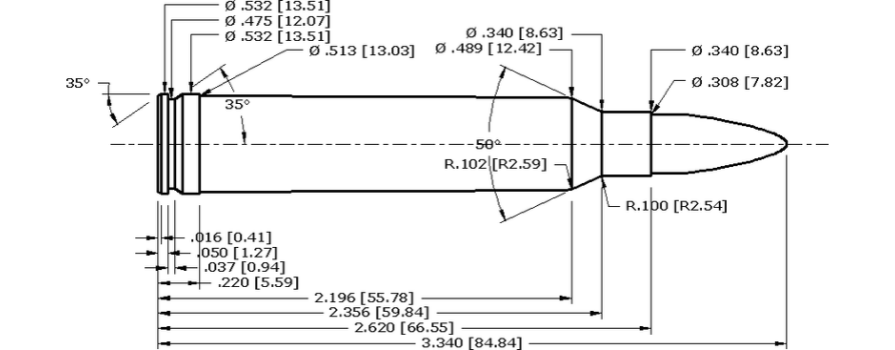
The .300 Winchester Magnum has been around since 1963, and more than six decades later, it remains one of America's most respected big-game cartridges. Hunters trust it for everything from whitetail deer in open country to elk in the mountains, while long-range shooters appreciate its ability to launch heavy, aerodynamic .30-caliber bullets at substantial velocities. Few cartridges offer quite the same combination of power, versatility, and established performance.
But walk into a sporting goods store or browse .300 Win Mag ammunition online, and you'll quickly encounter a question that isn't nearly as straightforward as it seems: Which bullet weight should you choose?
A 150-grain bullet might leave the muzzle at well over 3,200 feet per second, while a 200-grain projectile typically starts several hundred feet per second slower. The lighter bullet offers speed and a flat initial trajectory. The heavier bullet may offer better long-range velocity retention, less wind drift, and a different balance of penetration and expansion. Between them sit the 165- and 180-grain options, both of which have earned loyal followings among hunters.
It's tempting to assume that lighter bullets are for deer and heavier bullets are for elk, but that oversimplifies what makes ammunition effective. Bullet construction, ballistic coefficient, impact velocity, and the rifle itself can matter just as much as weight.
To understand where each option excels, we'll examine the four major .300 Win Mag bullet-weight categories and what their differences actually mean for hunting, target shooting, and long-range performance.
Why Bullet Weight Matters in the .300 Win Mag
Every .300 Winchester Magnum load fires a bullet with a nominal diameter of .308 inch, but those bullets can vary considerably in weight, length, shape, and construction. A lightweight soft-point hunting bullet and a long, high-ballistic-coefficient match bullet may share the same diameter while behaving very differently after leaving the barrel.
Generally speaking, lighter bullets can be driven faster with a given cartridge. Heavier bullets usually start slower, but many modern heavy-for-caliber designs have aerodynamic advantages that allow them to retain velocity more efficiently over distance. That's why the fastest bullet at the muzzle isn't necessarily the flattest-shooting or least wind-sensitive option at 700 or 1,000 yards.
Weight also affects recoil and terminal performance, although neither relationship is as simple as it first appears. Recoil depends on bullet momentum, powder charge, rifle weight, and other factors. Meanwhile, a bullet's effectiveness on game depends heavily on how it expands, penetrates, and holds together at its actual impact velocity.
The .300 Win Mag has enough case capacity to make all four weight classes useful. Its versatility is one of the reasons it has remained popular for so long. The trick is choosing a load suited to the job rather than assuming one bullet weight must be best at everything.
150-Grain 300 Win Mag: Speed Comes First
The 150-grain bullet sits toward the lighter end of the traditional .300 Win Mag hunting spectrum. It takes advantage of the cartridge's generous powder capacity to produce exceptionally high muzzle velocities, making it attractive to hunters who want a flat trajectory at ordinary hunting distances.
Hornady's 150-grain InterLock soft-point load in its American Whitetail lineup illustrates the concept. With a published muzzle velocity of approximately 3,275 fps, it delivers more than 3,500 foot-pounds of muzzle energy. Federal's 150-grain Power-Shok soft-point load starts at a more moderate 3,150 fps, demonstrating that even ammunition with the same bullet weight can produce meaningfully different velocities.
Hornady American Whitetail — 150-Grain InterLock SP
Muzzle: 3,275 fps | Approximately 3,573 ft-lbs
Federal Power-Shok — 150-Grain JSP
Muzzle: 3,150 fps | Approximately 3,305 ft-lbs
The appeal is obvious. A fast 150-grain bullet provides plenty of energy for deer-sized game and can produce a relatively flat trajectory over conventional hunting distances. For a hunter pursuing whitetails or pronghorn in open terrain, that combination can be very useful.
There is a trade-off, however. Many conventional 150-grain soft-point bullets have lower ballistic coefficients than heavier, more streamlined projectiles. As distances increase, they may lose velocity more rapidly and become more sensitive to wind. Their high impact velocities can also produce aggressive expansion, especially at close range.
That doesn't mean all 150-grain bullets behave alike. A conventional lead-core soft point and a controlled-expansion copper bullet can deliver very different results on the same animal. A tough, lightweight monolithic bullet may penetrate exceptionally well despite weighing less than a traditional lead-core alternative.
For deer hunting at moderate distances, 150 grains can be an excellent choice. For hunters prioritizing larger game or extended-range performance, the heavier weight classes deserve a closer look.
165-Grain 300 Win Mag: The Overlooked Middle Ground
If 150 grains emphasizes speed and 180 grains represents the traditional all-around hunting choice, the 165-grain category offers an appealing compromise. It retains much of the velocity advantage associated with lighter bullets while providing additional weight and a wide selection of modern hunting designs.
Hornady's 165-grain CX Superformance load demonstrates just how much performance is available in this category. Its published muzzle velocity of 3,260 fps puts it remarkably close to some 150-grain loads, despite carrying an additional 15 grains of bullet weight. Federal's 165-grain Fusion, by comparison, is listed at 3,080 fps.
Hornady Superformance — 165-Grain CX
Muzzle: 3,260 fps | Approximately 3,894 ft-lbs
Federal Fusion — 165 Grain
Muzzle: 3,080 fps | Approximately 3,475 ft-lbs
These loads also illustrate why comparing bullet weight alone can be misleading. Hornady's CX uses a copper-alloy construction designed for controlled expansion and weight retention. Federal's Fusion uses a bonded lead-core design intended to help the bullet hold together during penetration. Both are hunting bullets, but their construction and performance characteristics differ.
For hunters who primarily pursue deer but occasionally hunt larger animals, 165 grains can be a particularly interesting option. A well-constructed bullet in this weight class can provide substantial penetration without sacrificing the velocity that makes the .300 Win Mag appealing.
It's also a useful choice for someone who wants a single hunting load rather than maintaining separate ammunition for every species. The right 165-grain bullet can cover a broad range of applications, provided the hunter understands its expansion characteristics and appropriate impact-velocity limits.
The 165-grain category doesn't receive quite as much attention as 180 grains, but there's no reason to dismiss it as merely a compromise. With modern bullet construction, it can be a very capable all-around hunting option.
180-Grain 300 Win Mag: The Traditional All-Around Choice
Ask experienced .300 Winchester Magnum hunters which bullet weight they trust most, and 180 grains is likely to come up repeatedly. There is a good reason for that. It offers an effective balance of velocity, sectional density, available bullet designs, and performance on larger game.
Traditional 180-grain .300 Win Mag factory loads commonly produce muzzle velocities around 2,960 fps, although some modern ammunition is faster. At that velocity, a 180-grain bullet generates approximately 3,502 foot-pounds of muzzle energy. That is substantial performance from a cartridge that remains widely available in factory hunting rifles.
For deer, 180 grains may be more bullet than necessary in some situations, but that doesn't make it a poor choice. With suitable construction, a 180-grain projectile can expand reliably while retaining enough integrity for deep penetration. For elk, moose, and other larger animals, that combination becomes especially attractive.
The 180-grain category also offers a tremendous variety of hunting bullets. Bonded designs, traditional controlled-expansion bullets, and aerodynamic tipped bullets allow hunters to select ammunition based on expected impact velocities and game rather than relying on weight alone.
One of the strongest arguments for 180 grains is versatility. It is heavy enough to perform well on substantial animals with the right bullet construction, yet fast enough to maintain a useful trajectory at extended hunting distances. A hunter who owns one .300 Win Mag rifle and wants one dependable factory load could reasonably begin the search here.
Still, 180 grains isn't automatically superior to 165 grains for every animal or to 200 grains for every long-range application. Its reputation comes from providing a useful balance, not from being perfect in every circumstance.
200-Grain 300 Win Mag: Built for Retained Performance
The 200-grain category takes the .300 Winchester Magnum in a different direction. Rather than maximizing muzzle velocity, many bullets in this weight class emphasize high ballistic coefficients, retained velocity, and performance at longer distances.
Hornady's 200-grain ELD-X factory load is a useful example. With a published muzzle velocity of approximately 2,850 fps, it starts slower than the lighter options but still generates more than 3,600 foot-pounds of muzzle energy.
A heavy, aerodynamic bullet can retain velocity particularly well, which becomes increasingly important as shooting distances grow. Even though it starts slower, a well-designed 200-grain projectile may resist wind drift more effectively than a lighter bullet with a substantially lower ballistic coefficient.
That distinction matters to long-range hunters and precision shooters. At several hundred yards, wind estimation can be more difficult than calculating elevation, and a bullet that drifts less offers a practical advantage. High-ballistic-coefficient bullets also tend to maintain useful velocity farther downrange, although the exact benefit depends on the specific projectile.
The trade-offs include a more pronounced recoil impulse in many load-and-rifle combinations and potential compatibility concerns with certain rifles. Heavy, elongated bullets may require an appropriate barrel twist rate for stable flight. Their length can also affect cartridge seating depth and magazine compatibility.
For someone using the .300 Win Mag primarily as a conventional deer rifle, a 200-grain bullet may not provide much practical benefit. For someone who hunts larger game in open country or shoots at extended distances, the additional bullet weight and aerodynamic potential can make considerably more sense.
300 Win Mag Ballistics: Does the Heaviest Bullet Win?
Comparing these four weight classes reveals an interesting pattern. As bullet weight increases, typical muzzle velocity generally decreases, but muzzle energy doesn't necessarily follow the same trend.
Consider the representative factory loads discussed above.
150 Grain: 3,275 fps | 3,573 ft-lbs
165 Grain: 3,260 fps | 3,894 ft-lbs
180 Grain: 2,960 fps | 3,502 ft-lbs
200 Grain: 2,850 fps | 3,607 ft-lbs
The 165-grain Hornady Superformance load produces the highest muzzle-energy figure in this particular group, even though it isn't the heaviest bullet. That's because kinetic energy depends on both mass and the square of velocity. A relatively small increase in speed can make a substantial difference in energy.
But these figures should not be mistaken for a controlled test of bullet weight alone. They represent different factory loads with different bullet constructions, powder formulations, and ballistic characteristics. The 165-grain load's unusually high velocity is a feature of that specific ammunition, not proof that every 165-grain bullet outperforms every 180- or 200-grain bullet.
Downrange performance introduces another variable: ballistic coefficient. A heavier bullet with an efficient shape may retain velocity better than a lighter projectile, but a streamlined 165-grain bullet can also outperform a blunt 180-grain design in certain conditions.
At 100 or 200 yards, muzzle velocity may be one of the most noticeable differences. At 500 yards and beyond, bullet shape, retained velocity, and wind drift become increasingly important. There is no universal rule that the heaviest bullet always drops the least or that the fastest bullet always has the flattest trajectory.
For a meaningful trajectory comparison, the specific bullet, ballistic coefficient, muzzle velocity, sight-in distance, and atmospheric conditions all need to be considered.
Best 300 Win Mag Bullet Weight for Deer Hunting
For whitetail deer, mule deer, and pronghorn, both 150- and 165-grain bullets deserve serious consideration. The .300 Winchester Magnum has more than enough power for deer-sized animals, so the priority should be finding a bullet that expands appropriately without creating unnecessary damage.
A 150-grain conventional soft point can be extremely effective, particularly when the shot is taken at moderate distance. However, its high impact velocity may produce substantial expansion and meat damage, especially on close-range shots through heavy muscle.
A 165-grain controlled-expansion bullet offers another approach. Bonded and monolithic designs can retain weight and penetrate effectively while still taking advantage of the cartridge's high velocity. That makes the category appealing to hunters who want one load for deer and potentially larger game.
A 180-grain bullet is also perfectly reasonable for deer, particularly if the hunter already uses it successfully for elk or other animals. There's little reason to change a proven, accurate load simply because the game is smaller, provided the bullet's expansion characteristics suit the expected impact conditions.
For most deer hunters, I'd begin by considering 150- or 165-grain hunting ammunition, then choose based on the bullet's construction and the rifle's accuracy. The heavier options remain entirely viable, but their additional weight isn't automatically an advantage on smaller game.
Best 300 Win Mag Bullet Weight for Elk: Is 180 Grain Still King?
Elk hunting is where the traditional 180-grain recommendation becomes particularly persuasive. Elk are substantially larger and tougher than deer, and bullet penetration becomes an important consideration, especially when the shot must pass through heavy muscle or bone.
A well-constructed 180-grain hunting bullet offers a combination of velocity, sectional density, and controlled expansion that has made it a longstanding favorite among .300 Win Mag hunters. Federal's 180-grain Trophy Bonded Tip is one example of a bullet designed to retain integrity and penetrate reliably.
For many elk hunters, 180 grains remains an excellent starting point.
But it isn't the only sensible choice. A 165-grain bonded or monolithic bullet can provide impressive penetration because bullet construction strongly influences how much weight the projectile retains during impact. Conversely, a conventional 200-grain bullet that expands too rapidly may not penetrate as effectively as a lighter bullet built specifically for controlled expansion.
The 200-grain category becomes especially interesting when longer hunting distances are involved. A high-BC hunting bullet can retain velocity and energy efficiently, potentially extending the distance over which it meets its manufacturer's recommended expansion threshold.
That doesn't mean a 200-grain bullet makes extreme-distance hunting automatically ethical. Accurate ranging, wind estimation, stable shooting positions, and sufficient impact velocity remain essential. The animal's movement and the shooter's ability to place the shot are also critical considerations.
If I were choosing a general-purpose .300 Win Mag elk load, I'd start with a premium 180-grain hunting bullet that shoots accurately in the rifle. I'd consider 200 grains when the rifle handles it well and the hunting conditions genuinely favor a heavier, more aerodynamic projectile.
Best 300 Win Mag Bullet Weight for Target Shooting
Target shooting introduces a different set of priorities. Hunters need a bullet that expands and penetrates predictably, while target shooters are usually more concerned with accuracy, consistent velocity, and minimizing wind drift.
For ordinary range shooting at 100 to 300 yards, there's no compelling reason to insist on the heaviest bullet available. A rifle that produces excellent groups with 165- or 180-grain ammunition may be entirely satisfactory for recreational precision shooting. At those distances, the aerodynamic advantages of heavier match bullets are often less important than consistent ammunition and good shooting fundamentals.
As distances increase, however, high-ballistic-coefficient bullets become more attractive. Match projectiles weighing approximately 190 to 200 grains are well established in .30-caliber long-range shooting, and the .300 Win Mag has enough capacity to drive them at useful velocities.
Dedicated long-range shooters sometimes go heavier still. Bullets in the 208- to 230-grain range can offer excellent aerodynamic performance, and specialized rifles may be configured specifically around them.
There are practical limits. Longer bullets require adequate stabilization, and a rifle's barrel twist rate, chamber dimensions, and magazine length can determine whether a particular projectile is suitable. A heavy bullet that isn't properly stabilized will not deliver the accuracy its ballistic coefficient might suggest.
It's also important to distinguish match ammunition from hunting ammunition. A match bullet designed to punch consistent holes in paper or strike steel isn't automatically engineered for controlled expansion on game. Bullet construction and the manufacturer's intended application should guide that decision.
For general target shooting, 165 to 180 grains can work extremely well. For dedicated long-range precision, I'd give serious consideration to high-BC match bullets around 190 to 215 grains, provided the rifle is compatible.
Does Bullet Weight Change Recoil?
The .300 Winchester Magnum isn't known for mild recoil, and changing bullet weight doesn't transform it into a soft-shooting cartridge. It does, however, affect the recoil equation.
In otherwise comparable ammunition, a heavier bullet can increase recoil because the rifle must respond to the forward momentum of the bullet and propellant gases. But factory loads differ in velocity and powder charge, so bullet weight alone doesn't provide a reliable measure of how much recoil a particular cartridge will generate.
A high-velocity 165-grain Superformance load, for example, may not feel noticeably softer than a more conventional 180-grain load. Likewise, a heavy 200-grain load in a substantial target rifle can feel more comfortable than a lighter load fired from an ultralight hunting rifle.
Rifle weight, stock geometry, recoil pads, and muzzle devices all influence the shooting experience. A properly fitted rifle with sufficient weight can make the .300 Win Mag much easier to manage, particularly during extended range sessions.
For hunters, the most important consideration is whether the rifle can be fired accurately and confidently from realistic field positions. For target shooters, recoil management also affects the ability to observe impacts and maintain consistency over many rounds.
The best bullet weight is of limited value if the shooter becomes uncomfortable enough to anticipate the shot.
Why Bullet Construction Matters More Than a Few Grains
One of the biggest mistakes when choosing .300 Win Mag ammunition is treating bullet weight as a substitute for bullet design.
A 165-grain copper-alloy hunting bullet, a 180-grain bonded-core projectile, and a 200-grain match bullet are built for different purposes. Their weights offer useful information, but those numbers don't explain how each bullet will behave after impact.
Traditional cup-and-core soft points are designed to expand, but they can lose substantial weight at high impact velocities. Bonded bullets attach the lead core to the jacket to help resist separation. Monolithic copper-alloy bullets typically emphasize controlled expansion and weight retention. High-BC hunting bullets are shaped to retain velocity and may be engineered to expand at lower impact speeds than conventional designs.
Each approach has advantages and limitations.
For larger animals, penetration and reliable expansion are especially important. For longer-distance hunting, the bullet must also retain enough velocity to expand as intended. For target shooting, terminal expansion may be irrelevant, making match-oriented construction a better fit.
This is why a premium 165-grain bullet can outperform an unsuitable 200-grain bullet for a particular hunting application. It also explains why two factory loads with identical bullet weights may produce very different results.
Before choosing ammunition, consider what the bullet was designed to do, not merely how much it weighs.
Which 300 Win Mag Bullet Weight Should You Choose?
After comparing the four weight classes, the most useful conclusion is that the .300 Winchester Magnum doesn't have one universally superior bullet weight. Each option emphasizes a different part of the cartridge's considerable performance range.
For deer hunting, 150- and 165-grain bullets offer high velocity and plenty of power, particularly when paired with construction appropriate for the game and shooting distance. The 165-grain category is especially appealing for hunters who want a versatile load without giving up much speed.
For elk and other larger animals, 180 grains remains a strong all-around starting point. It provides an excellent balance of velocity and bullet weight, with numerous premium hunting designs available. Heavier 200-grain hunting bullets may be attractive when their aerodynamic characteristics and terminal performance match the expected conditions.
For target shooting, the answer depends on distance. A good 165- or 180-grain load can be highly accurate at conventional ranges, while long-range precision shooters may benefit from streamlined bullets weighing 190 grains or more.
If you own one .300 Win Mag and want a single general-purpose hunting load, a well-constructed 180-grain bullet is difficult to argue against. But if most of your hunting involves whitetails at moderate distances, a 165-grain load might be a better fit. And if your primary interest is long-range target shooting, the most suitable bullet may weigh considerably more than either.
The .300 Winchester Magnum's greatest strength isn't that it launches one particular bullet weight exceptionally well. It's that the cartridge offers enough performance to make a wide range of bullet weights genuinely useful.
Choose the bullet for the job, verify how it shoots in your rifle, and don't let the number printed on the ammunition box make the entire decision for you.
Compare 300 Win Mag Ammunition Prices
Whether you're looking for fast 150-grain deer loads, versatile 165- and 180-grain hunting ammunition, or heavy bullets for long-range shooting, factory .300 Winchester Magnum ammunition varies considerably in price and availability.
Before settling on a particular load, you can compare .300 Win Mag ammunition listings and prices at AmmoBrowser to see what online retailers have available. Once you find ammunition that shoots accurately in your rifle, buying enough of the same load or lot for practice and hunting can help maintain consistency.
Ballistic figures are based on representative published factory ammunition specifications and calculated muzzle-energy values. Actual velocities and trajectories vary with barrel length, rifle, ammunition lot, and environmental conditions. Always follow firearm and ammunition manufacturer guidance, confirm your rifle's compatibility with the ammunition selected, and comply with applicable hunting regulations.