
'%3e%3cpath%20d='M25.8906%2030.68L16.0006%2025L6.14062%2030.68V4.55C6.14063%203.75435%206.4567%202.99129%207.0193%202.42868C7.58191%201.86607%208.34498%201.55%209.14063%201.55H22.8906C23.6863%201.55%2024.4493%201.86607%2025.0119%202.42868C25.5746%202.99129%2025.8906%203.75435%2025.8906%204.55V30.68ZM9.14063%203.55C8.87541%203.55%208.62105%203.65536%208.43352%203.84289C8.24598%204.03043%208.14063%204.28478%208.14063%204.55V27.23L16.0006%2022.72L23.8806%2027.23V4.55C23.8806%204.28478%2023.7753%204.03043%2023.5877%203.84289C23.4002%203.65536%2023.1458%203.55%2022.8806%203.55H9.14063Z'%20fill='white'/%3e%3cpath%20d='M9.14063%202.55H22.8906C23.4211%202.55%2023.9298%202.76071%2024.3048%203.13579C24.6799%203.51086%2024.8906%204.01957%2024.8906%204.55V8.62H7.14062V4.55C7.14063%204.01957%207.35134%203.51086%207.72641%203.13579C8.10148%202.76071%208.61019%202.55%209.14063%202.55Z'%20fill='%238A3301'/%3e%3cpath%20d='M25.8906%209.62H6.14062V4.55C6.14063%203.75435%206.4567%202.99129%207.0193%202.42868C7.58191%201.86607%208.34498%201.55%209.14063%201.55H22.8906C23.6863%201.55%2024.4493%201.86607%2025.0119%202.42868C25.5746%202.99129%2025.8906%203.75435%2025.8906%204.55V9.62ZM8.14063%207.62H23.8906V4.55C23.8906%204.28478%2023.7853%204.03043%2023.5977%203.84289C23.4102%203.65536%2023.1558%203.55%2022.8906%203.55H9.14063C8.87541%203.55%208.62105%203.65536%208.43352%203.84289C8.24598%204.03043%208.14063%204.28478%208.14063%204.55V7.62Z'%20fill='white'/%3e%3cpath%20d='M16%2020.25C15.7348%2020.25%2015.4804%2020.1446%2015.2929%2019.9571C15.1054%2019.7696%2015%2019.5152%2015%2019.25V14.07C15%2013.8048%2015.1054%2013.5504%2015.2929%2013.3629C15.4804%2013.1754%2015.7348%2013.07%2016%2013.07C16.2652%2013.07%2016.5196%2013.1754%2016.7071%2013.3629C16.8946%2013.5504%2017%2013.8048%2017%2014.07V19.25C17%2019.5152%2016.8946%2019.7696%2016.7071%2019.9571C16.5196%2020.1446%2016.2652%2020.25%2016%2020.25Z'%20fill='white'/%3e%3cpath%20d='M18.5999%2017.66H13.4199C13.1547%2017.66%2012.9004%2017.5546%2012.7128%2017.3671C12.5253%2017.1796%2012.4199%2016.9252%2012.4199%2016.66C12.4199%2016.3948%2012.5253%2016.1404%2012.7128%2015.9529C12.9004%2015.7654%2013.1547%2015.66%2013.4199%2015.66H18.5999C18.8651%2015.66%2019.1195%2015.7654%2019.307%2015.9529C19.4946%2016.1404%2019.5999%2016.3948%2019.5999%2016.66C19.5999%2016.9252%2019.4946%2017.1796%2019.307%2017.3671C19.1195%2017.5546%2018.8651%2017.66%2018.5999%2017.66Z'%20fill='white'/%3e%3c/g%3e%3cdefs%3e%3cclipPath%20id='clip0_29353_35'%3e%3crect%20width='32'%20height='32'%20fill='white'/%3e%3c/clipPath%3e%3c/defs%3e%3c/svg%3e) Wishlist
Wishlist
.308 Winchester Bullet Weights: 150 vs 165 vs 180 Grain
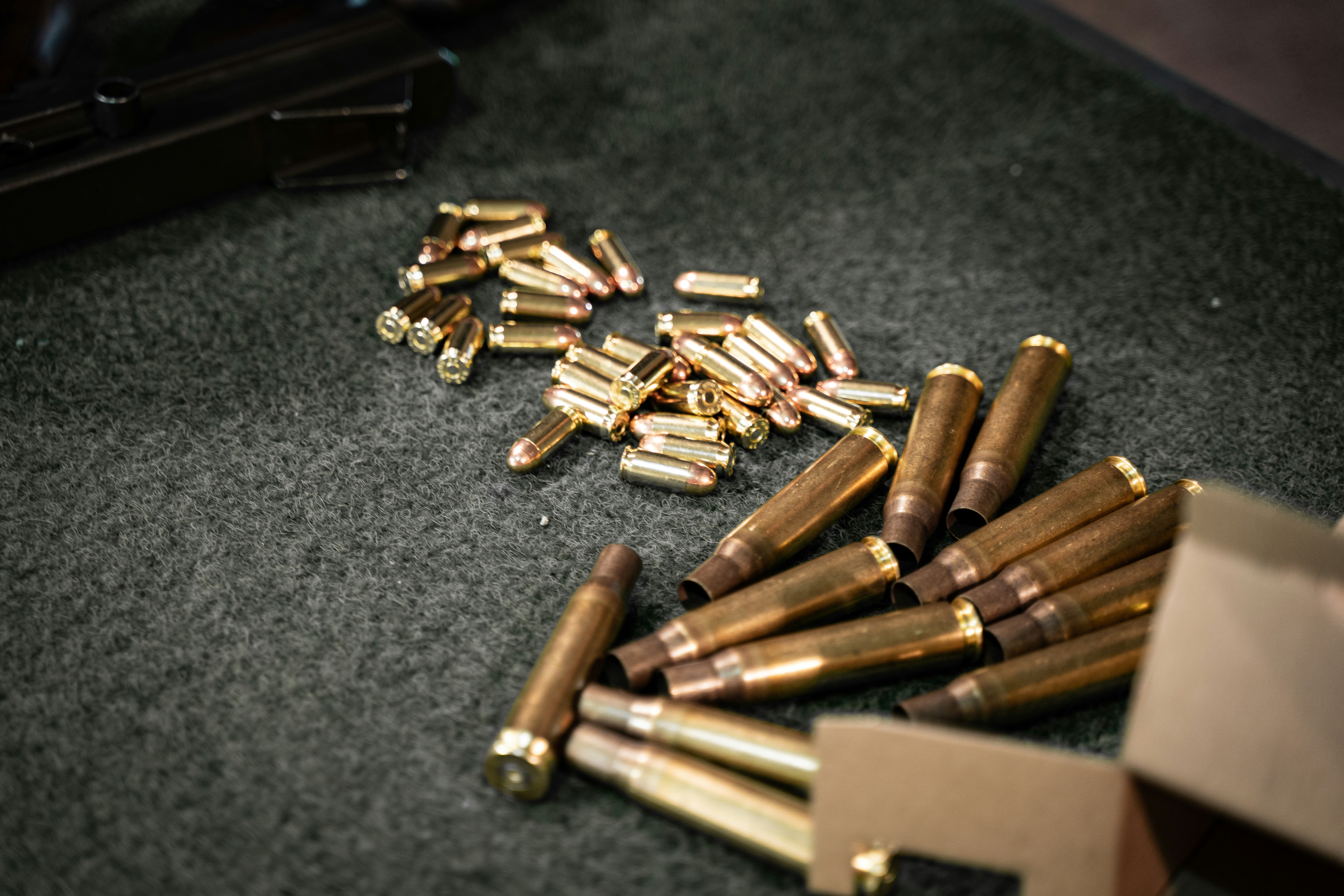
One of the biggest advantages of the .308 Winchester is its versatility. Few rifle cartridges offer as many factory ammunition choices, allowing hunters, competitive shooters, and recreational marksmen to tailor their ammunition to nearly any purpose. Walk into almost any sporting goods store and you'll find .308 Winchester loaded with bullets ranging from lightweight varmint projectiles to heavy hunting and match bullets.
For most shooters, however, three bullet weights dominate the conversation: 150 grain, 165 grain, and 180 grain. Each has earned a loyal following because each excels in different situations. Choosing the right one isn't simply a matter of selecting the heaviest or fastest option. The best bullet weight depends on how you plan to use your rifle, the game you're hunting, the distances you expect to shoot, and even how your individual rifle performs with different loads.
Why Bullet Weight Matters
Bullet weight influences nearly every aspect of a cartridge's performance. Velocity, recoil, trajectory, wind drift, penetration, and retained energy are all affected by the weight of the projectile.
Lighter bullets generally leave the muzzle at higher velocities and produce flatter trajectories at common hunting distances. Heavier bullets usually retain momentum better, penetrate deeper, and often perform more consistently against larger animals or challenging shot angles.
While these differences are important, they are often smaller than many shooters expect. Modern bullet design has narrowed the performance gap considerably, making bullet construction just as important as weight in many hunting situations.
150-Grain .308 Winchester
The 150-grain bullet is one of the most popular choices for deer hunting, and for good reason. It combines relatively high velocity with moderate recoil, producing a flat trajectory that simplifies shot placement at typical hunting distances.
Many hunters appreciate how quickly 150-grain loads reach their target while still delivering more than enough energy for whitetail deer, mule deer, antelope, and similar game. The lighter recoil also makes extended practice sessions more comfortable, helping shooters build confidence before hunting season.
For hunters who rarely pursue larger game and usually keep their shots inside 300 yards, a quality 150-grain hunting load is often an outstanding choice.
165-Grain .308 Winchester
If there is one bullet weight that many experienced hunters consider the "do everything" option, it's 165 grains.
This weight strikes an excellent balance between speed and penetration. It carries energy well, performs reliably across a broad range of hunting distances, and is capable of handling everything from deer to black bear when paired with quality hunting bullets.
Many rifles also shoot exceptionally well with 165-grain ammunition, making it one of the most versatile options available for hunters who want a single load that can handle nearly any North American big game short of the largest species.
For shooters who only want to buy one type of hunting ammunition, 165-grain loads are often difficult to beat.
180-Grain .308 Winchester
The 180-grain bullet emphasizes penetration and retained momentum over raw speed. Although it produces slightly more recoil and a somewhat more curved trajectory, it excels when deeper penetration is needed.
Hunters pursuing elk, large black bear, wild hogs, or deer in heavy cover sometimes prefer heavier bullets because they maintain momentum exceptionally well through bone and dense tissue.
For the average whitetail hunter, however, the additional bullet weight is not always necessary. Modern 150- and 165-grain premium hunting bullets are fully capable of delivering ethical harvests on deer-sized game.
Which Bullet Weight Is Best for Deer Hunting?
For most deer hunters, the answer is surprisingly simple.
Both 150-grain and 165-grain hunting loads perform exceptionally well on whitetail and mule deer. The choice often comes down to which load your rifle shoots most accurately.
Hunters who primarily hunt open country may appreciate the flatter trajectory of 150-grain ammunition, while those who want additional penetration or occasionally pursue larger game may lean toward 165 grains.
Although 180-grain ammunition certainly works on deer, many hunters reserve it for situations where larger animals or more demanding shot angles are expected.
Which Bullet Weight Is Best for Target Shooting?
Target shooters often have different priorities than hunters.
Consistency, low recoil, and excellent accuracy usually matter more than terminal performance. Many recreational shooters prefer affordable 150-grain full metal jacket ammunition for practice because it offers good accuracy at a reasonable cost.
Competitive precision shooters, however, frequently choose heavier match bullets designed specifically for long-range performance. These specialized bullets often extend beyond the traditional 150-, 165-, and 180-grain hunting weights, but among common factory ammunition, 165- and 180-grain match loads generally perform well as distances increase.
Which Bullet Weight Is Best for Long-Range Shooting?
Long-range shooting involves much more than simply choosing the heaviest bullet available.
Ballistic coefficient, bullet design, muzzle velocity, barrel twist rate, and wind conditions all influence downrange performance.
While heavier bullets often retain velocity better and resist wind drift more effectively, the most accurate load is ultimately the one your rifle consistently groups well. Many shooters are surprised to discover their rifle strongly prefers one particular factory load over another, even when both use the same bullet weight.
Testing several quality loads is almost always more valuable than relying solely on published ballistic charts.
Does Every Rifle Prefer the Same Bullet Weight?
No.
Even two identical rifles may produce different results with the same ammunition. Barrel manufacturing tolerances, chamber dimensions, bedding, optics, and countless other variables all influence accuracy.
This is why experienced shooters often purchase several different factory loads before hunting season and spend time at the range determining which one produces the tightest groups.
The best-performing ammunition in your rifle may not be the same load that works best in someone else's.
Common Mistakes When Choosing Bullet Weight
Many new shooters assume heavier bullets are automatically better. In reality, proper bullet construction and precise shot placement usually matter far more than an additional 15 or 30 grains of weight.
Another common mistake is switching ammunition immediately before hunting season without confirming the rifle's zero. Different bullet weights—and even different brands using the same weight can impact in different locations.
Finally, don't overlook practice. Confidence comes from familiarity with your chosen ammunition, not simply from reading ballistic charts.
Which Bullet Weight Should You Choose?
If your primary focus is deer hunting, a quality 150- or 165-grain hunting load will satisfy nearly every situation you'll encounter.
If you occasionally pursue larger game or simply prefer additional penetration, 165- or 180-grain bullets become attractive options.
For general-purpose use, many experienced shooters consider 165 grains to offer the best overall balance of trajectory, recoil, accuracy, and versatility.
Ultimately, the "best" bullet weight is the one that your rifle shoots accurately and that gives you complete confidence when the moment matters most.
Frequently Asked Questions:
Is 150 grain or 165 grain better for deer?
Both perform extremely well. Many hunters choose 150 grains for flatter trajectories, while others prefer 165 grains for its versatility and penetration.
Is 180 grain too heavy for deer?
Not at all. It is fully capable of ethically harvesting deer, although many hunters prefer lighter bullets unless they also pursue larger game.
Which .308 bullet weight has the least recoil?
Generally, 150-grain ammunition produces slightly less felt recoil than heavier 165- or 180-grain loads.
Does a heavier bullet mean better accuracy?
Not necessarily. Accuracy depends on your individual rifle, ammunition quality, and shooter skill. Every rifle has its own preferences.
Final Thoughts
The .308 Winchester remains one of the most versatile rifle cartridges ever developed because it offers excellent performance across a wide range of bullet weights. Whether you choose 150, 165, or 180 grains, today's premium factory ammunition is capable of delivering outstanding accuracy and dependable terminal performance when matched to the right application.
Rather than searching for a universally "best" bullet weight, spend time finding the load your rifle shoots most accurately. A well-placed shot with quality ammunition will always outperform chasing small differences in bullet weight alone.