
'%3e%3cpath%20d='M25.8906%2030.68L16.0006%2025L6.14062%2030.68V4.55C6.14063%203.75435%206.4567%202.99129%207.0193%202.42868C7.58191%201.86607%208.34498%201.55%209.14063%201.55H22.8906C23.6863%201.55%2024.4493%201.86607%2025.0119%202.42868C25.5746%202.99129%2025.8906%203.75435%2025.8906%204.55V30.68ZM9.14063%203.55C8.87541%203.55%208.62105%203.65536%208.43352%203.84289C8.24598%204.03043%208.14063%204.28478%208.14063%204.55V27.23L16.0006%2022.72L23.8806%2027.23V4.55C23.8806%204.28478%2023.7753%204.03043%2023.5877%203.84289C23.4002%203.65536%2023.1458%203.55%2022.8806%203.55H9.14063Z'%20fill='white'/%3e%3cpath%20d='M9.14063%202.55H22.8906C23.4211%202.55%2023.9298%202.76071%2024.3048%203.13579C24.6799%203.51086%2024.8906%204.01957%2024.8906%204.55V8.62H7.14062V4.55C7.14063%204.01957%207.35134%203.51086%207.72641%203.13579C8.10148%202.76071%208.61019%202.55%209.14063%202.55Z'%20fill='%238A3301'/%3e%3cpath%20d='M25.8906%209.62H6.14062V4.55C6.14063%203.75435%206.4567%202.99129%207.0193%202.42868C7.58191%201.86607%208.34498%201.55%209.14063%201.55H22.8906C23.6863%201.55%2024.4493%201.86607%2025.0119%202.42868C25.5746%202.99129%2025.8906%203.75435%2025.8906%204.55V9.62ZM8.14063%207.62H23.8906V4.55C23.8906%204.28478%2023.7853%204.03043%2023.5977%203.84289C23.4102%203.65536%2023.1558%203.55%2022.8906%203.55H9.14063C8.87541%203.55%208.62105%203.65536%208.43352%203.84289C8.24598%204.03043%208.14063%204.28478%208.14063%204.55V7.62Z'%20fill='white'/%3e%3cpath%20d='M16%2020.25C15.7348%2020.25%2015.4804%2020.1446%2015.2929%2019.9571C15.1054%2019.7696%2015%2019.5152%2015%2019.25V14.07C15%2013.8048%2015.1054%2013.5504%2015.2929%2013.3629C15.4804%2013.1754%2015.7348%2013.07%2016%2013.07C16.2652%2013.07%2016.5196%2013.1754%2016.7071%2013.3629C16.8946%2013.5504%2017%2013.8048%2017%2014.07V19.25C17%2019.5152%2016.8946%2019.7696%2016.7071%2019.9571C16.5196%2020.1446%2016.2652%2020.25%2016%2020.25Z'%20fill='white'/%3e%3cpath%20d='M18.5999%2017.66H13.4199C13.1547%2017.66%2012.9004%2017.5546%2012.7128%2017.3671C12.5253%2017.1796%2012.4199%2016.9252%2012.4199%2016.66C12.4199%2016.3948%2012.5253%2016.1404%2012.7128%2015.9529C12.9004%2015.7654%2013.1547%2015.66%2013.4199%2015.66H18.5999C18.8651%2015.66%2019.1195%2015.7654%2019.307%2015.9529C19.4946%2016.1404%2019.5999%2016.3948%2019.5999%2016.66C19.5999%2016.9252%2019.4946%2017.1796%2019.307%2017.3671C19.1195%2017.5546%2018.8651%2017.66%2018.5999%2017.66Z'%20fill='white'/%3e%3c/g%3e%3cdefs%3e%3cclipPath%20id='clip0_29353_35'%3e%3crect%20width='32'%20height='32'%20fill='white'/%3e%3c/clipPath%3e%3c/defs%3e%3c/svg%3e) Wishlist
Wishlist
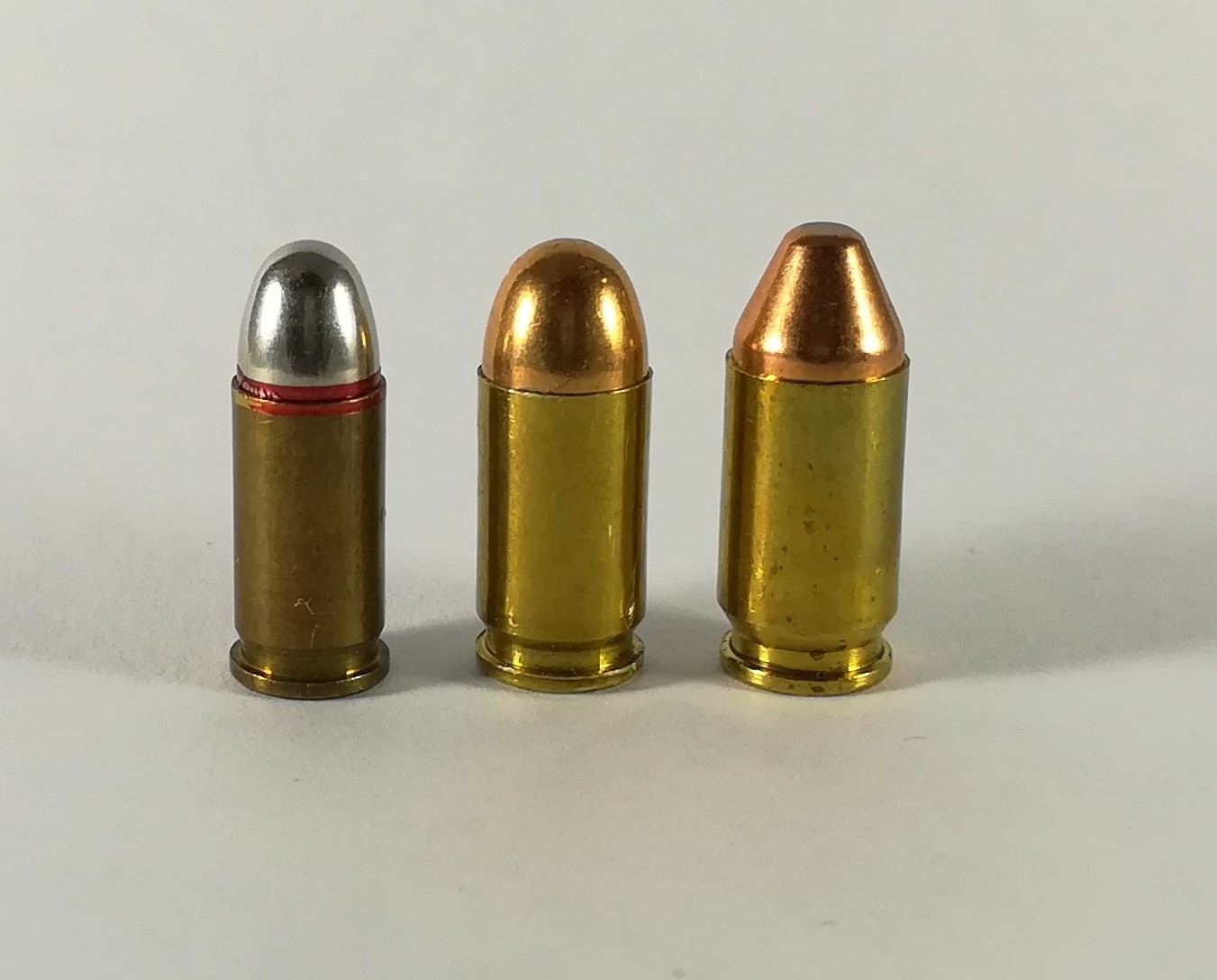
Put .32 ACP and .380 ACP next to cartridges like 9mm and neither looks particularly intimidating. They are small handgun rounds traditionally associated with compact and pocket sized pistols. Yet ask shooters which of the two makes more sense and you can start an argument surprisingly quickly.
At first, the answer seems obvious. The .380 ACP normally fires a heavier, wider bullet and produces substantially more muzzle energy. If those were the only things that mattered, there would not be much left to discuss. But small pistols have a way of making ammunition behave differently from what the numbers on a ballistic chart might suggest. Recoil becomes more noticeable, grip becomes more important, and an extra bit of power can come with a meaningful tradeoff in shootability.
That is where the .32 ACP refuses to disappear.
More than a century after both cartridges were introduced, shooters are still comparing them for essentially the same reason: Do you take the greater ballistic performance of .380 ACP, or give some of that up for the softer shooting characteristics of .32 ACP?
The answer is more interesting than simply choosing the cartridge with the bigger number.
Quick Answer: .32 ACP vs .380 ACP
If you only look at ballistic performance, .380 ACP has the advantage. Typical .380 ammunition uses heavier bullets and produces considerably more muzzle energy than typical .32 ACP ammunition. There is also a broad selection of modern .380 ammunition designed around compact handguns.
But .32 ACP has an advantage that becomes increasingly important as the firearm gets smaller: lower recoil. In lightweight pocket pistols, .380 ACP can feel surprisingly sharp. The softer recoil of .32 ACP can make a small handgun easier to control and more comfortable to shoot.
There is another wrinkle. Neither caliber's performance can be judged solely by the cartridge name. Bullet construction matters tremendously. Some hollow points expand but sacrifice penetration, while some loads penetrate deeply with little expansion. That becomes especially important with cartridges operating with relatively limited energy.
So the simple version is this:
.380 ACP gives you more ballistic performance. .32 ACP gives you less recoil. The ammunition you choose within either caliber matters almost as much as the caliber decision itself.
These Two Cartridges Have Been Arguing for More Than a Century
The .32 ACP is the older of the two. John Moses Browning developed the cartridge near the end of the 19th century, and it appeared commercially in 1899. It became enormously popular in Europe and was chambered in countless compact semiautomatic pistols.
The .380 ACP arrived several years later, in 1908. It was also a Browning design and followed a similar basic idea: create a relatively compact cartridge that worked well in small semiautomatic pistols.
That shared history helps explain why these cartridges continue to be compared. They were never intended to do exactly what larger service pistol cartridges did. Compactness and manageable shooting characteristics were part of their appeal from the beginning.
Over time, however, the American market moved much more heavily toward .380 ACP for small defensive pistols. That did not make .32 ACP obsolete. Instead, it left the older cartridge occupying an interesting niche where shooters who value low recoil and compact firearms continue to defend it.
And once you actually shoot very small pistols chambered in both cartridges, it becomes easier to understand why.
.380 ACP Has the Ballistic Advantage
There is no reason to dance around this part of the comparison. .380 ACP generally produces more muzzle energy than .32 ACP.
The interesting part is why.
It is easy to assume .380 simply launches bullets dramatically faster, but velocity does not tell the whole story. Some loads from the two cartridges can produce surprisingly similar muzzle velocities. The major difference is that .380 ACP is normally moving a substantially heavier projectile.
Ammunition To Go provides a particularly useful example using comparable Speer Gold Dot loads. Its published comparison lists a 60 grain .32 ACP Gold Dot at 960 fps and 123 foot pounds of muzzle energy, while the 90 grain .380 ACP Gold Dot reaches 1,040 fps and 216 foot pounds.
The difference becomes even easier to see with comparable Hornady ammunition. In that comparison, both cartridges are listed at 1,000 fps, yet the 60 grain .32 produces about 133 foot pounds, while the 90 grain .380 produces approximately 200 foot pounds.
Same listed velocity. Much different energy.
That heavier projectile is a fundamental part of the .380's advantage. The cartridge does not need to turn into a miniature magnum to outperform .32 ACP. It can operate at relatively modest handgun velocities while sending considerably more bullet mass downrange.
For shooters comparing the cartridges purely from the standpoint of energy and potential terminal performance, .380 ACP starts with the stronger hand.
But that additional performance does not come free.
The Smaller the Pistol Gets, the More Recoil Matters
Neither .32 ACP nor .380 ACP is generally considered a hard recoiling handgun cartridge. Put them into tiny, lightweight pistols, though, and the experience can change dramatically.
A small firearm has less mass to absorb the recoil impulse. The grip may also give the shooter less surface area to hold onto. Combine those characteristics with a heavier .380 projectile and a pocket pistol can feel much sharper than someone expecting "just a .380" might anticipate.
This is where .32 ACP makes its strongest argument.
The cartridge generally produces noticeably less recoil, and that can make small pistols easier to shoot comfortably. USCCA has highlighted this distinction in its comparison of the cartridges, particularly when discussing very compact handguns.
That does not mean every .32 is pleasant and every .380 is unpleasant. Felt recoil depends heavily on the firearm. Gun weight, grip shape, action type, bore axis and even how well the pistol fits your hand can influence what you feel.
But when comparing similarly sized firearms, the lower powered .32 ACP generally has an inherent recoil advantage.
And that matters beyond comfort.
Less recoil can make it easier to keep the sights under control and recover between shots. For shooters who are particularly recoil sensitive, have limited hand strength, or simply dislike the sharp impulse of very lightweight .380 pistols, that difference can be meaningful.
This is why comparing these cartridges solely by muzzle energy misses half of the argument. More energy is useful, but you still have to shoot the firearm well.
.32 ACP Bullets Are Considerably Lighter
Bullet weight makes the difference between these cartridges easy to visualize.
Conventional .32 ACP ammunition commonly falls somewhere around 60 to 73 grains. There are loads outside that range, but it captures much of the traditional factory ammunition shooters will encounter. The classic 71 grain FMJ is especially closely associated with the cartridge.
Factory offerings include 60 grain hollow points, 65 grain hollow points, 71 grain FMJ loads and projectiles around 73 grains.
The .380 ACP moves into noticeably heavier territory.
Many conventional .380 loads fall between roughly 80 and 102 grains, with 90 and 95 grain ammunition being particularly common. Depending on manufacturer and bullet design, you'll also encounter weights such as 85, 88, 92, 94, 99 and 100 grains.
Those numbers may not look dramatically different until you compare the most typical examples directly.
A 71 grain .32 ACP and a 95 grain .380 ACP can operate at velocities that occupy roughly the same general neighborhood, yet the .380 is carrying approximately one third more projectile mass.
That helps explain why simply comparing velocity figures can be misleading.
It also explains why bullet weight should not be treated as a ranking system. A heavier projectile is not automatically a better projectile. Bullet construction determines what that weight actually does when it reaches the target.
And that's where this comparison gets considerably more complicated.
Penetration Is Where Things Get Interesting
Looking at muzzle energy might lead you to expect .380 ACP to dominate every terminal performance comparison. Actual ballistic testing is messier.
Lucky Gunner's extensive handgun ammunition testing provides a good illustration. Their .32 ACP tests used compact pistols and Clear Ballistics gelatin with a four layer fabric barrier. The results varied significantly depending on ammunition.
One particularly interesting example was 73 grain Fiocchi FMJ fired from a KelTec P32 with a 2.7 inch barrel. It averaged approximately 16.8 inches of penetration in Lucky Gunner's testing.
Some of the .32 ACP hollow points behaved very differently. Loads in the roughly 60 to 65 grain range produced varying combinations of penetration and expansion, with some landing around 9 to 14 inches of penetration.
That exposes one of the challenges with a relatively low energy cartridge.
A hollow point requires energy to expand. Expansion increases the frontal area of the projectile, which can also slow it down more quickly. A bullet that expands impressively but does not penetrate sufficiently presents a different compromise from a bullet that penetrates deeply but barely expands.
Shooting Illustrated has discussed the same issue with .32 ACP, including testing where FMJ ammunition produced substantially deeper penetration than some expanding ammunition.
That does not mean FMJ is universally the right answer for .32 ACP. It means the words printed on the ammunition box do not tell you everything you need to know.
The .380 ACP faces a similar problem, although it begins with more available energy.
Lucky Gunner's .380 testing shows considerable differences from load to load. Some projectiles penetrate deeply but expand very little. Others expand much more aggressively while giving up penetration. Certain loads manage the balance better than others.
That's why saying ".380 hollow points beat .32 hollow points" is much less useful than it sounds.
Which .380 load? Which .32 load? What bullet? What barrel length? How did it perform?
Once you start asking those questions, ammunition selection becomes a major part of the comparison.
More Power Doesn't Automatically Mean Better Ammunition
One of the easiest mistakes when shopping for handgun ammunition is treating muzzle energy like a scoreboard.
If one box says 200 foot pounds and another says 130, the first must be better, right?
Not necessarily.
Muzzle energy tells you something useful about the projectile as it leaves the barrel, but it does not tell you how that bullet will behave afterward. Two bullets carrying similar energy can behave very differently because of their construction.
An FMJ projectile is designed differently from a conventional jacketed hollow point. Different hollow points can use different cavity shapes, jacket designs and bullet profiles. Those differences affect expansion and penetration.
This is particularly important with .32 ACP and .380 ACP because neither cartridge has an enormous amount of energy to work with. There is less margin for a poorly matched bullet design.
The takeaway isn't that one particular bullet type always wins. It is that choosing a well performing load matters more than simply buying ammunition based on caliber and bullet weight.
That is true for most handgun cartridges, but these two make the lesson especially obvious.
FMJ vs Hollow Point Changes the Conversation
For ordinary range shooting, FMJ ammunition is the straightforward choice in either caliber. It is generally intended for practice and provides predictable feeding and inexpensive shooting compared with many premium defensive loads.
When the conversation turns to defensive ammunition, things get more complicated.
Modern hollow points are designed to expand under appropriate conditions, increasing their diameter while ideally retaining enough penetration. The .380 ACP's additional energy gives ammunition designers more to work with, and the cartridge has a substantial selection of modern defensive loads.
But even within .380 ACP, not every hollow point performs the same way, especially from very short barrels.
The .32 ACP presents an even more interesting problem. Because there is less energy available, aggressive expansion can sometimes come at a significant cost in penetration. That is one reason discussions around .32 defensive ammunition often become debates over whether expansion or deeper penetration should receive priority.
There isn't a universal answer that applies to every load.
What the ballistic testing does show is that you should evaluate the actual ammunition rather than assuming the projectile type guarantees a particular result.
A box labeled "hollow point" is not a ballistic test.
So Why Would Anyone Choose .32 ACP?
This is where the caliber's reputation becomes more interesting.
If .380 ACP fires heavier bullets, produces more energy and has become extremely common in compact defensive pistols, why hasn't .32 ACP simply disappeared?
Because the .32's weakness on a ballistic chart is closely connected to its biggest advantage in the shooter's hand.
It is easier to shoot.
For someone who finds a tiny .380 unpleasant, moving to .32 ACP can substantially change the experience. Lower recoil may encourage more practice and make the pistol easier to control.
There can also be capacity and firearm design advantages depending on the particular models being compared, although those are characteristics of individual firearms rather than guarantees of the cartridge itself.
And there is something else worth remembering: not every ammunition decision is about maximizing a single ballistic measurement.
Shooters routinely make tradeoffs. Rifle shooters trade recoil for power. Hunters trade trajectory for bullet mass. Competition shooters balance recoil against reliability and accuracy.
Choosing between .32 and .380 is another version of the same thing.
The .32 shooter is accepting less ballistic performance in exchange for something tangible.
Whether that exchange makes sense depends on the shooter.
Then Why Has .380 ACP Become So Popular?
The .380 occupies a particularly useful middle ground.
It can be chambered in very compact firearms while offering considerably more energy than .32 ACP. Modern ammunition manufacturers have also devoted substantial attention to the cartridge, giving shooters numerous FMJ and defensive ammunition choices.
For many shooters, the recoil remains completely manageable. In that situation, the .380's advantage becomes difficult to ignore.
If two similarly sized pistols are equally comfortable and controllable for you, the .380's heavier projectile and greater energy provide a compelling reason to choose it.
That is probably why so many comparisons end there.
But the key phrase is for you.
Someone who shoots a .380 pocket pistol poorly but handles a .32 comfortably has a different equation than someone who can shoot either one equally well.
A ballistic chart cannot measure that.
.32 ACP vs .380 ACP for Range Shooting
For casual range shooting, the comparison changes again because terminal performance is largely irrelevant.
Now recoil, ammunition cost, availability, firearm choice and simple enjoyment matter more.
The .32 ACP's soft recoil can make it extremely pleasant to shoot, particularly in larger pistols originally designed around the cartridge. Some of the classic European .32 pistols are dramatically easier shooting than the tiny pocket guns people often associate with the caliber today.
The .380 ACP remains relatively mild in a suitably sized handgun as well. Much of its reputation for being "snappy" comes from combining the cartridge with exceptionally small, lightweight firearms.
That distinction matters.
A cartridge doesn't have one fixed recoil experience.
If you're choosing ammunition primarily for range use, there is little reason to obsess over the terminal ballistics we've been discussing. Reliable FMJ ammunition that functions properly in your firearm is generally the practical starting point.
And if you simply enjoy shooting .32 more than .380, that is a perfectly legitimate reason to own one.
What About .380 ACP vs .32 ACP for Self Defense?
This is the section where it is most tempting to declare a winner, and where doing so would oversimplify the decision.
From a cartridge performance standpoint, .380 ACP has the advantage. It generally fires heavier bullets and produces substantially greater muzzle energy. Modern defensive ammunition can also provide useful combinations of expansion and penetration when matched appropriately to the firearm.
The .32 ACP gives up some of that performance in exchange for lower recoil.
How much that matters depends heavily on the person using the firearm.
Someone who can comfortably and accurately shoot a small .380 may see little reason to step down in ballistic performance. Someone who struggles with the recoil of the same size .380 may find a .32 considerably easier to control.
There is also no substitute for verifying that the ammunition you choose functions reliably in your particular firearm. Compact semiautomatic pistols can sometimes be more sensitive to ammunition than larger handguns, and bullet profiles can differ considerably between FMJ and defensive loads.
This is one place where internet arguments often become less useful than actual range time.
The best ammunition on paper is not very useful if your firearm doesn't run it reliably or you cannot shoot it effectively.
Don't Ignore the Gun Around the Cartridge
This might be the most important point in the entire comparison.
People talk about .32 ACP vs .380 ACP as though they're choosing cartridges in isolation. In reality, you're normally choosing a firearm and ammunition combination.
A larger .380 may be easier to shoot than an extremely small .32. A well designed grip can make one pistol more controllable than another despite using the more powerful cartridge. Trigger characteristics, sights, slide operation and overall ergonomics can all affect the experience.
Barrel length matters too.
The velocity printed on an ammunition manufacturer's box or website is generated under particular testing conditions. Put that ammunition through a substantially shorter barrel and the result can change. That is particularly relevant when discussing pocket pistols because very short barrels are common.
This is another reason we shouldn't reduce the decision to:
.380 = more power
.32 = less recoil
Those statements are generally useful, but the actual firearm determines how much either advantage matters.
Which One Would Make More Sense for You?
Instead of asking which cartridge is universally better, ask what problem you're actually trying to solve.
If your priority is extracting more ballistic performance from a very compact handgun, .380 ACP has the stronger argument. Its heavier bullets and greater energy give it an advantage that shows up clearly in the numbers.
If your priority is minimizing recoil while keeping the firearm small, .32 ACP becomes much more interesting. That can be especially relevant for shooters who find lightweight .380 pistols uncomfortable or difficult to control.
If you're choosing between two actual firearms, shoot both if possible.
That one range session can tell you something no ballistic chart can: whether the recoil difference actually matters to you.
Then evaluate ammunition within the caliber rather than assuming every load performs alike.
The Tiny Cartridge Argument Isn't Going Away
The reason .32 ACP vs .380 ACP has survived as an argument for so long is that both sides are arguing about something real.
The .380 crowd is right about the ballistic advantage. It typically fires a heavier projectile and generates considerably more muzzle energy. If you can shoot a compact .380 comfortably and accurately, that additional performance is meaningful.
The .32 crowd is also right about recoil. In small, lightweight pistols, giving up some power can produce a firearm that is noticeably easier and more pleasant to shoot. For some shooters, that difference matters more than another number on a ballistic chart.
And neither side gets to ignore ammunition.
The gel testing makes that especially clear. Bullet construction can dramatically change penetration and expansion within either caliber. Choosing a cartridge is only the first decision. Choosing a good load for the firearm is the second.
So after more than a century, we're not going to declare the argument dead.
We can at least explain why it refuses to die.
.380 ACP gives you more performance. .32 ACP gives you more shootability. Which tradeoff makes more sense depends on the firearm, the ammunition and the person pulling the trigger.
Compare .32 ACP and .380 ACP Ammo Prices
Information provided by AmmoBrowser is for general informational and educational purposes only. Ammunition specifications, ballistics, performance, pricing, and availability can vary by manufacturer, load, firearm, barrel length, and other conditions. While we strive to provide accurate and current information, AmmoBrowser makes no guarantee regarding its completeness or accuracy. Always follow firearm and ammunition manufacturer instructions, verify that ammunition is compatible with your firearm, and follow all applicable laws and safe firearm handling practices.