
'%3e%3cpath%20d='M25.8906%2030.68L16.0006%2025L6.14062%2030.68V4.55C6.14063%203.75435%206.4567%202.99129%207.0193%202.42868C7.58191%201.86607%208.34498%201.55%209.14063%201.55H22.8906C23.6863%201.55%2024.4493%201.86607%2025.0119%202.42868C25.5746%202.99129%2025.8906%203.75435%2025.8906%204.55V30.68ZM9.14063%203.55C8.87541%203.55%208.62105%203.65536%208.43352%203.84289C8.24598%204.03043%208.14063%204.28478%208.14063%204.55V27.23L16.0006%2022.72L23.8806%2027.23V4.55C23.8806%204.28478%2023.7753%204.03043%2023.5877%203.84289C23.4002%203.65536%2023.1458%203.55%2022.8806%203.55H9.14063Z'%20fill='white'/%3e%3cpath%20d='M9.14063%202.55H22.8906C23.4211%202.55%2023.9298%202.76071%2024.3048%203.13579C24.6799%203.51086%2024.8906%204.01957%2024.8906%204.55V8.62H7.14062V4.55C7.14063%204.01957%207.35134%203.51086%207.72641%203.13579C8.10148%202.76071%208.61019%202.55%209.14063%202.55Z'%20fill='%238A3301'/%3e%3cpath%20d='M25.8906%209.62H6.14062V4.55C6.14063%203.75435%206.4567%202.99129%207.0193%202.42868C7.58191%201.86607%208.34498%201.55%209.14063%201.55H22.8906C23.6863%201.55%2024.4493%201.86607%2025.0119%202.42868C25.5746%202.99129%2025.8906%203.75435%2025.8906%204.55V9.62ZM8.14063%207.62H23.8906V4.55C23.8906%204.28478%2023.7853%204.03043%2023.5977%203.84289C23.4102%203.65536%2023.1558%203.55%2022.8906%203.55H9.14063C8.87541%203.55%208.62105%203.65536%208.43352%203.84289C8.24598%204.03043%208.14063%204.28478%208.14063%204.55V7.62Z'%20fill='white'/%3e%3cpath%20d='M16%2020.25C15.7348%2020.25%2015.4804%2020.1446%2015.2929%2019.9571C15.1054%2019.7696%2015%2019.5152%2015%2019.25V14.07C15%2013.8048%2015.1054%2013.5504%2015.2929%2013.3629C15.4804%2013.1754%2015.7348%2013.07%2016%2013.07C16.2652%2013.07%2016.5196%2013.1754%2016.7071%2013.3629C16.8946%2013.5504%2017%2013.8048%2017%2014.07V19.25C17%2019.5152%2016.8946%2019.7696%2016.7071%2019.9571C16.5196%2020.1446%2016.2652%2020.25%2016%2020.25Z'%20fill='white'/%3e%3cpath%20d='M18.5999%2017.66H13.4199C13.1547%2017.66%2012.9004%2017.5546%2012.7128%2017.3671C12.5253%2017.1796%2012.4199%2016.9252%2012.4199%2016.66C12.4199%2016.3948%2012.5253%2016.1404%2012.7128%2015.9529C12.9004%2015.7654%2013.1547%2015.66%2013.4199%2015.66H18.5999C18.8651%2015.66%2019.1195%2015.7654%2019.307%2015.9529C19.4946%2016.1404%2019.5999%2016.3948%2019.5999%2016.66C19.5999%2016.9252%2019.4946%2017.1796%2019.307%2017.3671C19.1195%2017.5546%2018.8651%2017.66%2018.5999%2017.66Z'%20fill='white'/%3e%3c/g%3e%3cdefs%3e%3cclipPath%20id='clip0_29353_35'%3e%3crect%20width='32'%20height='32'%20fill='white'/%3e%3c/clipPath%3e%3c/defs%3e%3c/svg%3e) Wishlist
Wishlist
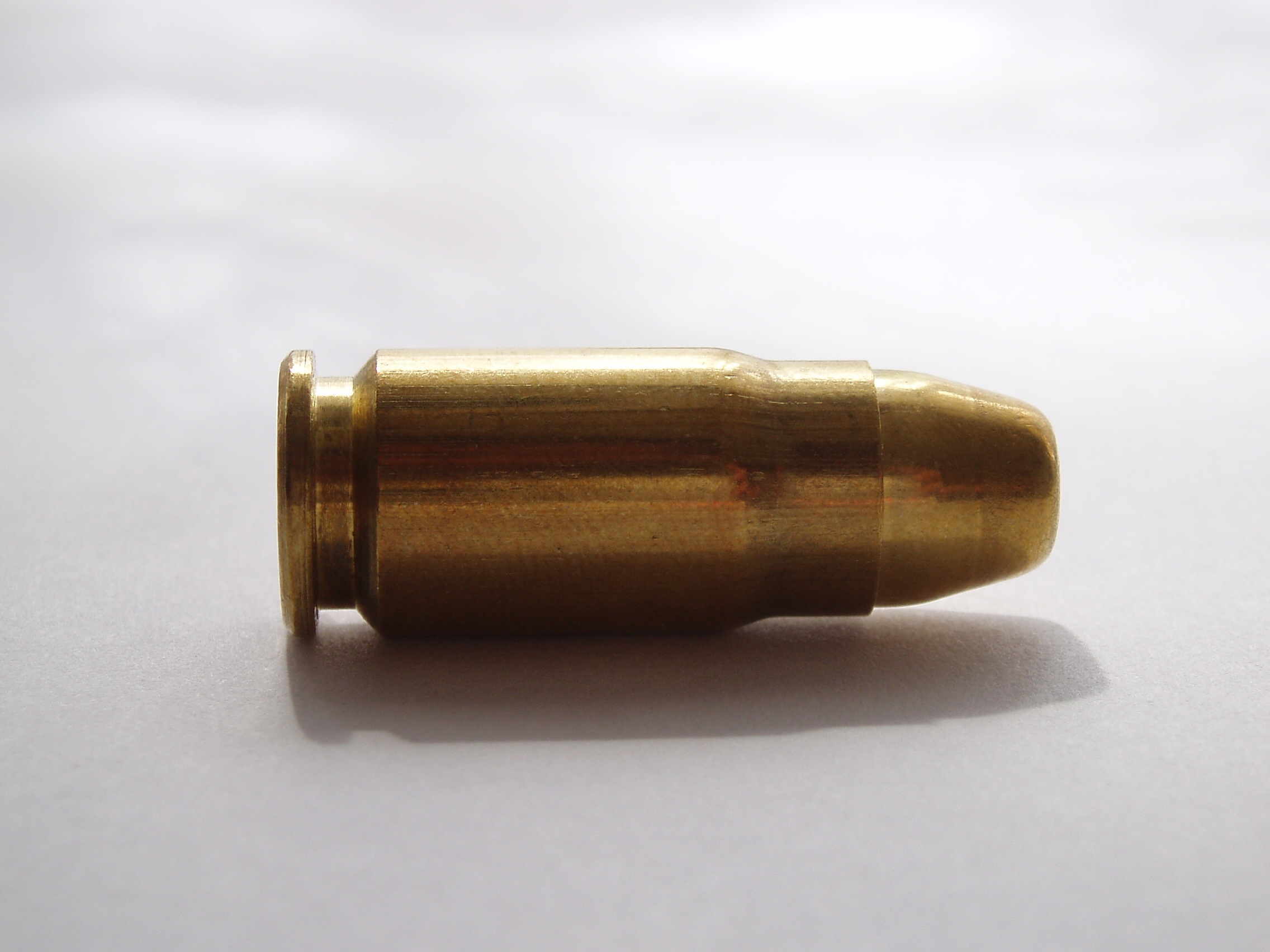
If you saw .357 SIG and .357 Magnum sitting next to each other on an ammunition shelf without knowing anything about them, the names would make the relationship seem obvious. You might assume .357 SIG is simply a modern semiautomatic version of .357 Magnum, or at least that the two cartridges use the same bullets and produce roughly the same performance.
The reality is much more interesting.
The .357 SIG does have a genuine connection to .357 Magnum. When SIG Sauer and Federal developed the cartridge in the 1990s, one of the goals was to produce the kind of velocity associated with the famous 125 grain .357 Magnum load while using a cartridge suitable for a semiautomatic pistol. In that narrow comparison, .357 SIG gets surprisingly close.
But that's where the similarities begin to disappear.
The cartridges use different case designs, slightly different bullet diameters, different firearm platforms, and very different ranges of bullet weights. The .357 Magnum can go far beyond the 125 grain loads that made the comparison possible in the first place, while .357 SIG is much more specialized around relatively light, fast bullets.
So which one actually delivers more performance, and why was .357 SIG created if .357 Magnum already existed?
Quick Answer
Despite the similar names, .357 SIG and .357 Magnum are completely different cartridges and are not interchangeable. Only use ammunition specifically approved for your firearm by its manufacturer.
The .357 SIG is a high velocity semiautomatic pistol cartridge that is particularly impressive with 125 grain bullets. Depending on the ammunition and barrel length being compared, its velocity can approach some 125 grain .357 Magnum loads.
The .357 Magnum is a larger and considerably more versatile cartridge. It can fire 125 grain bullets at impressive velocities too, but it can also move into much heavier bullets that take it well beyond what .357 SIG was designed to do.
There's another surprise hiding behind the names. .357 SIG doesn't actually use a .357 inch bullet. Its projectile is approximately .355 inch in diameter, essentially the same diameter used by 9mm ammunition. The .357 Magnum uses approximately .357 inch bullets.
So while their names and performance overlap in one particularly interesting area, these are fundamentally different cartridges.
Why Is It Called .357 SIG If the Bullet Isn't .357 Inch?
This is probably the strangest part of the comparison.
The .357 Magnum uses a bullet approximately .357 inch in diameter. That makes sense.
The .357 SIG uses a bullet approximately .355 inch in diameter.
That puts its actual projectile diameter much closer to 9mm than .357 Magnum. In fact, visually comparing the cartridges makes the difference even more obvious. The .357 SIG uses a short bottleneck case with the body narrowing down around the smaller bullet. The .357 Magnum uses a much longer, straight wall, rimmed case.
So why give the SIG cartridge a .357 name at all?
Performance is a big part of the answer.
When SIG Sauer and Federal developed the .357 SIG in the early 1990s, the idea wasn't simply to create another 9mm class cartridge. The developers were pursuing the performance associated with one of the most respected handgun loads of the era: the 125 grain .357 Magnum.
The cartridge was introduced commercially in 1994, giving shooters something unusual. Here was a semiautomatic pistol cartridge firing a relatively small bullet at velocities that could get surprisingly close to the Magnum load that inspired it.
That historical connection is why comparing .357 SIG and .357 Magnum actually makes sense despite how different the cartridges look.
The 125 Grain Load Is Where This Comparison Gets Interesting
If you want to understand why .357 SIG exists, start with a 125 grain bullet.
That weight became closely associated with .357 Magnum performance, particularly in defensive ammunition. The challenge was getting similar speed from a cartridge that could function reliably in a conventional semiautomatic pistol.
The .357 SIG was built around that idea.
Typical 125 grain .357 SIG ammunition is often listed around 1,350 fps, although exact velocity depends on the load and barrel length. Full power 125 grain .357 Magnum ammunition can reach roughly 1,400 to 1,450 fps or more, again depending heavily on the ammunition and firearm.
That's close enough to explain why .357 SIG developed the reputation it did.
But it's also where simplistic comparisons can become misleading.
There are .357 Magnum loads that are relatively mild, and there are extremely fast ones. The same is true to a lesser degree with .357 SIG. Barrel length makes another substantial difference, particularly when someone compares a compact semiautomatic pistol with a longer barreled revolver.
Published numbers and chronograph testing therefore don't always produce the same winner.
The useful takeaway isn't that .357 SIG perfectly duplicates .357 Magnum. It doesn't need to.
What's impressive is that a semiautomatic pistol cartridge can operate in the same general performance neighborhood as certain 125 grain .357 Magnum loads.
That's what the SIG was trying to accomplish.
And it largely succeeded.
357 SIG vs 357 Magnum Ballistics
A representative comparison shows just how close the cartridges can be.
A 125 grain .357 SIG load around 1,350 fps produces approximately 506 foot pounds of muzzle energy. A 125 grain .357 Magnum traveling around 1,450 fps produces approximately 584 foot pounds.
Those numbers shouldn't be treated as specifications for every box of ammunition. Different manufacturers, bullets, barrels and test conditions can shift them substantially.
But they illustrate the relationship well.
The .357 Magnum has the advantage in that example, but the .357 SIG is producing serious velocity from a cartridge designed for a semiautomatic pistol.
Trajectory is also relatively flat by conventional handgun standards because of that velocity. That was one of the characteristics that made .357 SIG interesting to law enforcement agencies and shooters who wanted something faster than the common service cartridges of the period.
The comparison changes dramatically, however, when we stop insisting that both cartridges fire the same 125 grain bullet.
That's when .357 Magnum begins showing just how different it really is.
The Magnum Can Go Much Heavier
The 125 grain comparison makes .357 SIG look remarkably competitive.
Put a 158 grain bullet into the discussion and things change.
The .357 Magnum has historically been loaded with a wide variety of bullet weights, including 125, 140, 158, 180 grains and beyond. Lighter and heavier options exist as well. That gives ammunition manufacturers considerable room to tune the cartridge for different purposes.
A 125 grain Magnum can emphasize velocity.
A 158 grain load can trade some of that speed for additional bullet mass.
Heavier 180 grain loads can push the cartridge in a completely different direction, particularly when penetration and retained momentum matter more than maximum velocity.
The .357 SIG doesn't have nearly that kind of range.
Its identity revolves heavily around the 125 grain bullet, although other factory weights such as 135 and 147 grains have been offered. That isn't necessarily a flaw. A specialized cartridge can be extremely good at what it was designed to do.
But it means the statement ".357 SIG is basically .357 Magnum for a semiautomatic" falls apart pretty quickly.
It would be more accurate to say that .357 SIG was designed to capture a particular slice of .357 Magnum performance.
The Magnum itself can do considerably more.
Why the Bottleneck Case?
The .357 SIG is immediately recognizable because of its unusual shape.
Most familiar handgun cartridges such as 9mm, .40 S&W and .45 ACP don't have a dramatic shoulder. The .357 SIG does. Its wider case body narrows near the front to hold the smaller .355 inch projectile.
That bottleneck design allows the cartridge to package considerable powder capacity behind a relatively small diameter bullet while remaining suitable for semiautomatic pistol magazines.
The shape has also developed a reputation for reliable feeding. A smaller diameter projectile and case neck are being guided toward a chamber opening larger than the bullet itself, which can create favorable feeding geometry.
That doesn't mean a .357 SIG pistol is somehow incapable of malfunctioning. Firearms, magazines, ammunition and maintenance all matter. But reliable feeding has long been one of the characteristics enthusiasts associate with the cartridge.
The bottleneck also gives .357 SIG one of the most distinctive profiles in the handgun ammunition world.
Set it beside a .357 Magnum and you would never guess from appearance alone that anyone intended these two cartridges to be compared.
Revolver vs Semiautomatic Changes Everything
The ammunition is only half of this comparison.
The firearm around it matters just as much.
The .357 Magnum is historically associated with revolvers. A traditional Magnum revolver might hold six rounds, although capacity varies depending on the firearm.
The .357 SIG was built for semiautomatic pistols. Depending on the pistol and magazine, that can mean substantially greater ammunition capacity.
That difference affects the entire shooting experience.
A semiautomatic pistol uses the energy generated by firing to cycle the action. Its slide moves, the fired case is extracted and another cartridge is loaded from the magazine.
A revolver operates completely differently. There is no reciprocating slide, and the cartridges sit individually inside the cylinder.
That means comparing felt recoil based only on cartridge energy doesn't tell the whole story.
Firearm weight, grip shape, barrel length, bore height, action design and ammunition all affect what the shooter actually feels.
A lightweight .357 Magnum revolver can be dramatically different to shoot than a large steel revolver using the same ammunition. Likewise, a compact .357 SIG pistol won't necessarily feel the same as a larger service size pistol.
This is why blanket statements such as ".357 SIG has less recoil than .357 Magnum" need context.
It can, particularly when compared with powerful Magnum loads. But the gun gets a vote.
Is 357 SIG Hard to Shoot?
The .357 SIG's speed comes with a price.
It has a reputation for being snappy, especially compared with 9mm. Muzzle blast can also be substantial. Shooters accustomed to softer service pistol cartridges may immediately notice the difference.
That doesn't mean the cartridge is uncontrollable. Plenty of shooters handle it very well, and firearm size makes a substantial difference.
But physics doesn't disappear simply because the cartridge fits inside a semiautomatic pistol.
Driving a 125 grain bullet at approximately 1,350 fps requires considerably more energy than launching a typical 9mm bullet at lower velocity. The shooter ultimately experiences some consequence of that extra performance.
This becomes important when evaluating the cartridge in the real world.
Raw velocity is impressive. Being able to shoot accurately and quickly matters too.
For someone who shoots .357 SIG well, its combination of speed and semiautomatic capacity can be very appealing. Someone who performs considerably better with a softer cartridge may reach a different conclusion.
357 Magnum Recoil Has an Even Wider Range
Talking about ".357 Magnum recoil" as though it's one thing is even more problematic.
The cartridge's enormous ammunition range means its shooting characteristics can change substantially from one load to another.
A relatively mild 125 grain load from a large steel revolver is one experience. A heavy Magnum load fired from a lightweight revolver can be something else entirely.
Move into 158 or 180 grain ammunition and the recoil characteristics change again.
That's one of the recurring themes with .357 Magnum: versatility creates variation.
The cartridge can be configured relatively mildly, or ammunition manufacturers can take advantage of the large case and strong firearms to produce genuinely powerful handgun loads.
The .357 SIG operates inside a much narrower window.
That makes the Magnum harder to summarize, but it's also one of the reasons the cartridge has remained useful for so long.
Does 357 SIG Hit as Hard as 357 Magnum?
Sometimes this question is really asking about muzzle energy.
Other times it's asking about terminal performance.
Those aren't exactly the same thing.
With comparable 125 grain ammunition, the cartridges can produce surprisingly similar velocity and energy figures. Full power .357 Magnum generally has more performance available, but ammunition selection and barrel length can create considerable overlap.
Terminal performance adds another variable: bullet construction.
A hollow point has to do more than leave the muzzle quickly. Its design influences how it expands, how deeply it penetrates and how consistently it performs after encountering clothing or other material.
That means a well designed .357 SIG hollow point could outperform a poorly matched .357 Magnum load in a particular test even if the Magnum has more theoretical power.
The reverse can also happen.
This is why ballistic gel testing is useful but needs context. It evaluates the behavior of a particular load, not every cartridge carrying the same caliber designation.
The name on the case tells you the cartridge.
The bullet tells you a huge part of what that cartridge will actually do.
So Why Didn't 357 SIG Become More Popular?
This may be the most interesting question of all.
The cartridge works.
It delivers impressive velocity. It can approach certain .357 Magnum loads. It operates in practical semiautomatic pistols. It has been adopted by law enforcement agencies and developed a loyal following.
Yet .357 SIG never displaced 9mm.
Part of the explanation is that 9mm kept getting better.
Modern bullet design improved enormously. Ammunition manufacturers became better at producing projectiles that could expand reliably while still providing useful penetration. As 9mm defensive ammunition improved, the practical argument for accepting additional recoil, muzzle blast, ammunition cost and reduced availability to gain .357 SIG velocity became harder for many shooters to justify.
The cartridge also faced a basic market problem.
9mm ammunition is everywhere.
.357 SIG isn't.
That difference matters if you shoot regularly. A cartridge can have excellent ballistics and still become inconvenient if ammunition is harder to find or offers fewer choices.
The .357 SIG gradually moved from an exciting service cartridge toward something more specialized.
That doesn't mean it failed.
It means the market changed around it.
Where 357 SIG Still Makes Sense
The shooters who continue to like .357 SIG generally aren't confused about what they're getting.
They're choosing it because they specifically want the characteristics that make the cartridge unusual.
It is fast. It shoots relatively flat for a conventional handgun cartridge. Its bottleneck design is distinctive. It offers impressive 125 grain performance from a semiautomatic platform, and it has enough history behind it that it's more than a short lived experiment.
For someone who already owns a .357 SIG pistol and shoots it well, there's no requirement that 9mm be a better answer simply because it's more common.
The downside is specialization.
Ammunition selection isn't nearly as broad as 9mm or .357 Magnum. Availability can fluctuate. Practice ammunition may cost more. Recoil and muzzle blast are greater than some shooters want.
Those aren't reasons the cartridge is bad.
They're the tradeoffs that come with what it does.
Where 357 Magnum Pulls Away
The .357 Magnum's biggest advantage isn't necessarily what happens with one 125 grain load.
It's everything else the cartridge can do.
Its broad bullet weight range allows it to move from relatively light, fast ammunition into traditional 158 grain loads and considerably heavier projectiles. That makes it adaptable to recreational shooting, hunting applications and other uses where a heavier projectile may make more sense than maximum velocity.
There's also another enormous advantage built into many .357 Magnum revolvers: they can also fire .38 Special ammunition when the firearm manufacturer approves it.
That dramatically expands the shooter's ammunition choices.
A .357 Magnum revolver can therefore offer powerful Magnum ammunition at one end of the spectrum and much softer .38 Special loads at the other.
The .357 SIG doesn't have an equivalent trick.
Its narrower focus is part of what makes it interesting, but it's also why the Magnum is considerably more versatile.
357 SIG vs 357 Magnum for Range Shooting
For ordinary recreational shooting, there isn't a universal winner.
The .357 SIG offers the familiar operation of a semiautomatic pistol, higher magazine capacity in many platforms and an energetic shooting experience. Someone who owns a .357 SIG pistol will probably want to practice with the ammunition they actually use.
The .357 Magnum offers a completely different experience.
Revolver shooters can choose from an enormous range of .357 Magnum ammunition, and compatible revolvers can often use .38 Special for softer practice. That gives the shooter much more flexibility in how the gun behaves.
Availability is another consideration.
Neither cartridge competes with 9mm for sheer ubiquity, but .357 Magnum has been around since the 1930s and remains supported by a broad ammunition market. .357 SIG is more specialized, so local selection can be much thinner.
For someone buying ammunition online, that difference may be less noticeable, but it's still worth considering before committing heavily to either cartridge.
357 SIG vs 357 Magnum for Defensive Use
Both cartridges have been used for defensive purposes, and both are capable of substantial handgun performance.
The .357 SIG's appeal is easy to understand. It combines high velocity with the capacity and operating characteristics of a semiautomatic pistol.
The .357 Magnum offers tremendous ammunition flexibility and a long history in defensive revolvers.
But cartridge specifications alone shouldn't decide this question.
The specific firearm matters. So does the ammunition. So does the shooter's ability to control the firearm and make accurate follow up shots.
A powerful load that someone struggles to shoot accurately isn't automatically more useful than a somewhat softer load they can control confidently.
Modern defensive ammunition also makes bullet construction extremely important. Comparing caliber names without comparing the actual loads can hide more than it reveals.
The Biggest Pros and Cons of 357 SIG
The .357 SIG's greatest strength is straightforward: it produces a lot of velocity from a semiautomatic handgun cartridge. Its 125 grain performance can approach the territory that inspired it, it offers relatively flat handgun trajectories, and it works in pistols capable of carrying considerably more ammunition than a traditional revolver.
Its disadvantages are just as real.
The cartridge produces noticeable recoil and muzzle blast. Factory ammunition selection is narrower than 9mm or .357 Magnum. Ammunition can be harder to find, and the cartridge doesn't offer anything close to the Magnum's enormous bullet weight range.
That makes .357 SIG a fascinating example of a cartridge being extremely good at a fairly specific job.
It wasn't designed to do everything.
The Biggest Pros and Cons of 357 Magnum
The .357 Magnum's defining strength is range.
Not shooting distance alone, but range of capability.
A shooter can choose light, fast ammunition, traditional 158 grain loads or much heavier bullets. Many .357 Magnum revolvers also accept .38 Special, making the platform even more flexible.
Full power Magnum ammunition can produce substantially more recoil and blast, particularly from smaller revolvers. Capacity is generally lower than a .357 SIG semiautomatic, and revolvers offer a very different manual of operation.
But if the question is simply which cartridge offers the broader performance envelope, the Magnum's much wider ammunition selection makes the distinction clear.
Same Number, Very Different Cartridges
The names make .357 SIG and .357 Magnum sound much more alike than they really are.
The .357 SIG doesn't even fire the same diameter bullet. It uses a bottleneck case designed for semiautomatic pistols, while the .357 Magnum uses a long rimmed case associated primarily with revolvers.
Yet the connection between them is real.
The .357 SIG was developed around the idea of delivering the kind of performance shooters associated with the famous 125 grain .357 Magnum load. When you compare those particular loads, the SIG gets surprisingly close.
That's the impressive part.
The mistake is assuming that means the cartridges are interchangeable in purpose.
Move beyond 125 grains and .357 Magnum reveals a much broader personality. It can use heavier bullets, cover a wider range of applications and, in compatible revolvers, add .38 Special to the mix.
The .357 SIG takes a different approach. It concentrates much of its appeal into a fast 125 grain projectile, then packages that performance inside a practical semiautomatic pistol.
They share a number.
They share an interesting piece of ballistic history.
But they're two very different answers to two very different handgun designs.
Information provided by AmmoBrowser is for general informational and educational purposes only. Ammunition specifications, ballistics, performance, pricing, and availability can vary by manufacturer, load, firearm, barrel length, and other conditions. While we strive to provide accurate and current information, AmmoBrowser makes no guarantee regarding its completeness or accuracy. Always follow firearm and ammunition manufacturer instructions, verify that ammunition is compatible with your firearm, and follow all applicable laws and safe firearm handling practices.