
'%3e%3cpath%20d='M25.8906%2030.68L16.0006%2025L6.14062%2030.68V4.55C6.14063%203.75435%206.4567%202.99129%207.0193%202.42868C7.58191%201.86607%208.34498%201.55%209.14063%201.55H22.8906C23.6863%201.55%2024.4493%201.86607%2025.0119%202.42868C25.5746%202.99129%2025.8906%203.75435%2025.8906%204.55V30.68ZM9.14063%203.55C8.87541%203.55%208.62105%203.65536%208.43352%203.84289C8.24598%204.03043%208.14063%204.28478%208.14063%204.55V27.23L16.0006%2022.72L23.8806%2027.23V4.55C23.8806%204.28478%2023.7753%204.03043%2023.5877%203.84289C23.4002%203.65536%2023.1458%203.55%2022.8806%203.55H9.14063Z'%20fill='white'/%3e%3cpath%20d='M9.14063%202.55H22.8906C23.4211%202.55%2023.9298%202.76071%2024.3048%203.13579C24.6799%203.51086%2024.8906%204.01957%2024.8906%204.55V8.62H7.14062V4.55C7.14063%204.01957%207.35134%203.51086%207.72641%203.13579C8.10148%202.76071%208.61019%202.55%209.14063%202.55Z'%20fill='%238A3301'/%3e%3cpath%20d='M25.8906%209.62H6.14062V4.55C6.14063%203.75435%206.4567%202.99129%207.0193%202.42868C7.58191%201.86607%208.34498%201.55%209.14063%201.55H22.8906C23.6863%201.55%2024.4493%201.86607%2025.0119%202.42868C25.5746%202.99129%2025.8906%203.75435%2025.8906%204.55V9.62ZM8.14063%207.62H23.8906V4.55C23.8906%204.28478%2023.7853%204.03043%2023.5977%203.84289C23.4102%203.65536%2023.1558%203.55%2022.8906%203.55H9.14063C8.87541%203.55%208.62105%203.65536%208.43352%203.84289C8.24598%204.03043%208.14063%204.28478%208.14063%204.55V7.62Z'%20fill='white'/%3e%3cpath%20d='M16%2020.25C15.7348%2020.25%2015.4804%2020.1446%2015.2929%2019.9571C15.1054%2019.7696%2015%2019.5152%2015%2019.25V14.07C15%2013.8048%2015.1054%2013.5504%2015.2929%2013.3629C15.4804%2013.1754%2015.7348%2013.07%2016%2013.07C16.2652%2013.07%2016.5196%2013.1754%2016.7071%2013.3629C16.8946%2013.5504%2017%2013.8048%2017%2014.07V19.25C17%2019.5152%2016.8946%2019.7696%2016.7071%2019.9571C16.5196%2020.1446%2016.2652%2020.25%2016%2020.25Z'%20fill='white'/%3e%3cpath%20d='M18.5999%2017.66H13.4199C13.1547%2017.66%2012.9004%2017.5546%2012.7128%2017.3671C12.5253%2017.1796%2012.4199%2016.9252%2012.4199%2016.66C12.4199%2016.3948%2012.5253%2016.1404%2012.7128%2015.9529C12.9004%2015.7654%2013.1547%2015.66%2013.4199%2015.66H18.5999C18.8651%2015.66%2019.1195%2015.7654%2019.307%2015.9529C19.4946%2016.1404%2019.5999%2016.3948%2019.5999%2016.66C19.5999%2016.9252%2019.4946%2017.1796%2019.307%2017.3671C19.1195%2017.5546%2018.8651%2017.66%2018.5999%2017.66Z'%20fill='white'/%3e%3c/g%3e%3cdefs%3e%3cclipPath%20id='clip0_29353_35'%3e%3crect%20width='32'%20height='32'%20fill='white'/%3e%3c/clipPath%3e%3c/defs%3e%3c/svg%3e) Wishlist
Wishlist
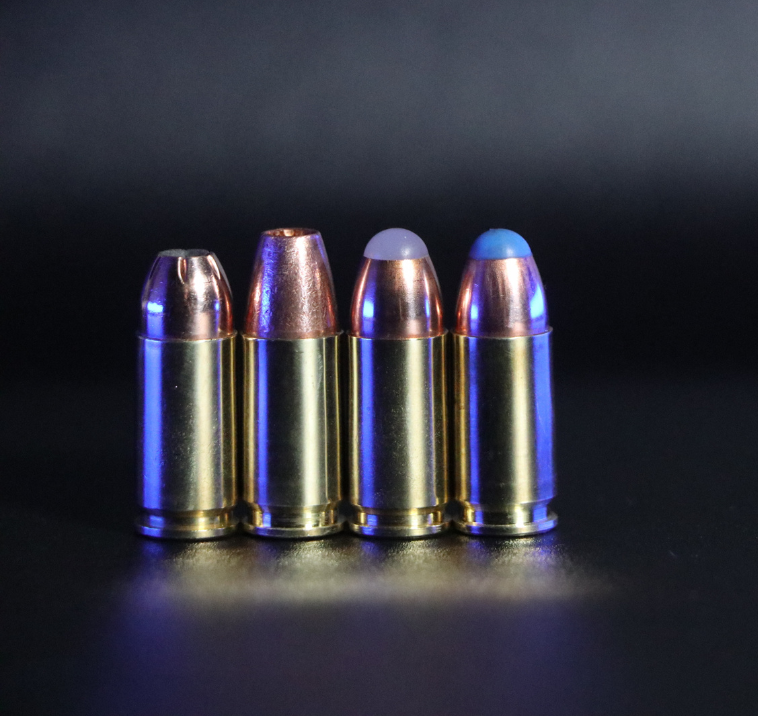
On paper, this comparison looks like it should have been settled decades ago.
The 9mm generally pushes similar weight bullets substantially faster than .38 Special. It produces more muzzle energy, works in semiautomatic pistols that typically hold more ammunition, and has become one of the most widely used handgun cartridges in the world. Even the American law enforcement market that was once dominated by .38 Special revolvers has overwhelmingly moved toward semiautomatic pistols, with 9mm becoming particularly prominent.
Yet walk into a gun store today and .38 Special is still there.
There are still new .38 Special revolvers being made. Ammunition companies still offer everything from mild target loads to modern defensive ammunition. Shooters still carry small .38 revolvers, shoot larger ones at the range, and buy .357 Magnum revolvers knowing they can also use .38 Special ammunition when the firearm is designed for it.
So what gives?
The answer is that 9mm versus .38 Special isn't really just a cartridge comparison. It's a comparison between two very different approaches to the handgun.
And once the guns themselves enter the discussion, the old .38 starts making a lot more sense.
Quick Answer: .38 Special vs 9mm
If you're comparing raw ballistic performance, 9mm generally has the advantage. It launches similar weight bullets faster and produces substantially more muzzle energy. Modern 9mm ammunition also offers an enormous selection of defensive and range loads.
.38 Special takes a different approach. It generally operates at lower velocity and produces less energy, but it can also produce less recoil when the cartridges are fired from comparable guns. It remains closely tied to the revolver, particularly compact defensive revolvers and larger recreational or target guns.
The bullets themselves aren't dramatically different in diameter. A typical 9mm projectile measures about .355 inch while .38 Special commonly uses a .357 inch projectile.
Even their bullet weights overlap.
Common 9mm ammunition centers heavily around 115, 124 and 147 grains, while .38 Special commonly appears in weights such as 110, 125, 130, 148 and 158 grains.
That means you can put a 124 grain 9mm next to a 125 grain .38 Special and have bullets that are almost the same diameter and almost exactly the same weight.
What happens when you fire them is a different story.
The Bullets Are Almost the Same Size. The Performance Isn't.
This may be the most surprising part of the entire comparison.
People sometimes imagine that 9mm must use a substantially different projectile to produce its ballistic advantage. It doesn't.
Take two representative loads around 125 grains.
Ballistics101 lists a Federal 124 grain 9mm FMJ at 1,150 fps and 364 foot pounds of muzzle energy. A Federal 125 grain .38 Special load on the same resource is listed at 830 fps and 191 foot pounds.
That's only a one grain difference in projectile weight, yet the 9mm example is traveling about 320 fps faster and producing nearly twice the muzzle energy.
Another close comparison shows the same pattern. A Fiocchi 124 grain 9mm is listed at 1,200 fps and 396 foot pounds, while a Fiocchi 125 grain .38 Special is listed at 970 fps and 261 foot pounds.
The exact numbers change with the ammunition and firearm, so those shouldn't be treated as universal velocities for either cartridge. But the broader pattern is difficult to miss.
9mm generally gets considerably more velocity out of a similarly sized projectile.
That extra velocity is a major reason 9mm can produce more energy despite firing bullets that often weigh about the same as .38 Special bullets.
It also demonstrates why caliber names tell you surprisingly little about performance.
A bigger number printed on the ammunition box doesn't automatically mean a more powerful cartridge.
Why Is 9mm So Much Faster?
Part of the answer is hiding in the cartridges' histories.
.38 Special was designed in 1898 and introduced around the turn of the century. Early ammunition used black powder, and the cartridge became associated with Smith & Wesson's Military & Police revolver. Police departments, military users and target shooters quickly adopted it.
9mm comes from almost the same era, but it was designed around a very different concept. Georg Luger developed the cartridge for semiautomatic pistols, and unlike the long, rimmed .38 Special case, 9mm is a compact rimless cartridge designed around smokeless powder and higher operating pressures.
Those differences still matter today.
The .38 Special's case looks enormous next to the stubby 9mm, but case length alone doesn't determine performance. The 9mm operates in a completely different pressure environment, allowing it to generate considerably more velocity from a surprisingly compact cartridge.
That is one of the reasons this comparison can seem backwards at first.
The longer cartridge isn't the faster one.
Recoil Is Where the Gun Changes the Answer
If 9mm is producing more velocity and energy, you'd expect it to recoil more.
Put the two cartridges into very similar guns and that expectation generally makes sense.
Shooting Illustrated performed an unusually useful comparison using two Taurus snub nose revolvers with essentially identical size and weight, one chambered in .38 Special and the other in 9mm. In that closely matched comparison, the author found the .38 Special more pleasant to shoot and described it as producing less felt recoil.
But that's not how most people encounter these cartridges.
The typical .38 Special defensive handgun is a revolver.
The typical 9mm defensive handgun is a semiautomatic.
Now we've changed the weight of the gun, grip shape, action, recoil characteristics and potentially the barrel length. A lightweight .38 Special snub nose can feel surprisingly sharp, while a larger 9mm semiautomatic can be comfortable to shoot despite the cartridge producing more energy.
That's why saying “.38 Special has less recoil than 9mm” without talking about the firearm is incomplete.
The cartridge matters.
The gun matters too.
This becomes especially important for anyone choosing a small handgun because the smallest gun isn't necessarily the easiest one to shoot. Removing firearm weight gives recoil less mass to work against, and small grips can make that recoil harder to manage.
So if recoil is an important part of your decision, don't compare cartridges in isolation. Compare the actual firearms and ammunition you're considering.
Their Bullet Weights Overlap More Than You'd Think
The conventional 9mm lineup is wonderfully simple.
Walk through enough ammunition listings and you'll repeatedly encounter three numbers:
115 grain, 124 grain and 147 grain.
There are plenty of exceptions, but those three weights cover a huge portion of conventional 9mm range and defensive ammunition.
.38 Special spreads things out more.
Common factory choices include 110, 125, 130, 148 and 158 grain bullets, with additional weights available.
The 148 grain wadcutter is particularly interesting because of its connection to target shooting. Wadcutters have a flat front profile that punches clean holes through paper targets, and mild .38 Special wadcutter loads became deeply associated with precision revolver shooting.
The 158 grain projectile is another classic .38 Special weight, while lighter bullets such as 110 and 125 grains appear in other types of ammunition.
That gives .38 Special a broader traditional spread, while 9mm factory ammunition tends to concentrate around its familiar three weights.
But there's enough overlap to reinforce the central point of this comparison.
The bullets aren't what make these cartridges dramatically different.
A 124 grain 9mm and 125 grain .38 Special are almost identical in weight. Their performance differs because of what the cartridges do with those bullets.
Ballistic Gel Makes the Comparison More Interesting
Muzzle energy is easy to compare because it's a number.
Terminal performance isn't nearly that simple.
Lucky Gunner's extensive ballistic testing provides a good example. Its .38 Special testing covered 18 defensive loads using synthetic ballistic gelatin and a four layer fabric barrier. Most of the tested .38 Special loads produced penetration within the commonly referenced 12 to 18 inch range, although many were toward the lower end. Expansion was much less consistent. Twelve of the 18 loads had at least one projectile clog with fabric and completely fail to expand, while five failed to expand in all ten shots.
But some .38 Special loads performed very differently.
For example, Lucky Gunner's Federal 130 grain HST Micro results from its 4 inch test barrel averaged about 14.1 inches of penetration with .708 inch expansion. Winchester's 130 grain Ranger Bonded +P averaged roughly 15.1 inches with .582 inch expansion from the same barrel length.
That's important because it prevents us from making the opposite mistake and dismissing .38 Special simply because its muzzle energy is lower.
Load selection matters enormously.
9mm's additional velocity does, however, give ammunition designers more energy to work with. Modern 9mm defensive ammunition includes numerous loads designed to balance expansion and penetration, and the cartridge's enormous popularity means manufacturers have invested heavily in developing ammunition for it.
That doesn't mean every 9mm hollow point will outperform every .38 Special hollow point.
It means caliber alone doesn't tell you what a particular bullet will do.
And ballistic gelatin isn't a human body. It is useful because it provides a standardized medium for comparing ammunition under controlled conditions. It shouldn't be interpreted as a prediction of exactly what will happen in a real world defensive incident.
The Bigger Difference Is the Gun
Here's where this article stops being a normal caliber comparison.
Suppose you choose .38 Special.
You're probably choosing a revolver.
Suppose you choose 9mm.
You're probably choosing a semiautomatic pistol.
There are exceptions on both sides, including 9mm revolvers, but those two platforms represent how the cartridges are most commonly encountered.
That distinction changes nearly everything.
A compact .38 Special revolver may hold five or six cartridges. Modern 9mm semiautomatic pistols frequently offer greater ammunition capacity, although actual capacity varies enormously depending on the firearm.
Reloading is different too. A semiautomatic pistol generally uses detachable magazines, while revolver shooters may reload individually or use devices such as speedloaders or moon clips where appropriate.
The controls are different.
The trigger systems can be different.
The way malfunctions are handled is different.
Even the shape of the gun against the body can be different.
So someone shopping for a defensive handgun isn't really standing in front of two ammunition boxes deciding whether 9mm or .38 Special has the better velocity.
They're often deciding whether they want a revolver or a semiautomatic pistol.
That's a much bigger decision.
So Why Did 9mm Become So Popular?
Because 9mm doesn't need to dominate every individual category.
It combines a lot of desirable characteristics in one cartridge.
It provides substantial ballistic performance from a compact cartridge. Recoil remains manageable for many shooters in appropriately sized firearms. The small cartridge dimensions work well with higher capacity semiautomatic pistol designs. There is a huge selection of firearms chambered for it and an enormous variety of ammunition.
That combination is difficult to beat.
The result is a cartridge that works in everything from very small concealed carry pistols to full size duty handguns and pistol caliber carbines.
9mm has also benefited enormously from advances in modern projectile design. Hollow point bullets have become increasingly sophisticated, allowing manufacturers to tune ammunition around expansion, penetration and particular firearm applications.
And popularity feeds on itself.
When huge numbers of people own 9mm firearms, manufacturers have a strong incentive to develop more 9mm guns and ammunition. More products make the cartridge attractive to more shooters, which creates even more demand.
That's how a cartridge becomes an ecosystem rather than simply another caliber.
Then Why Won't .38 Special Die?
This is the question that makes the comparison interesting.
Because if ballistic performance and semiautomatic capacity were the only things that mattered, .38 Special should have faded away when police departments and civilian shooters moved toward modern semiautomatics.
It didn't.
One reason is simply that revolvers didn't disappear.
There are enormous numbers of .38 Special and .357 Magnum revolvers already in circulation, and manufacturers continue producing new ones. Many shooters appreciate the revolver's characteristics enough that they aren't trying to replace it with a semiautomatic.
The cartridge itself also remains pleasant and versatile in the right gun.
A larger .38 Special revolver firing mild ammunition can be exceptionally comfortable for recreational shooting. The cartridge has a long target shooting tradition and can be remarkably accurate.
Compact revolvers give .38 Special another identity entirely. Small snub nose revolvers remain popular because they're compact and mechanically different from semiautomatic pistols.
Whether those characteristics are advantages depends on the shooter and intended use, but the platform continues to have an audience.
Then there's .357 Magnum.
Many revolvers chambered for .357 Magnum are designed to also accept .38 Special ammunition. That gives .38 Special access to another enormous population of firearms and lets owners of compatible .357 revolvers use softer shooting .38 Special ammunition when they want it.
Always confirm ammunition compatibility with the firearm manufacturer rather than assuming it based on caliber family.
So .38 Special survives because it still does useful things in guns people still want to own.
It doesn't need to beat 9mm at being 9mm.
Range Shooting Changes the Equation Again
If your primary goal is punching holes in paper, the ballistic advantage of 9mm may become much less important.
A mild .38 Special load in a substantial revolver can be extremely enjoyable to shoot. The cartridge's target shooting heritage is part of the reason 148 grain wadcutters remain so recognizable.
9mm has a different advantage: sheer ubiquity.
Because of its enormous popularity, there is a vast selection of 9mm range ammunition from many manufacturers. That makes it particularly practical for shooters who go through large quantities of ammunition.
Availability can fluctuate, and ammunition prices constantly change, so there's little value in putting specific prices into an evergreen article. But 9mm's scale is a genuine practical advantage.
Shooting Illustrated made the same general observation in its matched revolver comparison, noting that 9mm was easier to source and less expensive at the time of its test.
For someone shooting thousands of rounds, ammunition availability matters.
For someone who simply loves shooting a .38 revolver, it may not change the decision at all.
What About Personal Protection?
This is where people most often want a simple answer, and it's also where simplistic answers are least useful.
9mm generally gives you greater ballistic performance and is usually paired with a semiautomatic pistol offering greater ammunition capacity than a compact .38 Special revolver.
.38 Special generally produces less ballistic energy but remains available in very compact revolvers, and modern defensive ammunition gives shooters significantly more choices than the cartridge had generations ago.
The ammunition matters.
The firearm matters.
And the person operating both matters.
A cartridge that produces impressive gel results isn't useful if a shooter cannot control the firearm accurately. Conversely, choosing a very mild cartridge doesn't automatically make a tiny lightweight handgun easy to shoot.
This is why actual practice with the firearm matters more than arguing over a few feet per second.
It's also why the ballistic gel results shouldn't be reduced to ".38 bad, 9mm good." Lucky Gunner's testing showed that some .38 Special loads expanded impressively while others struggled, especially when fabric interfered with expansion.
Specific ammunition performance can vary substantially even within the same caliber.
What About .38 Special +P?
There's another complication hiding on ammunition shelves: .38 Special +P.
The +P designation identifies .38 Special ammunition loaded to a higher pressure specification than standard .38 Special. That can provide additional velocity, but it also changes recoil and firearm compatibility considerations.
Not every .38 Special firearm should be assumed to be rated for +P ammunition, particularly when dealing with older firearms.
So don't treat +P as an automatic upgrade.
Check the firearm manufacturer's documentation and use ammunition specifically approved for that firearm.
And even with +P ammunition, .38 Special doesn't suddenly become 9mm. You're still comparing cartridges with different designs, operating characteristics and typical platforms.
Two Cartridges From Another Era That Refused to Leave
There's something remarkable about the fact that we're still having this argument.
.38 Special was designed in 1898. Smith & Wesson's Military & Police revolver helped turn it into one of the defining American handgun cartridges, and police departments and target shooters adopted it extensively.
9mm emerged only a few years later from a completely different branch of handgun development.
One became synonymous with the revolver.
The other became synonymous with the modern semiautomatic pistol.
For decades, .38 Special had the stronger American law enforcement identity. Eventually semiautomatic pistols took over that role, and 9mm became enormously prominent. American Rifleman notes that relatively few police departments use .38 Special today compared with the cartridge's former dominance.
Yet .38 Special didn't vanish when its service career faded.
Instead, it settled into something arguably more durable: a cartridge with a huge installed base, a devoted revolver following, a target shooting tradition, and enough modern ammunition development to remain relevant.
.38 Special vs 9mm Isn't Really About Finding a Winner
If all we cared about were muzzle velocity and energy, this would be a very short article.
9mm generally produces more of both.
If we put the cartridges into closely comparable firearms, .38 Special can offer noticeably softer recoil. Shooting Illustrated's same size snub revolver comparison demonstrated exactly that tradeoff: 9mm delivered greater ballistic efficiency while .38 Special was more comfortable for the author to shoot.
Then the real world complicates everything.
Most people aren't choosing between identical revolvers chambered in different cartridges. They're choosing between entirely different handguns.
That's where .38 Special finds its reason to exist.
It isn't trying to beat 9mm at velocity, energy or semiautomatic capacity. It belongs to a different handgun tradition that millions of shooters still find useful.
And that's probably the best explanation for why the cartridge refuses to disappear.
9mm became popular because it does an extraordinary number of things well.
.38 Special stayed popular because the things it does well still matter to people who want a revolver.
More than a century after both cartridges appeared, apparently there's still room for both.
Information provided by AmmoBrowser is for general informational and educational purposes only. Ammunition specifications, ballistics, performance, pricing, and availability can vary by manufacturer, load, firearm, barrel length, and other conditions. While we strive to provide accurate and current information, AmmoBrowser makes no guarantee regarding its completeness or accuracy. Always follow firearm and ammunition manufacturer instructions, verify that ammunition is compatible with your firearm, and follow all applicable laws and safe firearm handling practices.