
'%3e%3cpath%20d='M25.8906%2030.68L16.0006%2025L6.14062%2030.68V4.55C6.14063%203.75435%206.4567%202.99129%207.0193%202.42868C7.58191%201.86607%208.34498%201.55%209.14063%201.55H22.8906C23.6863%201.55%2024.4493%201.86607%2025.0119%202.42868C25.5746%202.99129%2025.8906%203.75435%2025.8906%204.55V30.68ZM9.14063%203.55C8.87541%203.55%208.62105%203.65536%208.43352%203.84289C8.24598%204.03043%208.14063%204.28478%208.14063%204.55V27.23L16.0006%2022.72L23.8806%2027.23V4.55C23.8806%204.28478%2023.7753%204.03043%2023.5877%203.84289C23.4002%203.65536%2023.1458%203.55%2022.8806%203.55H9.14063Z'%20fill='white'/%3e%3cpath%20d='M9.14063%202.55H22.8906C23.4211%202.55%2023.9298%202.76071%2024.3048%203.13579C24.6799%203.51086%2024.8906%204.01957%2024.8906%204.55V8.62H7.14062V4.55C7.14063%204.01957%207.35134%203.51086%207.72641%203.13579C8.10148%202.76071%208.61019%202.55%209.14063%202.55Z'%20fill='%238A3301'/%3e%3cpath%20d='M25.8906%209.62H6.14062V4.55C6.14063%203.75435%206.4567%202.99129%207.0193%202.42868C7.58191%201.86607%208.34498%201.55%209.14063%201.55H22.8906C23.6863%201.55%2024.4493%201.86607%2025.0119%202.42868C25.5746%202.99129%2025.8906%203.75435%2025.8906%204.55V9.62ZM8.14063%207.62H23.8906V4.55C23.8906%204.28478%2023.7853%204.03043%2023.5977%203.84289C23.4102%203.65536%2023.1558%203.55%2022.8906%203.55H9.14063C8.87541%203.55%208.62105%203.65536%208.43352%203.84289C8.24598%204.03043%208.14063%204.28478%208.14063%204.55V7.62Z'%20fill='white'/%3e%3cpath%20d='M16%2020.25C15.7348%2020.25%2015.4804%2020.1446%2015.2929%2019.9571C15.1054%2019.7696%2015%2019.5152%2015%2019.25V14.07C15%2013.8048%2015.1054%2013.5504%2015.2929%2013.3629C15.4804%2013.1754%2015.7348%2013.07%2016%2013.07C16.2652%2013.07%2016.5196%2013.1754%2016.7071%2013.3629C16.8946%2013.5504%2017%2013.8048%2017%2014.07V19.25C17%2019.5152%2016.8946%2019.7696%2016.7071%2019.9571C16.5196%2020.1446%2016.2652%2020.25%2016%2020.25Z'%20fill='white'/%3e%3cpath%20d='M18.5999%2017.66H13.4199C13.1547%2017.66%2012.9004%2017.5546%2012.7128%2017.3671C12.5253%2017.1796%2012.4199%2016.9252%2012.4199%2016.66C12.4199%2016.3948%2012.5253%2016.1404%2012.7128%2015.9529C12.9004%2015.7654%2013.1547%2015.66%2013.4199%2015.66H18.5999C18.8651%2015.66%2019.1195%2015.7654%2019.307%2015.9529C19.4946%2016.1404%2019.5999%2016.3948%2019.5999%2016.66C19.5999%2016.9252%2019.4946%2017.1796%2019.307%2017.3671C19.1195%2017.5546%2018.8651%2017.66%2018.5999%2017.66Z'%20fill='white'/%3e%3c/g%3e%3cdefs%3e%3cclipPath%20id='clip0_29353_35'%3e%3crect%20width='32'%20height='32'%20fill='white'/%3e%3c/clipPath%3e%3c/defs%3e%3c/svg%3e) Wishlist
Wishlist
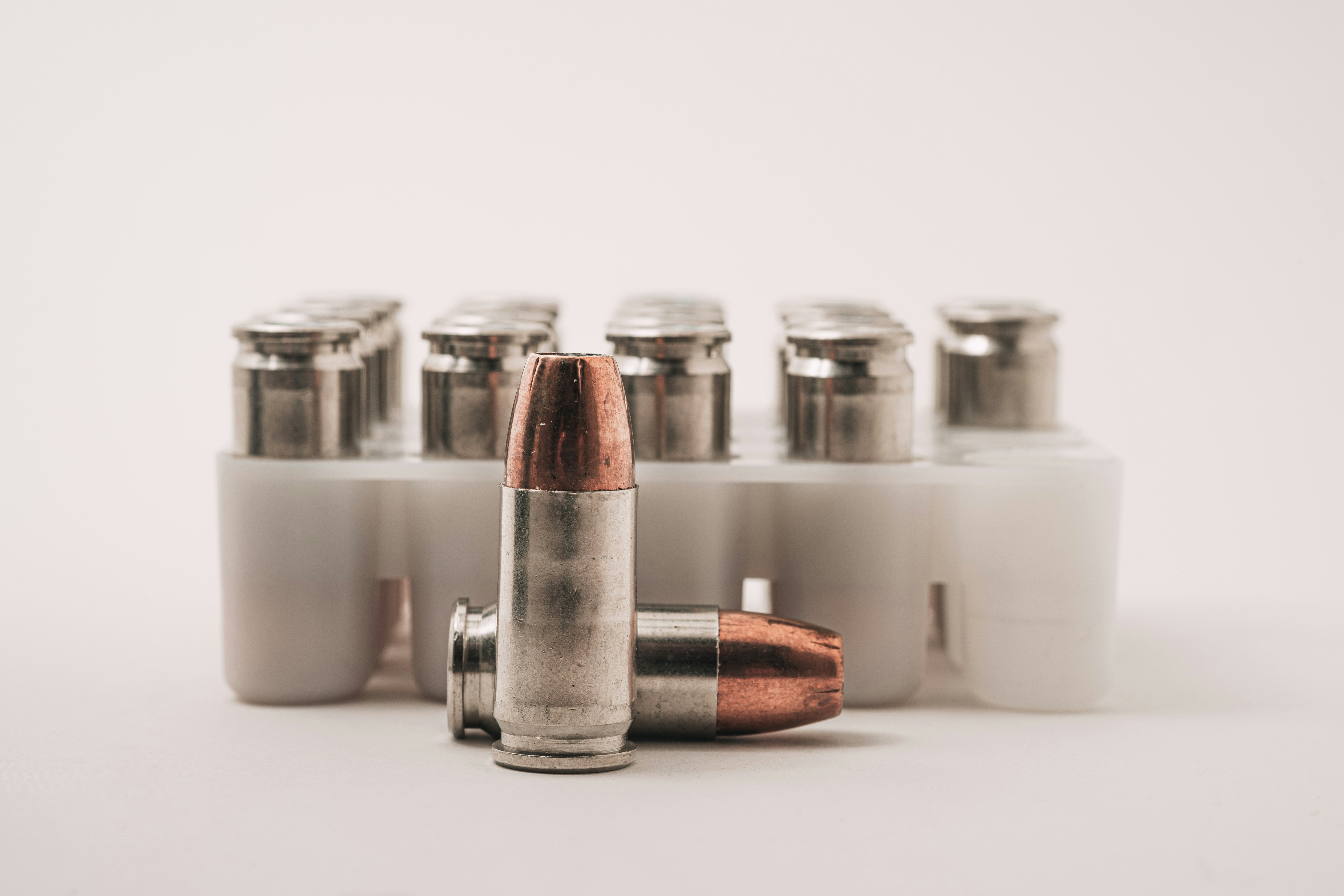
At first glance, comparing .380 ACP with 9mm seems almost unnecessary. The 9mm is more powerful, enormously popular, available in countless loads, and chambered in everything from tiny carry pistols to full-size handguns. If those were the only things that mattered, the conversation would end there.
But it doesn't.
The .380 ACP has remained popular for more than a century, and people continue deliberately choosing pistols chambered for it even though 9mm is readily available. The reason becomes clearer once you stop treating handgun cartridges as numbers on a ballistics chart and start looking at the firearm someone actually has to shoot. Recoil, pistol size, grip strength, comfort, control, ammunition availability, and how well someone can operate a particular handgun can matter every bit as much as muzzle energy.
That makes .380 vs. 9mm a more interesting comparison than it initially appears. The 9mm has a clear performance advantage, but that doesn't automatically make .380 ACP pointless. Each cartridge makes different compromises, and understanding those compromises is much more useful than simply declaring one the winner.
Key Takeaways
- 9mm generally offers greater velocity and energy and remains the stronger all around choice for most shooters.
- .380 ACP can offer less recoil, although the extremely small pistols commonly chambered for it can sometimes feel surprisingly snappy.
- Pistol size matters almost as much as cartridge choice. A larger .380 can be exceptionally comfortable to shoot, while a tiny 9mm can be considerably more demanding.
- 9mm has the advantage in ammunition selection and availability.
- The best choice isn't necessarily the cartridge with the biggest numbers. A handgun you can comfortably operate and shoot accurately is far more useful than one you dislike practicing with.
.380 ACP and 9mm Are Closely Related but Not the Same
The cartridges look similar enough that someone unfamiliar with ammunition could easily mistake one for the other. Both use bullets of approximately the same diameter, but their cases and overall dimensions are different. The 9mm Luger, also commonly called 9mm Parabellum or 9x19mm uses a longer case and generally operates at higher pressure, allowing it to produce more velocity and energy.
The .380 ACP is also known as 9mm Browning Short, 9mm Short, 9mm Kurz, and 9x17mm. Those names provide a clue about its relationship to 9mm: it's essentially a shorter cartridge firing a similarly sized projectile, but it should not be confused with 9mm Luger. The cartridges are not interchangeable simply because their bullet diameters are similar.
That difference in case capacity and operating pressure gives 9mm its performance advantage. Depending on the particular ammunition and firearm, a 9mm projectile can leave the barrel considerably faster and carry more energy than a comparable .380 ACP projectile.
But that's only the beginning of the comparison.
The lower performance of .380 ACP can also mean less recoil. And because .380 ACP can function in very compact handgun designs, it has long been associated with small, lightweight pistols. Those characteristics are a large part of the reason the cartridge survived even as 9mm became one of the dominant handgun cartridges in the world.
Why 9mm Became So Popular
There's a reason 9mm appears in practically every discussion about modern handgun ammunition.
It's an unusually effective compromise.
It's powerful enough to offer significantly more performance than smaller cartridges while remaining manageable for a huge range of shooters. Its relatively compact dimensions allow manufacturers to build handguns with good magazine capacity without making the grip excessively large. Ammunition manufacturers produce everything from inexpensive range ammunition to sophisticated defensive loads, and the sheer popularity of the cartridge makes ammunition relatively easy to find.
Modern handgun development has strengthened that position even further. Shooters no longer need a large pistol to get 9mm. Today's compact and micro-compact 9mm pistols can be remarkably small while maintaining useful capacity.
That development has put additional pressure on .380 ACP.
Years ago, the choice could feel more obvious: choose .380 if you wanted a truly tiny pistol, or accept a larger handgun if you wanted 9mm performance. Today, that line has blurred considerably.
Yet .380 ACP hasn't disappeared.
And there's a reason.
Why People Still Choose .380 ACP
One of the easiest mistakes in cartridge comparisons is assuming everyone values the same characteristics.
Some shooters don't care about maximizing power. They're much more concerned about recoil, ease of operation, firearm size, comfort, or simply finding a handgun they enjoy shooting.
That's where .380 ACP can make a compelling case for itself.
Put .380 ACP in an appropriately sized handgun and it can be exceptionally pleasant to shoot. Reduced recoil can make follow-up shots easier and can make extended practice sessions more comfortable. For someone who is recoil-sensitive or simply dislikes sharp recoil, that difference can be meaningful.
There are also shooters who have difficulty manipulating certain firearms because of hand strength, arthritis, injury, age, or other physical limitations. Some manufacturers have specifically designed .380 pistols around easier operation, including lighter slide manipulation and user-friendly controls. In those situations, choosing .380 isn't about trying to compete with 9mm ballistics. It's about finding a handgun the owner can confidently and reliably operate.
And confidence matters.
A person who enjoys shooting their .380 and practices regularly may be considerably better served by it than by owning a more powerful 9mm they rarely shoot because they find it unpleasant.
Recoil Is More Complicated Than ".380 Kicks Less"
On paper, .380 ACP should generally recoil less than 9mm, and when comparing similar firearms, that's usually what you'd expect.
The problem is that people rarely compare identical firearms.
Many .380 pistols are extremely small and lightweight. A lighter firearm has less mass to absorb the movement generated when a round is fired, which means even a lower-powered cartridge can feel surprisingly sharp in a tiny pistol. Small grips can also give the shooter less surface area to control the gun.
Meanwhile, a larger or heavier 9mm pistol can feel remarkably manageable.
That's why someone who shoots a tiny pocket-sized .380 and then a full-size 9mm might actually tell you that the 9mm feels better.
It doesn't mean the laws of physics stopped working. It means the firearm matters.
This is one of the most important practical lessons in the entire .380 vs. 9mm discussion. Don't choose solely by cartridge if recoil is a major concern. Shoot the actual firearms you're considering whenever possible.
A medium-sized .380 can be extremely soft shooting. A micro 9mm can be surprisingly lively. A tiny .380 can also be snappy.
The cartridge is only part of the equation.
The Power Difference Is Real
This is the category where 9mm clearly separates itself.
With broadly comparable ammunition, 9mm generally produces greater velocity and muzzle energy than .380 ACP. There's no reason to pretend otherwise.
That additional velocity can also be important when discussing expanding defensive ammunition. Hollow-point bullets are engineered to perform within particular velocity ranges, and getting reliable expansion while maintaining adequate penetration can be more challenging as velocity decreases.
Modern .380 defensive ammunition has improved considerably, but manufacturers still have to work within the cartridge's performance limitations. Some .380 loads prioritize expansion, some prioritize penetration, and finding the ideal balance can be more difficult than with 9mm.
The larger performance envelope of 9mm gives ammunition designers more room to work.
That's one of the strongest arguments for 9mm when firearm size and recoil aren't major concerns.
But it doesn't mean every 9mm load automatically performs better than every .380 load. Bullet construction matters enormously, and defensive ammunition should be evaluated as a complete load rather than judged solely by caliber or bullet weight.
Does 9mm Have More Recoil?
Usually, yes if we're comparing similar guns.
But this is where the internet can make cartridge comparisons unnecessarily confusing.
Imagine shooting a relatively large .380 pistol weighing around the same as a compact 9mm. The .380 will generally be the softer shooter. Now compare a tiny lightweight .380 sub compact against a heavier full-size 9mm. The result may feel completely different.
That's why I wouldn't tell someone who's recoil-sensitive to simply "buy a .380."
I'd tell them to try the actual handgun.
Grip size, grip texture, slide design, bore height, firearm weight, ammunition, and even how well the gun fits your hands can influence perceived recoil.
If recoil is the deciding factor, the gun matters just as much as the cartridge stamped on its barrel.
The Size Advantage Isn't What It Used to Be
Historically, one of .380 ACP's biggest advantages was simple: it allowed manufacturers to build extremely small semiautomatic pistols.
That advantage still exists, but it isn't as dramatic as it once was.
Modern micro-compact 9mm pistols have become remarkably small. Shooters can now get 9mm performance and surprisingly good magazine capacity from handguns that would have seemed unusually compact not very long ago.
So why buy a .380?
Because the smallest possible firearm isn't everyone's goal.
Some shooters want a compact handgun that's easy to shoot, not merely easy to make small. That's an important distinction.
Put .380 ACP into a slightly larger pistol and something interesting happens. Instead of using the cartridge solely to make the firearm tiny, manufacturers can use its lower recoil to make the firearm exceptionally manageable.
For some shooters, that's where .380 makes the most sense today.
Not necessarily as the smallest handgun possible.
But as a comfortable handgun that's easier to control.
Ammunition Selection: 9mm Wins Easily
If you're the kind of shooter who likes trying different ammunition, 9mm has an enormous advantage.
Walk into almost any store that sells handgun ammunition and you'll probably encounter multiple 9mm options. There are numerous bullet weights, inexpensive FMJ loads for practice, premium hollow points, competition ammunition, reduced-recoil offerings, and specialized loads from many different manufacturers.
.380 ACP is common enough that finding ammunition usually isn't difficult, but the selection typically isn't nearly as extensive.
There's another interesting reality: .380 ACP ammunition can sometimes cost more than 9mm, despite being the smaller and less powerful cartridge.
That seems backwards until you consider production volume.
9mm is manufactured on an enormous scale. Competition among manufacturers and huge demand help keep range ammunition relatively affordable. .380 ACP is popular, but it doesn't approach the same volume.
For someone who plans to shoot frequently, that difference matters.
A few dollars per box doesn't seem significant until you've fired thousands of rounds.
What About Accuracy?
There's no inherent reason to assume that choosing 9mm suddenly makes someone more accurate.
At normal handgun distances, the shooter and firearm will usually matter much more than the theoretical accuracy difference between these cartridges.
This is another area where recoil enters the conversation.
A shooter who is uncomfortable with a particular 9mm pistol may anticipate recoil, tighten their grip inconsistently, or rush shots. Give that same person a comfortable .380 they enjoy shooting and their groups might improve immediately.
Another shooter may notice practically no difference between the cartridges and prefer the additional performance of 9mm.
That's why cartridge comparisons can't completely replace actually shooting the guns.
Paper specifications tell us what the ammunition can do.
They don't tell us what you can do with it.
Why Experienced Shooters Don't Always Pick the More Powerful Cartridge
There's a tendency to think of cartridge selection as a ladder.
More power equals better.
But experienced shooters often become less obsessed with that idea, not more.
They start thinking about the entire system: handgun size, reliability, recoil, ammunition availability, ergonomics, sights, trigger, magazine capacity, and how well they personally shoot the firearm.
That perspective helps explain why .380 ACP continues to have loyal users.
Someone who owns multiple handguns may choose a 9mm most of the time but still appreciate a .380 for situations where its particular characteristics make sense. Another shooter might find that a moderately sized .380 is simply more enjoyable to practice with.
Neither decision requires pretending .380 is as powerful as 9mm.
It's simply recognizing that power isn't the only characteristic that makes a handgun useful.
.380 vs. 9mm for New Shooters
This is one area where I'd avoid making a blanket recommendation.
It's tempting to say every beginner should start with .380 because it has less recoil. But if that beginner buys an extremely small, lightweight .380 with a short grip, they may discover that it's considerably harder to shoot comfortably than expected.
Likewise, handing every beginner a tiny 9mm because it's the most popular cartridge isn't necessarily ideal.
A new shooter will often benefit more from a handgun that fits their hands properly, has manageable recoil, and is easy for them to operate.
That could be a .380.
It could easily be a 9mm.
If possible, renting or trying several pistols before purchasing one can answer more questions than hours spent comparing cartridge specifications online.
Which One Would I Choose?
For the majority of shooters, 9mm is the more practical all-around choice.
Its performance advantage is meaningful, ammunition selection is enormous, practice ammunition is widely available, and today's handgun market offers an incredible selection of sizes and designs.
If someone told me they wanted one general-purpose centerfire handgun and didn't have any particular difficulty shooting 9mm, that's where I'd start.
But that doesn't make .380 ACP obsolete.
I'd seriously consider .380 for someone who shoots it noticeably better, wants less recoil from an appropriately sized handgun, prefers a particular .380 pistol, or needs a firearm that's easier for them to manipulate.
That's the part specifications can't decide for you.
If you shoot a .380 confidently and accurately but struggle with the 9mm you're considering, choosing 9mm merely because someone online said it's "better" doesn't make much sense.
The Real Difference Between .380 and 9mm
After all the comparisons, the distinction is actually pretty straightforward.
9mm gives you more ballistic performance and more ammunition choices. .380 ACP can give you less recoil and opens the door to some exceptionally compact or easy to operate handgun designs.
For many people, 9mm's advantages outweigh the compromises.
That's why it's so popular.
But .380 ACP solves problems that aren't visible on a velocity chart. Not everyone has the same hand strength. Not everyone tolerates recoil equally. Not everyone wants the same size firearm. And not everyone shoots the same handgun equally well.
That's why .380 ACP is still here.
And it's probably not going anywhere.
Frequently Asked Questions
Is .380 the same as 9mm?
No. Although they use similarly sized bullets, .380 ACP and 9mm Luger are different cartridges with different case dimensions and performance levels. They should not be treated as interchangeable ammunition.
Is 9mm more powerful than .380 ACP?
Generally, yes. Comparable 9mm ammunition typically produces greater velocity and energy than .380 ACP.
Does .380 have less recoil than 9mm?
Generally yes when comparing similar firearms, but handgun size and weight can dramatically affect perceived recoil. An extremely small lightweight .380 can feel sharper than someone expects.
Why would anyone choose .380 instead of 9mm?
Lower recoil, compact firearm designs, easier operation in certain pistols, personal comfort, and better individual shooting performance can all make .380 attractive despite 9mm's ballistic advantage.
Is .380 ammo cheaper than 9mm?
Not necessarily. Because 9mm is manufactured in enormous quantities, it can frequently be less expensive despite being the more powerful cartridge. Prices vary considerably by manufacturer, load, retailer, and market conditions.
Can you shoot .380 in a 9mm handgun?
Do not assume cartridges are interchangeable based on similar dimensions or bullet diameter. Only use ammunition specifically approved by the firearm manufacturer for your firearm. Check the owner's manual or contact the manufacturer if you're uncertain.
Final Verdict
If you're looking for the straightforward winner on specifications, 9mm wins. It offers greater performance, vastly more ammunition choices, widespread availability, and an enormous selection of excellent handguns.
But that's not the entire point of this comparison.
The better question is whether those advantages make you shoot the gun better.
For someone comfortable with both cartridges, 9mm will usually make more sense. For someone who shoots a particular .380 substantially better, values reduced recoil, or needs a firearm that's easier to operate, .380 ACP can be exactly the right choice.
The best handgun cartridge isn't necessarily the one producing the biggest number on a box.
It's the one that works reliably in your firearm and that you can operate and shoot safely, accurately, and confidently.
Information provided by AmmoBrowser is for general informational and educational purposes only. Ammunition specifications and performance can vary by manufacturer, load, firearm, barrel length, and other conditions. AmmoBrowser makes no guarantee regarding the completeness or accuracy of the information provided. Always follow firearm and ammunition manufacturer instructions, verify that ammunition is compatible with your firearm, and follow all applicable laws and safe firearm-handling practices.