
'%3e%3cpath%20d='M25.8906%2030.68L16.0006%2025L6.14062%2030.68V4.55C6.14063%203.75435%206.4567%202.99129%207.0193%202.42868C7.58191%201.86607%208.34498%201.55%209.14063%201.55H22.8906C23.6863%201.55%2024.4493%201.86607%2025.0119%202.42868C25.5746%202.99129%2025.8906%203.75435%2025.8906%204.55V30.68ZM9.14063%203.55C8.87541%203.55%208.62105%203.65536%208.43352%203.84289C8.24598%204.03043%208.14063%204.28478%208.14063%204.55V27.23L16.0006%2022.72L23.8806%2027.23V4.55C23.8806%204.28478%2023.7753%204.03043%2023.5877%203.84289C23.4002%203.65536%2023.1458%203.55%2022.8806%203.55H9.14063Z'%20fill='white'/%3e%3cpath%20d='M9.14063%202.55H22.8906C23.4211%202.55%2023.9298%202.76071%2024.3048%203.13579C24.6799%203.51086%2024.8906%204.01957%2024.8906%204.55V8.62H7.14062V4.55C7.14063%204.01957%207.35134%203.51086%207.72641%203.13579C8.10148%202.76071%208.61019%202.55%209.14063%202.55Z'%20fill='%238A3301'/%3e%3cpath%20d='M25.8906%209.62H6.14062V4.55C6.14063%203.75435%206.4567%202.99129%207.0193%202.42868C7.58191%201.86607%208.34498%201.55%209.14063%201.55H22.8906C23.6863%201.55%2024.4493%201.86607%2025.0119%202.42868C25.5746%202.99129%2025.8906%203.75435%2025.8906%204.55V9.62ZM8.14063%207.62H23.8906V4.55C23.8906%204.28478%2023.7853%204.03043%2023.5977%203.84289C23.4102%203.65536%2023.1558%203.55%2022.8906%203.55H9.14063C8.87541%203.55%208.62105%203.65536%208.43352%203.84289C8.24598%204.03043%208.14063%204.28478%208.14063%204.55V7.62Z'%20fill='white'/%3e%3cpath%20d='M16%2020.25C15.7348%2020.25%2015.4804%2020.1446%2015.2929%2019.9571C15.1054%2019.7696%2015%2019.5152%2015%2019.25V14.07C15%2013.8048%2015.1054%2013.5504%2015.2929%2013.3629C15.4804%2013.1754%2015.7348%2013.07%2016%2013.07C16.2652%2013.07%2016.5196%2013.1754%2016.7071%2013.3629C16.8946%2013.5504%2017%2013.8048%2017%2014.07V19.25C17%2019.5152%2016.8946%2019.7696%2016.7071%2019.9571C16.5196%2020.1446%2016.2652%2020.25%2016%2020.25Z'%20fill='white'/%3e%3cpath%20d='M18.5999%2017.66H13.4199C13.1547%2017.66%2012.9004%2017.5546%2012.7128%2017.3671C12.5253%2017.1796%2012.4199%2016.9252%2012.4199%2016.66C12.4199%2016.3948%2012.5253%2016.1404%2012.7128%2015.9529C12.9004%2015.7654%2013.1547%2015.66%2013.4199%2015.66H18.5999C18.8651%2015.66%2019.1195%2015.7654%2019.307%2015.9529C19.4946%2016.1404%2019.5999%2016.3948%2019.5999%2016.66C19.5999%2016.9252%2019.4946%2017.1796%2019.307%2017.3671C19.1195%2017.5546%2018.8651%2017.66%2018.5999%2017.66Z'%20fill='white'/%3e%3c/g%3e%3cdefs%3e%3cclipPath%20id='clip0_29353_35'%3e%3crect%20width='32'%20height='32'%20fill='white'/%3e%3c/clipPath%3e%3c/defs%3e%3c/svg%3e) Wishlist
Wishlist
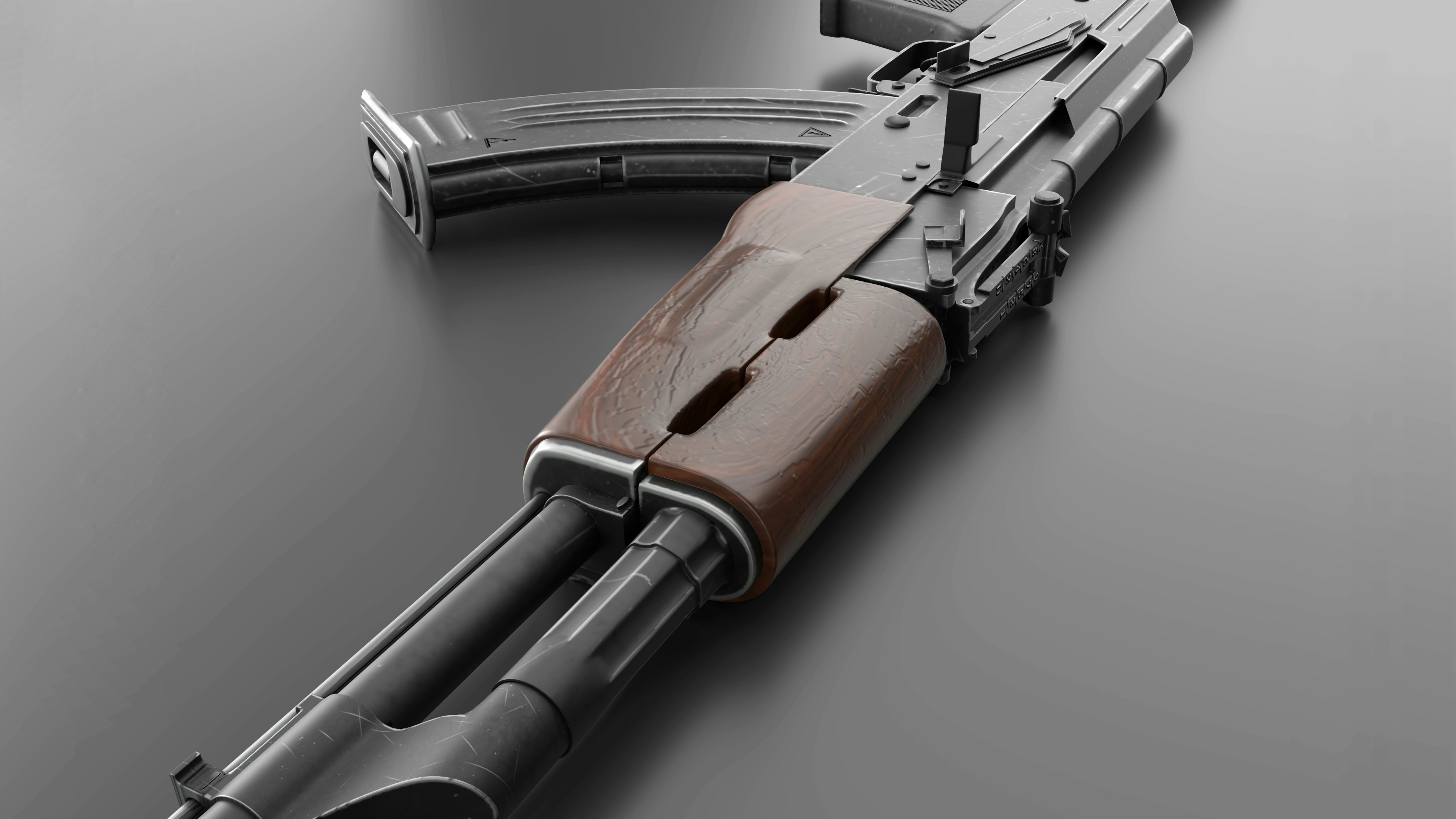
There is a reason the 5.56 vs. 7.62x39 debate never really goes away. Both cartridges are enormously popular, both have been used around the world for decades, and both are closely tied to iconic rifle platforms. On paper, though, they couldn't be more different.
The 5.56 NATO takes the lightweight-and-fast approach. Common loads use 55 or 62 grain bullets traveling at high velocity, producing mild recoil and a relatively flat trajectory. The 7.62x39 does almost the opposite. A typical load fires a bullet around 123 grains roughly twice the weight of common 5.56 ammunition at considerably lower velocity. That gives the 7.62x39 more projectile mass and typically more muzzle energy, while 5.56 gets the advantage in speed, recoil, and trajectory.
So which is better?
For target shooting, particularly once the distance starts stretching beyond 200 or 300 yards, I'd choose 5.56. For shorter-range shooting, the decision is much closer than the ballistic charts sometimes make it appear.
And that's really the story of these two cartridges.
5.56 Is About Speed. 7.62x39 Is About Weight.
You can understand most of the difference between these cartridges just by looking at the ammunition.
A common 55-grain 5.56 projectile is tiny compared with a roughly 123-grain 7.62x39 projectile. Even a heavier 77-grain 5.56 bullet remains substantially lighter. The tradeoff is velocity.
Common 5.56 ammunition can leave the muzzle around 3,000 fps or more depending on the load and barrel, while typical 7.62x39 ammunition is more commonly in the neighborhood of 2,300 fps. Exact numbers vary considerably by ammunition and firearm, but the basic relationship remains the same.
That velocity difference is important because it influences much more than how impressive the number on the ammunition box looks. A faster projectile reaches the target sooner, giving gravity less time to pull it downward. That's a major reason 5.56 generally shoots flatter than 7.62x39.
The heavier 7.62x39 projectile brings its own advantage. With roughly twice the bullet weight of common 5.56 ammunition, it generally produces more muzzle energy. That's a legitimate advantage but it doesn't automatically make 7.62x39 the better cartridge.
If you're shooting paper or steel, for example, the extra muzzle energy may be far less useful than lower recoil and a flatter trajectory.
This is one of the things I like about this comparison. Neither cartridge is simply a bigger or smaller version of the other. They prioritize different things.
At 100 Yards, This Is a Much Closer Fight Than You Might Think
Look at enough long-range ballistic charts and it would be easy to come away thinking that 7.62x39 is badly outclassed by 5.56.
At 100 yards, that's not really the case.
For recreational target shooting at 50 or 100 yards, both cartridges work extremely well. The 5.56 still shoots faster and recoils less, while the 7.62x39 still launches the heavier projectile, but neither advantage is likely to completely transform an afternoon of shooting paper or steel.
This is also where discussions about accuracy often become misleading.
The 7.62x39 has a reputation for being less accurate than 5.56, but some of that reputation comes from the rifles and inexpensive ammunition historically associated with the cartridge. A rifle firing inexpensive bulk ammunition isn't necessarily demonstrating everything the cartridge is capable of.
More bullet drop doesn't mean less accuracy either.
If one projectile drops 10 inches and another drops 20 inches at a given distance, both can still hit the same point if the shooter knows the correct elevation adjustment. A flatter trajectory simply makes the shooting problem easier and provides more forgiveness when the exact distance isn't known.
At 100 yards, though, that difference isn't nearly as important.
If your local range only goes to 100 yards, I'd choose based more on which rifle you enjoy shooting and what ammunition costs than on which trajectory looks better on paper.
Stretch the Distance and 5.56 Starts Pulling Away
This is where the comparison changes.
Move from 100 yards to 200 and the difference remains manageable. Push toward 300, 400, and 500 yards, however, and 5.56's velocity starts paying larger dividends.
The slower 7.62x39 projectile remains perfectly capable of reaching those distances. The problem isn't that the cartridge suddenly becomes ineffective at some arbitrary yard line. It's that the shooter needs progressively larger elevation corrections.
That's why I don't like giving cartridges one definitive “effective range.”
Effective for what?
Hitting a steel plate? Shooting a small group? Retaining a certain velocity? Achieving a particular terminal result?
Those aren't the same thing.
For target shooting, the more useful question is which cartridge makes hits easier as distance increases?
That's 5.56.
And heavier 5.56 ammunition makes the comparison even more interesting. A 77-grain 5.56 bullet usually starts slower than a lightweight 55-grain load, but well-designed heavier projectiles can have much better ballistic coefficients. That allows them to retain velocity more effectively and perform better in the wind as the distance grows.
This is why comparing one generic 55-grain 5.56 load against one 123-grain 7.62x39 load doesn't tell the entire story.
If you're buying cheap ammunition for a 100-yard range session, 55-grain 5.56 makes perfect sense.
If you're trying to hit targets at 400 or 500 yards, 77-grain 5.56 becomes much more interesting.
Recoil Is an Easy Win for 5.56
There isn't much controversy here.
5.56 recoils less.
Both cartridges are mild compared with larger rifle rounds, but 5.56 is exceptionally comfortable to shoot. That matters during high-volume range sessions, and it can make it easier to maintain your position and get the rifle settled for the next shot.
The 7.62x39 isn't remotely what I'd call punishing. It's still a very manageable cartridge. But fire the two from reasonably comparable rifles and the difference is noticeable.
This is one of those advantages that doesn't show up very dramatically on a ballistic chart but becomes obvious after a few hundred rounds.
If I'm planning to spend an entire afternoon shooting targets, I'll take less recoil every time unless the heavier projectile is giving me something I actually need.
For most target shooting, it isn't.
But Don't Confuse the Cartridge With the Rifle
The 5.56 vs. 7.62x39 discussion inevitably turns into an AR-15 vs. AK argument.
That's understandable, but it can also produce some bad conclusions.
If you compare a precision-oriented AR-15 firing quality 5.56 ammunition against an inexpensive AK platform firing bulk 7.62x39, you're comparing much more than cartridges. You're comparing barrels, triggers, sights, ammunition quality, ergonomics, operating systems, and potentially very different manufacturing standards.
The same problem appears when someone says 7.62x39 is inherently more reliable or 5.56 is inherently more accurate based entirely on the rifles they've personally shot.
Those may be legitimate observations about those rifles.
They aren't necessarily characteristics of the cartridges themselves.
For our purposes, it's more useful to separate the two questions:
What does the cartridge do well?
And:
What does the rifle do well?
When you're actually buying a rifle, of course, those questions come back together. But understanding the difference keeps the cartridge comparison honest.
The Price Question Isn't as Simple as It Used to Be
This is one area where old advice can get outdated quickly.
For years, cheap imported 7.62x39 was one of the cartridge's biggest attractions. Shooters could buy large quantities of inexpensive ammunition, which made it incredibly appealing for recreational shooting.
I wouldn't assume that's still the deciding advantage.
Ammunition markets change. Supply changes. Imports change. Manufacturers change. And prices can move enough that saying one cartridge is always cheaper eventually makes an article wrong.
For high-volume shooters, however, price absolutely matters.
If you shoot 5,000 rounds a year, even a five-cent-per-round difference works out to $250. At that point, ammunition cost can matter more to your actual ownership experience than a modest difference in muzzle energy.
That's why I'd compare current prices rather than choose based on what either cartridge cost five or ten years ago.
If you're deciding between the two for regular range use, compare current 5.56 and 7.62x39 ammunition prices on AmmoBrowser before assuming which one is cheaper.
compare current 5.56 and 7.62x39 ammunition prices on AmmoBrowser
So Which One Would I Actually Choose?
This gets much easier once we stop trying to declare one cartridge universally superior.
If I all had access to was a 100-yard range and that was where almost all of my shooting happened, I'd happily shoot either. The ballistic advantages of 5.56 exist at that distance, but they aren't important enough that I'd give up a 7.62x39 rifle I really enjoyed shooting.
If I wanted a rifle primarily for high-volume recreational shooting, I'd lean toward 5.56. The recoil is extremely mild, ammunition selection is enormous, and the cartridge is easy to shoot for long sessions.
If I expected to shoot regularly at 300 yards and beyond, I'd choose 5.56 without much hesitation. As the targets move farther away, its flatter trajectory and broad selection of heavier, higher-BC ammunition become increasingly useful.
If I specifically wanted the characteristics of 7.62x39 a substantially heavier projectile, greater muzzle energy, and the rifles traditionally associated with it—I'd buy the 7.62x39 and wouldn't worry that a ballistic chart says 5.56 shoots flatter at 500 yards.
That's the part caliber debates often miss.
The best cartridge isn't the one that wins the most categories. It's the one whose advantages line up with what you're actually going to do.
For the average shooter asking me specifically which of these two I'd choose for target and range shooting, though, my answer is 5.56 NATO.
It recoils less. It shoots flatter. It gives you an enormous selection of ammunition. And if your interests eventually move from 100-yard shooting toward 300, 400, or 500 yards, the cartridge gives you much more room to grow.
The 7.62x39 doesn't lose because it's a bad cartridge.
It loses this particular comparison because the things 5.56 does best happen to matter more for target shooting.
5.56 vs. 7.62x39: The Short Version
If you've made it this far, the answer probably isn't surprising.
Choose 5.56 if you want lower recoil, higher velocity, a flatter trajectory, broader ammunition selection, or plan to shoot at increasing distances.
Choose 7.62x39 if you want a heavier, larger-diameter projectile, greater muzzle energy, or simply prefer the rifles and shooting experience associated with the cartridge.
At 100 yards, either one can make for a great afternoon at the range.
At 500 yards, I'd much rather have the 5.56.
And somewhere between those two distances is where this comparison stops being an internet argument and starts becoming a fairly easy decision.
FAQ
Is 7.62x39 more powerful than 5.56?
If by "powerful" you mean heavier projectile and typical muzzle energy, 7.62x39 generally wins. But 5.56 offers substantially greater velocity, less recoil, and a flatter trajectory, which can be more useful for target shooting.
Is 5.56 more accurate than 7.62x39?
Not automatically. Accuracy depends heavily on the rifle and ammunition. However, 5.56 has an enormous selection of precision-oriented rifles and ammunition, and its flatter trajectory makes shooting at increasing distances easier.
Can you shoot 7.62x39 at 500 yards?
Yes. The cartridge can reach 500 yards, but reaching the target and making the shot easy are different things. 7.62x39 requires substantially more trajectory correction at extended distances, which is why I'd choose 5.56 if 400- to 500-yard target shooting were a priority.
Which is better for target shooting, 5.56 or 7.62x39?
5.56 gets my overall vote. Its lower recoil, flatter trajectory, higher velocity, and broad ammunition selection make it the more flexible target cartridge. At 50 or 100 yards, however, both can be excellent recreational choices.
Final Verdict
The 5.56 NATO and 7.62x39 aren't really trying to accomplish the same thing in the same way.
One gets there with speed.
The other gets there with weight.
At short range, that makes for a surprisingly close comparison. Both are manageable, capable, widely available cartridges that can be a lot of fun on the range.
Stretch the distance and the personality of each becomes much more obvious.
The 7.62x39's heavy projectile still works, but the shooter has to manage its increasingly arched trajectory. The 5.56's speed, mild recoil, and availability of better long-range projectile designs make the job progressively easier.
That's why I'd choose 5.56 for target shooting.
Not because it wins every ballistic category.
Because it wins the categories that matter most for that job.
And if you're choosing partly based on the cost of actually feeding the rifle, don't rely on old assumptions about which cartridge is cheaper. Compare current 5.56 and 7.62x39 ammo prices from multiple retailers on AmmoBrowser and make the decision using today's market rather than yesterday's.
Already Know Which Cartridge You Prefer?
If you've already decided between the two, compare current 5.56 and 7.62x39 ammo prices from multiple online retailers on AmmoBrowser before choosing a load. For high volume target shooting especially, current ammunition cost can be just as important as the ballistic differences between the cartridges.