
'%3e%3cpath%20d='M25.8906%2030.68L16.0006%2025L6.14062%2030.68V4.55C6.14063%203.75435%206.4567%202.99129%207.0193%202.42868C7.58191%201.86607%208.34498%201.55%209.14063%201.55H22.8906C23.6863%201.55%2024.4493%201.86607%2025.0119%202.42868C25.5746%202.99129%2025.8906%203.75435%2025.8906%204.55V30.68ZM9.14063%203.55C8.87541%203.55%208.62105%203.65536%208.43352%203.84289C8.24598%204.03043%208.14063%204.28478%208.14063%204.55V27.23L16.0006%2022.72L23.8806%2027.23V4.55C23.8806%204.28478%2023.7753%204.03043%2023.5877%203.84289C23.4002%203.65536%2023.1458%203.55%2022.8806%203.55H9.14063Z'%20fill='white'/%3e%3cpath%20d='M9.14063%202.55H22.8906C23.4211%202.55%2023.9298%202.76071%2024.3048%203.13579C24.6799%203.51086%2024.8906%204.01957%2024.8906%204.55V8.62H7.14062V4.55C7.14063%204.01957%207.35134%203.51086%207.72641%203.13579C8.10148%202.76071%208.61019%202.55%209.14063%202.55Z'%20fill='%238A3301'/%3e%3cpath%20d='M25.8906%209.62H6.14062V4.55C6.14063%203.75435%206.4567%202.99129%207.0193%202.42868C7.58191%201.86607%208.34498%201.55%209.14063%201.55H22.8906C23.6863%201.55%2024.4493%201.86607%2025.0119%202.42868C25.5746%202.99129%2025.8906%203.75435%2025.8906%204.55V9.62ZM8.14063%207.62H23.8906V4.55C23.8906%204.28478%2023.7853%204.03043%2023.5977%203.84289C23.4102%203.65536%2023.1558%203.55%2022.8906%203.55H9.14063C8.87541%203.55%208.62105%203.65536%208.43352%203.84289C8.24598%204.03043%208.14063%204.28478%208.14063%204.55V7.62Z'%20fill='white'/%3e%3cpath%20d='M16%2020.25C15.7348%2020.25%2015.4804%2020.1446%2015.2929%2019.9571C15.1054%2019.7696%2015%2019.5152%2015%2019.25V14.07C15%2013.8048%2015.1054%2013.5504%2015.2929%2013.3629C15.4804%2013.1754%2015.7348%2013.07%2016%2013.07C16.2652%2013.07%2016.5196%2013.1754%2016.7071%2013.3629C16.8946%2013.5504%2017%2013.8048%2017%2014.07V19.25C17%2019.5152%2016.8946%2019.7696%2016.7071%2019.9571C16.5196%2020.1446%2016.2652%2020.25%2016%2020.25Z'%20fill='white'/%3e%3cpath%20d='M18.5999%2017.66H13.4199C13.1547%2017.66%2012.9004%2017.5546%2012.7128%2017.3671C12.5253%2017.1796%2012.4199%2016.9252%2012.4199%2016.66C12.4199%2016.3948%2012.5253%2016.1404%2012.7128%2015.9529C12.9004%2015.7654%2013.1547%2015.66%2013.4199%2015.66H18.5999C18.8651%2015.66%2019.1195%2015.7654%2019.307%2015.9529C19.4946%2016.1404%2019.5999%2016.3948%2019.5999%2016.66C19.5999%2016.9252%2019.4946%2017.1796%2019.307%2017.3671C19.1195%2017.5546%2018.8651%2017.66%2018.5999%2017.66Z'%20fill='white'/%3e%3c/g%3e%3cdefs%3e%3cclipPath%20id='clip0_29353_35'%3e%3crect%20width='32'%20height='32'%20fill='white'/%3e%3c/clipPath%3e%3c/defs%3e%3c/svg%3e) Wishlist
Wishlist
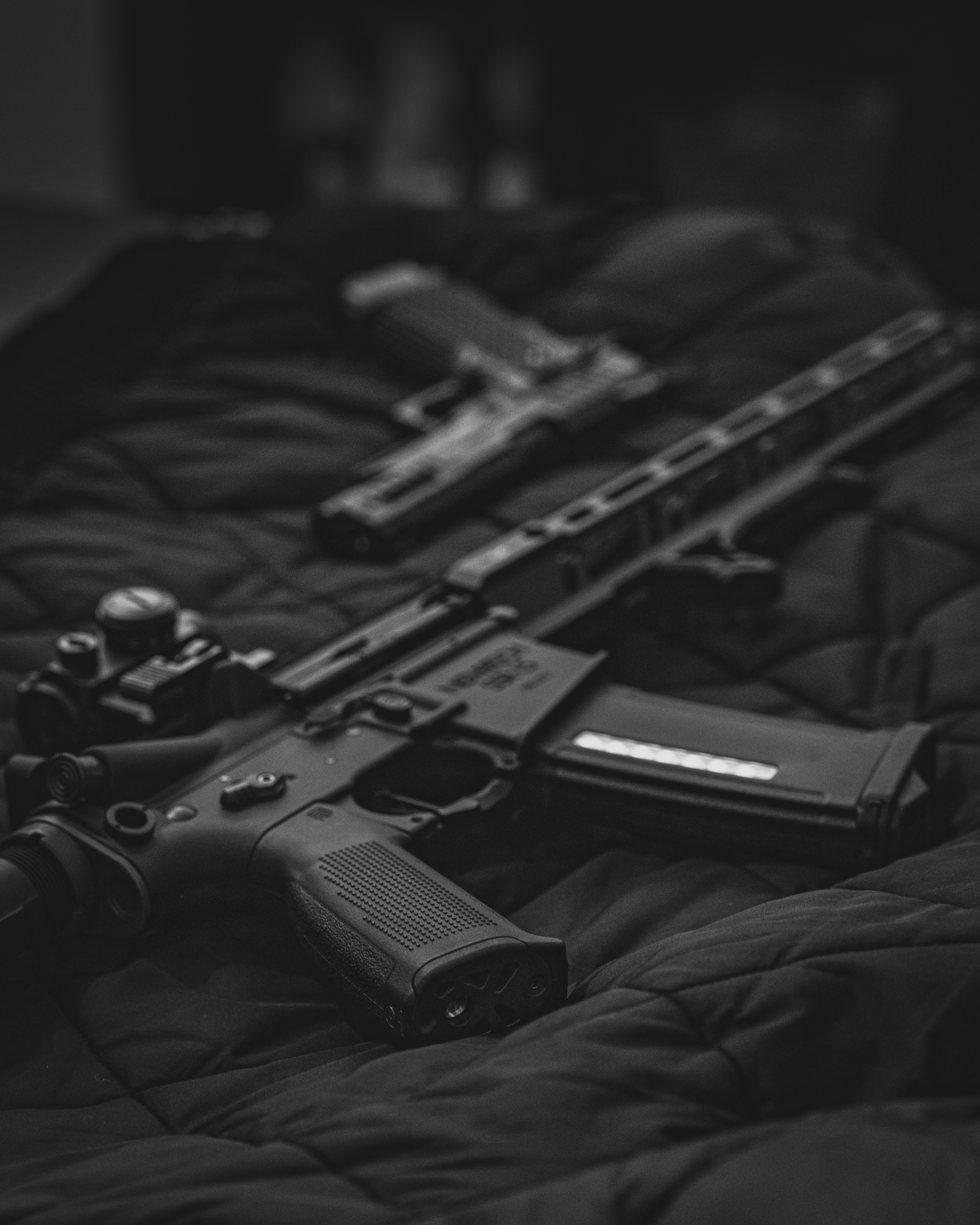
There was a time when 6.8 SPC looked like it might become one of the most important cartridges ever chambered in an AR-style rifle. It was developed in the early 2000s with input from U.S. Special Forces and the Army Marksmanship Unit, and the goal was ambitious: squeeze substantially more terminal performance out of an M4-sized platform without moving to a larger and heavier rifle.
It worked, at least from a ballistic standpoint. A 6.8mm projectile weighing roughly twice as much as a common 5.56 bullet could leave a relatively short barrel at respectable velocity and deliver considerably more energy downrange. Early testing was promising enough that 6.8 SPC attracted military interest, commercial ammunition, new rifles and plenty of attention from civilian shooters.
And then something strange happened.
6.8 SPC never took over.
It didn't replace 5.56. It didn't become America's default hunting cartridge for the AR-15. Other cartridges arrived and stole much of its attention. Walk into an average sporting-goods store today and you'll probably find stacks of 5.56, .300 Blackout and perhaps 6.5 Grendel long before you find a large selection of 6.8 SPC.
Yet more than two decades after its introduction, 6.8 SPC is still here. Hunters still use it. Ammunition companies still load it. Rifles and components remain available. And among shooters who actually own one particularly deer and hog hunters the cartridge has a surprisingly loyal following.
So what happened?
And more importantly, does 6.8 SPC still make sense today?
Quick Answer
6.8 SPC remains a very capable medium-game and general-purpose AR-15 cartridge, particularly at the shorter and moderate distances where many hunters actually shoot. It launches substantially heavier bullets than 5.56 while retaining manageable recoil and fitting into an AR-15-sized platform.
Its biggest problem isn't what happens after you pull the trigger.
It's everything surrounding the cartridge.
Factory ammunition selection is narrower than mainstream alternatives, ammunition can be expensive or difficult to find locally, magazines and bolts are different from a standard 5.56 AR, and newer cartridges have crowded into niches that 6.8 SPC once appeared poised to dominate.
For someone who already owns a good 6.8 SPC rifle, there isn't much reason to declare the cartridge obsolete. For someone buying their first alternative-caliber AR today, however, ammo availability deserves serious consideration before committing to it.
That contradiction is precisely why 6.8 SPC refuses to disappear.
6.8 SPC Was Designed to Give the AR More Punch
The story of 6.8 SPC begins with dissatisfaction over the performance of 5.56 NATO from relatively short military carbines.
Development started around 2002. According to historical reporting from American Rifleman, personnel associated with U.S. Special Forces and the Army Marksmanship Unit evaluated numerous projectile diameters and cartridge concepts while looking for a better combination of accuracy, reliability and terminal effectiveness in an M4-sized weapon. The resulting cartridge was the 6.8x43mm Special Purpose Cartridge, commonly called 6.8 SPC.
The design was based on a shortened .30 Remington case and used a .277-inch-diameter bullet. That's the same nominal bullet diameter associated with cartridges such as .270 Winchester, although the cartridges themselves are obviously very different.
One representative early military-oriented load used a 115-grain bullet at approximately 2,600 fps. That combination provided considerably more projectile mass and energy than typical 5.56 ammunition while still working in the smaller AR platform.
That last part matters.
Moving from an AR-15 to a larger .308-class rifle can deliver a substantial increase in power, but it also generally means a larger and heavier firearm, larger ammunition and additional weight carried in magazines.
6.8 SPC offered another approach.
Keep the familiar AR-15-sized platform but give it a bigger bullet.
It was an attractive idea in 2004.
It's still an attractive idea today.
So Why Didn't 6.8 SPC Replace 5.56?
This is where the history gets messy.
Despite considerable early attention, 6.8 SPC never became the widespread military cartridge some enthusiasts expected. Its commercial introduction also wasn't flawless, and early chamber specifications became part of a confusing story involving what shooters now commonly refer to as 6.8 SPC and SPC II.
Meanwhile, the firearms market didn't stand still.
5.56 ammunition and projectile design continued developing. 6.5 Grendel gained a following among shooters wanting better downrange performance from an AR-15. .300 Blackout became enormously popular, particularly in shorter-barreled and suppressed configurations. Later cartridges such as 6mm ARC gave shooters yet another way to extract more capability from the AR platform.
Suddenly 6.8 SPC wasn't the exciting new alternative anymore.
It was one option among many.
An American Rifleman retrospective captured the situation surprisingly well years ago: predictions of the cartridge's death proved premature because 6.8 SPC had found a comfortable home among civilian AR shooters even after its larger ambitions faded.
That's arguably still the best way to understand it.
6.8 SPC didn't win the cartridge war. It found a niche.
And hunting became one of the most important parts of that niche.
Why Hunters Never Completely Abandoned 6.8 SPC
If you look at conversations among current 6.8 SPC owners, one theme appears over and over:
deer and hogs.
That isn't an accident.
The cartridge combines a relatively large hunting bullet with an AR-15-sized rifle and manageable recoil. For hunters who don't need a traditional full-power rifle cartridge, that's a useful combination.
Historical testing and field use also established the cartridge as viable for deer-sized game when appropriate hunting ammunition is used. American Rifleman described it as adequate for deer and similar-size animals while emphasizing an important limitation: bullet selection matters because 6.8 SPC isn't an overwhelmingly powerful cartridge that makes projectile construction irrelevant.
That distinction is important.
There's a tendency to talk about hunting cartridges as though caliber alone determines performance. It doesn't. A properly constructed expanding hunting bullet and appropriate shot placement matter enormously.
6.8 SPC gives hunters more projectile weight and energy than the small-bore cartridges typically associated with the AR-15, but it shouldn't be mistaken for a .308 Winchester or another full-power hunting cartridge.
Think of its appeal differently.
A hunter walking through brush, climbing into a stand or carrying a rifle equipped with an optic or thermal sight may value a compact, relatively lightweight AR that still launches a meaningful hunting bullet.
That's where 6.8 SPC makes sense.
Recent owner discussions still reflect exactly that. Shooters describe using the cartridge successfully on deer and hogs, praise its relatively gentle recoil, and particularly like it from compact rifles. At the same time, those same conversations repeatedly complain about factory ammunition cost and local availability.
That tells us something important about why the cartridge survived.
People aren't necessarily keeping 6.8 SPC alive because it wins every ballistic comparison on paper.
They're keeping it alive because it works for what they actually use it for.
6.8 SPC Ballistics: What Should You Actually Expect?
6.8 SPC ballistics vary significantly with bullet weight, barrel length and ammunition, so there isn't one velocity number that describes the cartridge.
But representative factory ammunition gives us a useful picture.
Ammunition To Go's collected factory data includes loads around 100 to 120 grains, with several 110- and 115-grain offerings falling roughly in the mid-2,000-fps range depending on barrel length and ammunition. Ammoman similarly lists examples including a 110-grain load around 2,550 fps, a 115-grain load around 2,470 fps from a 16-inch barrel, and a 120-grain load around 2,460 fps from a 16-inch barrel.
Those aren't numbers intended to turn 6.8 SPC into a long-range wonder cartridge.
That's not its strength.
Its appeal is delivering a relatively heavy bullet with useful energy from a reasonably compact firearm.
That also explains why simply comparing muzzle velocity between 6.8 SPC and a smaller cartridge can be misleading. A lighter projectile can travel faster while carrying substantially less mass.
Energy isn't the only measure of terminal performance either, but it helps illustrate why hunters became interested in 6.8 SPC in the first place.
Early testing reported by American Rifleman put a representative 115-grain 6.8 SPC load from a 16-inch barrel at a nominal 2,600 fps and roughly 1,728 ft-lbs of muzzle energy. The same historical testing found the cartridge maintained substantial performance from shorter barrels as well.
That's a lot of capability squeezed into the AR-15 envelope.
But don't turn those numbers into a universal “effective range.”
You'll sometimes see surprisingly precise claims about exactly how many yards a cartridge is “effective.”
Real shooting doesn't work that neatly.
Different bullets lose velocity at different rates. Hunting bullets have different expansion requirements. Barrel length affects velocity. Accuracy varies by rifle and ammunition. The animal being hunted matters. And the shooter's ability to place a shot matters more than any theoretical maximum printed on a ballistic chart.
Ammoman's comparison of several factory loads illustrates the problem nicely: even using the same arbitrary energy threshold, different 6.8 SPC loads cross that threshold at significantly different distances.
So rather than declaring that 6.8 SPC is a “___-yard cartridge,” it's more useful to say:
6.8 SPC is fundamentally a short-to-moderate-range cartridge whose strengths are more about useful energy and performance from an AR-15 than extreme-distance shooting.
If long-range target shooting is your priority, there are better cartridges for that job.
Which 6.8 SPC Bullet Weight Is Best?
Most shooters shopping for factory 6.8 SPC ammo will encounter bullets clustered around the cartridge's traditional sweet spot rather than an enormous spectrum of projectile weights.
Historically, 85 to 115 grains has been a particularly useful range for 6.8 SPC. American Rifleman noted that while heavier 130-grain bullets can be loaded, achieving useful velocity becomes more difficult because of the cartridge's limited case capacity and overall dimensions.
For the average AmmoBrowser reader, there's no need to make this complicated.
Lighter bullets can offer more velocity and may suit applications where a flatter short-range trajectory or rapid expansion is desirable.
Around 110 to 115 grains is arguably the classic 6.8 SPC territory. You'll find hunting, general-purpose and other loads in this neighborhood, and these weights provide a good illustration of what the cartridge was originally intended to accomplish.
Heavier bullets around 120 grains sacrifice some velocity but can be useful when paired with projectile construction appropriate for the intended application.
The key is not to choose ammunition solely because one box has a bigger grain number.
For hunting in particular, bullet construction matters at least as much as bullet weight. A purpose-designed expanding hunting projectile is a fundamentally different tool from an FMJ bullet of similar weight.
That's why two boxes marked “110 grain” can behave very differently after impact.
Already know what you're looking for?
6.8 SPC vs. 6.8 SPC II: Why Is This So Confusing?
This is probably the most intimidating part of 6.8 SPC for someone encountering the cartridge for the first time.
You'll see references to:
6.8 SPC
and
6.8 SPC II
and it's easy to assume they're simply two different generations of ammunition.
The reality primarily involves chamber specifications, not two completely unrelated cartridges.
Early 6.8 SPC development and commercialization resulted in chamber/throat specifications that became controversial as the cartridge evolved. The later SPC II chamber incorporated dimensional changes that allowed ammunition makers and firearm manufacturers more flexibility with the cartridge.
For someone buying a modern rifle, the practical takeaway is more important than memorizing every chamber dimension:
Know exactly which chamber your firearm uses and follow the firearm and ammunition manufacturers' compatibility guidance.
Don't assume internet advice about what someone else safely shoots in their rifle automatically applies to yours.
This is particularly important because older rifles are still circulating. 6.8 SPC has been around for more than two decades, so a rifle bought secondhand could come from a very different era of the cartridge's development than a recently manufactured firearm.
If you're uncertain, check the barrel markings and manufacturer's documentation or contact the manufacturer.
That's much more useful than trying to become an amateur chamber engineer after reading three forum posts.
The Real Problem With 6.8 SPC Is Ammo
Here's where we get to the reason many shooters who admire 6.8 SPC still don't buy one.
Ammunition.
Not because 6.8 SPC ammunition is inherently bad.
Because it's niche.
Walk into a store looking for 5.56 or 9mm and there's a good chance you'll have multiple brands, bullet weights and price levels sitting in front of you.
6.8 SPC isn't that kind of cartridge.
Availability varies tremendously by location and retailer, and shooters frequently mention ammunition cost and selection when discussing whether they would recommend the cartridge today. Recent owner discussions include people who remain extremely satisfied with its hunting performance while acknowledging that ammunition isn't available everywhere.
That's probably the strongest argument against buying a 6.8 SPC rifle in 2026.
Not ballistics.
Not recoil.
Not hunting performance.
Logistics.
If you're going to shoot frequently, you need to consider what feeding that rifle will actually look like.
Can you reliably find the ammunition you want?
Are there multiple manufacturers producing suitable loads?
Can you find affordable ammunition for practice in addition to premium hunting ammunition?
What happens when your favorite load disappears from stock?
Those questions matter more with a niche cartridge.
Ironically, they're also where an ammunition comparison site becomes especially useful. When ammunition isn't stacked ten boxes deep at every local retailer, being able to compare inventory from multiple online sellers becomes much more valuable.
What It's Like to Shoot 6.8 SPC
Despite the larger bullet, one reason 6.8 SPC earned loyal users is that it doesn't turn an AR-15 into an unpleasant rifle.
Recoil is obviously greater than the extremely mild recoil associated with 5.56, but 6.8 SPC is still generally considered manageable, especially compared with moving into a larger rifle platform and more powerful cartridges.
Early testing of a 6.8 SPC Barrett M468 described the recoil as mild and the rifle as easy to control.
Current owners frequently make similar comments. One hunter in a recent discussion described having taken around ten deer with a 6.8 SPC while characterizing the recoil as very gentle.
Of course, perceived recoil depends on rifle weight, stock design, muzzle device and shooter.
But the broader point holds:
6.8 SPC provides a noticeable step up in projectile size and energy without requiring the shooter to accept the recoil and weight of a much larger rifle system.
For hunters, that can be an attractive compromise.
Is 6.8 SPC Obsolete?
This question is much more interesting than it appears.
If “obsolete” means another cartridge can beat it in some measurable category, then practically every cartridge ever made is obsolete.
There's almost always something faster, flatter, cheaper, more powerful or easier to find.
But that's not how shooters actually choose cartridges.
6.8 SPC still launches useful hunting bullets from a compact AR platform with manageable recoil. It still takes deer and hogs. It still performs well at the distances for which it was designed.
None of that stopped being true because newer cartridges arrived.
What has changed is the market around it.
6.5 Grendel became established among shooters interested in better downrange performance from the AR-15. .300 Blackout became one of the dominant alternative AR cartridges. 6mm ARC attracted shooters looking for impressive external ballistics from the small-frame platform.
And 5.56 never went anywhere.
That leaves 6.8 SPC occupying a smaller island than it once did.
The community reflects this divide perfectly. Some shooters call the cartridge dead because factory ammunition and components aren't as ubiquitous as competing choices. Others continue using it for deer and hog hunting and argue that social-media popularity has little to do with whether a cartridge actually works.
Both sides have a point.
6.8 SPC is no longer fashionable.
That's very different from being useless.
Should You Buy a 6.8 SPC Today?
For someone who already owns one, the answer is easy.
If the rifle shoots well, you can obtain appropriate ammunition, and it does what you need, there's little reason to abandon it because another cartridge has become more popular.
For a hunter who wants an AR-15-sized rifle for deer, hogs or similar applications at sensible distances, 6.8 SPC remains genuinely appealing.
The decision becomes harder for someone starting from zero.
If you're buying an alternative-caliber AR today, you should look beyond ballistic charts and consider the entire ecosystem. Factory ammunition availability, ammunition price, magazine availability, replacement parts and how much you actually plan to shoot should all factor into the decision.
If you shoot several thousand rounds a year, ammunition economics may overwhelm whatever ballistic advantage attracted you to 6.8 SPC.
If you fire a relatively small number of carefully selected hunting rounds every season, the equation changes considerably.
And that's perhaps the most important lesson from the entire 6.8 SPC story:
The best cartridge isn't always the cartridge that wins a spreadsheet. It's the one whose strengths line up with what you're actually going to do with the rifle.
Why 6.8 SPC Refuses to Die
6.8 SPC didn't fulfill the grand expectations surrounding its introduction.
It didn't replace 5.56.
It didn't become the standard American AR hunting cartridge.
It watched 6.5 Grendel, .300 Blackout, 6mm ARC and other cartridges compete for the attention it once enjoyed.
And yet here we are more than twenty years later, still talking about it.
That's because beneath all the history, chamber debates and cartridge comparisons is a very simple fact:
6.8 SPC works.
It puts a useful .277-caliber projectile behind substantially more mass than typical 5.56 ammunition. It works from an AR-15-sized platform. Recoil remains manageable. Hunters have been successfully using it on deer and hogs for years. And it delivers those qualities without forcing someone into a larger .308-sized rifle.
Its disadvantages are equally real. Ammunition isn't nearly as ubiquitous as 5.56. Factory choices are more limited. Cost can discourage high-volume shooting. And anyone entering the cartridge today has more competing options than shooters did when 6.8 SPC arrived.
That doesn't make 6.8 SPC the cartridge everyone should buy.
It makes it something more interesting:
a cartridge that lost the popularity contest without losing its purpose.
And that's why this supposedly forgotten AR cartridge refuses to die.
Ready to shop for 6.8 SPC ammo?
Disclaimer
Information provided by AmmoBrowser is for general informational and educational purposes only. Ammunition specifications, ballistics, performance, pricing, and availability can vary by manufacturer, load, firearm, barrel length, and other conditions. While we strive to provide accurate and current information, AmmoBrowser makes no guarantee regarding its completeness or accuracy. Always follow firearm and ammunition manufacturer instructions, verify that ammunition is compatible with your firearm, and follow all applicable laws and safe firearm-handling practices.