
'%3e%3cpath%20d='M25.8906%2030.68L16.0006%2025L6.14062%2030.68V4.55C6.14063%203.75435%206.4567%202.99129%207.0193%202.42868C7.58191%201.86607%208.34498%201.55%209.14063%201.55H22.8906C23.6863%201.55%2024.4493%201.86607%2025.0119%202.42868C25.5746%202.99129%2025.8906%203.75435%2025.8906%204.55V30.68ZM9.14063%203.55C8.87541%203.55%208.62105%203.65536%208.43352%203.84289C8.24598%204.03043%208.14063%204.28478%208.14063%204.55V27.23L16.0006%2022.72L23.8806%2027.23V4.55C23.8806%204.28478%2023.7753%204.03043%2023.5877%203.84289C23.4002%203.65536%2023.1458%203.55%2022.8806%203.55H9.14063Z'%20fill='white'/%3e%3cpath%20d='M9.14063%202.55H22.8906C23.4211%202.55%2023.9298%202.76071%2024.3048%203.13579C24.6799%203.51086%2024.8906%204.01957%2024.8906%204.55V8.62H7.14062V4.55C7.14063%204.01957%207.35134%203.51086%207.72641%203.13579C8.10148%202.76071%208.61019%202.55%209.14063%202.55Z'%20fill='%238A3301'/%3e%3cpath%20d='M25.8906%209.62H6.14062V4.55C6.14063%203.75435%206.4567%202.99129%207.0193%202.42868C7.58191%201.86607%208.34498%201.55%209.14063%201.55H22.8906C23.6863%201.55%2024.4493%201.86607%2025.0119%202.42868C25.5746%202.99129%2025.8906%203.75435%2025.8906%204.55V9.62ZM8.14063%207.62H23.8906V4.55C23.8906%204.28478%2023.7853%204.03043%2023.5977%203.84289C23.4102%203.65536%2023.1558%203.55%2022.8906%203.55H9.14063C8.87541%203.55%208.62105%203.65536%208.43352%203.84289C8.24598%204.03043%208.14063%204.28478%208.14063%204.55V7.62Z'%20fill='white'/%3e%3cpath%20d='M16%2020.25C15.7348%2020.25%2015.4804%2020.1446%2015.2929%2019.9571C15.1054%2019.7696%2015%2019.5152%2015%2019.25V14.07C15%2013.8048%2015.1054%2013.5504%2015.2929%2013.3629C15.4804%2013.1754%2015.7348%2013.07%2016%2013.07C16.2652%2013.07%2016.5196%2013.1754%2016.7071%2013.3629C16.8946%2013.5504%2017%2013.8048%2017%2014.07V19.25C17%2019.5152%2016.8946%2019.7696%2016.7071%2019.9571C16.5196%2020.1446%2016.2652%2020.25%2016%2020.25Z'%20fill='white'/%3e%3cpath%20d='M18.5999%2017.66H13.4199C13.1547%2017.66%2012.9004%2017.5546%2012.7128%2017.3671C12.5253%2017.1796%2012.4199%2016.9252%2012.4199%2016.66C12.4199%2016.3948%2012.5253%2016.1404%2012.7128%2015.9529C12.9004%2015.7654%2013.1547%2015.66%2013.4199%2015.66H18.5999C18.8651%2015.66%2019.1195%2015.7654%2019.307%2015.9529C19.4946%2016.1404%2019.5999%2016.3948%2019.5999%2016.66C19.5999%2016.9252%2019.4946%2017.1796%2019.307%2017.3671C19.1195%2017.5546%2018.8651%2017.66%2018.5999%2017.66Z'%20fill='white'/%3e%3c/g%3e%3cdefs%3e%3cclipPath%20id='clip0_29353_35'%3e%3crect%20width='32'%20height='32'%20fill='white'/%3e%3c/clipPath%3e%3c/defs%3e%3c/svg%3e) Wishlist
Wishlist
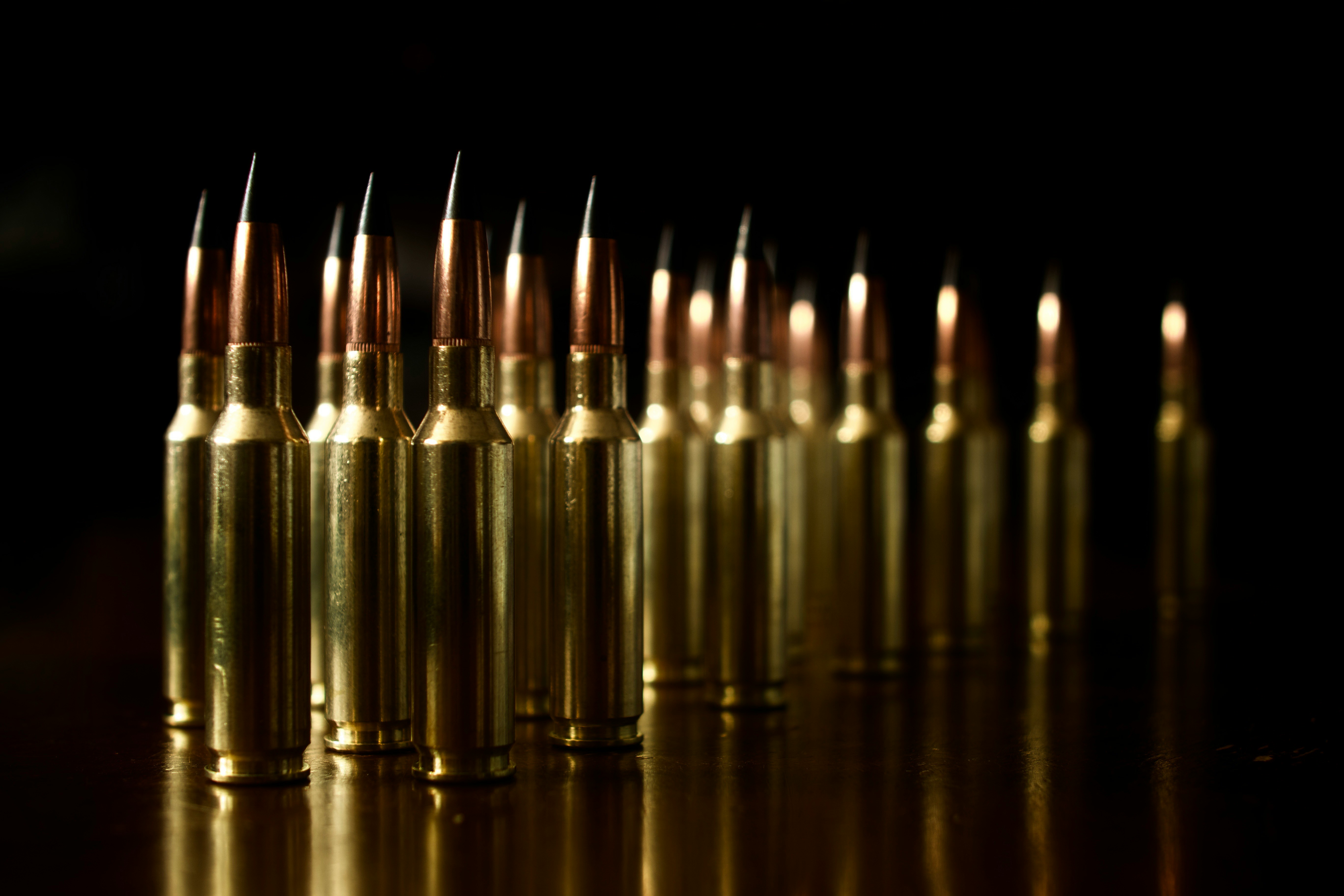
Looking for 6mm Creedmoor ammo? Compare current prices and available loads from multiple online retailers on AmmoBrowser.
Compare current prices on 6mm Creedmoor
The 6mm Creedmoor sounds almost too good when you first look at what it offers.
It can push high-ballistic-coefficient bullets at impressive velocities, produces relatively mild recoil, and was essentially built around the kind of performance precision rifle shooters care about. It also benefits from something many specialized cartridges never achieve: factory rifles and factory ammunition are readily available.
So why isn't everyone shooting one?
That's the interesting part of the 6mm Creedmoor story.
The cartridge wasn't created because shooters desperately needed another 6mm round. The .243 Winchester had already been around for decades, and the 6.5 Creedmoor was rapidly becoming one of the most successful modern rifle cartridges.
Instead, the 6mm Creedmoor grew out of a very specific idea:
What happens if you take the efficient 6.5 Creedmoor case, neck it down to 6mm, and pair it with long, aerodynamic bullets?
The answer turned out to be a cartridge that's extremely good at a few things.
But those advantages don't come for free.
6mm Creedmoor Started as an Experiment
The origins of 6mm Creedmoor are unusual because the cartridge wasn't initially developed by a major ammunition company.
Outdoor Life shooting editor John Snow developed the original concept in 2007 while working on an article about creating a wildcat cartridge. The idea was to neck the relatively new 6.5 Creedmoor case down to accept 6mm bullets and pair it with a high-BC projectile. The resulting wildcat eventually caught the attention of competitive shooters, including George Gardner of GA Precision.
That's where things really took off.
Precision Rifle Series competition was growing, and competitors were looking for cartridges that could deliver excellent downrange performance without excessive recoil. Lower recoil wasn't merely about making a rifle more comfortable to shoot. In a timed match, being able to stay on the rifle and see where your bullet impacts can be a genuine advantage.
The 6mm Creedmoor fit that role extremely well.
Eventually demand grew enough that Hornady standardized the cartridge and began offering factory ammunition in 2017.
That's an important part of why 6mm Creedmoor succeeded where many excellent wildcat cartridges never do.
You don't have to be a handloader to use it.
Today, there are factory rifles chambered for 6mm Creedmoor and factory ammunition from multiple manufacturers. What began as an experiment became a legitimate commercial cartridge.
Why Is 6mm Creedmoor So Fast?
The basic formula isn't complicated.
Take the 6.5 Creedmoor case, reduce the neck diameter to hold a .243-inch bullet, and you end up with a cartridge capable of driving relatively light, aerodynamic bullets at high velocity.
Typical factory loads vary, but bullets around 103 to 108 grains are particularly representative of what makes the cartridge interesting.
The Armory Life notes that the design is capable of pushing 105- to 108-grain bullets to velocities approaching 3,000 fps, depending on the load and firearm. In its own testing, a 108-grain ELD Match load averaged 2,850 fps and a 103-grain ELD-X averaged 2,872 fps.
That combination matters.
A light bullet by itself isn't particularly remarkable.
A fast bullet isn't particularly remarkable either.
What makes 6mm Creedmoor interesting is the combination of velocity and aerodynamic efficiency.
Modern 6mm projectiles can have excellent ballistic coefficients, allowing them to retain velocity well and resist wind effectively. That's one of the reasons 6mm cartridges became so attractive in precision rifle competition.
And they can achieve that performance without producing the recoil associated with larger cartridges.
That's where 6mm Creedmoor starts making a lot of sense.
Low Recoil Is a Bigger Deal Than It Sounds
Recoil is sometimes discussed as though it's simply a comfort issue.
For precision shooting, it's more important than that.
Imagine firing from an awkward position at a steel target. The rifle recoils, your sight picture moves, and somewhere downrange the bullet either hits or misses.
If recoil knocks you far enough off target that you can't see the impact, you've lost information.
A softer-shooting rifle makes it easier to stay behind the optic, observe the shot and make a correction if necessary.
That's extremely valuable in competition.
The Armory Life's author described recoil from the tested 6mm Creedmoor rifle as feeling similar to a .223 and noted that he could watch his shots impact the target. That's one shooter's experience rather than a universal recoil measurement, but it illustrates exactly why the cartridge became attractive to precision competitors.
It's not that shooters are afraid of recoil.
Less movement can help you shoot faster and observe more.
That's a much more meaningful advantage than simply saying the cartridge is pleasant to shoot.
And for someone who spends a long day behind a rifle, reduced recoil certainly doesn't hurt either.
6mm Creedmoor vs. 6.5 Creedmoor: What's the Difference?
This comparison is unavoidable.
The 6mm Creedmoor is based on the 6.5 Creedmoor case, the names are nearly identical, and both have strong reputations for precision shooting.
So why choose the smaller one?
The biggest difference is the basic tradeoff between lighter, faster bullets and heavier bullets carrying more mass.
6mm Creedmoor generally launches its lighter projectiles faster and produces less recoil. That combination can be particularly attractive for competition, where shooters want good wind performance while keeping rifle movement under control.
6.5 Creedmoor generally fires heavier bullets and brings a broader established ecosystem with it. Shooting Times' comparison likewise found the 6mm's advantages centered around velocity, trajectory and recoil, while the 6.5's heavier bullets bring their own benefits.
So is 6mm Creedmoor better than 6.5 Creedmoor?
Not universally.
If I were building a rifle primarily around precision target shooting and wanted to minimize recoil while retaining excellent external ballistics, the 6mm Creedmoor makes a very compelling argument.
If I wanted a more general purpose cartridge with heavier bullet options, enormous factory support and less concern about one of 6mm Creedmoor's biggest drawbacks, I'd lean toward 6.5 Creedmoor.
And that brings us to the question in the title.
So What's the Catch?
Barrel life.
This is the downside that deserves to be discussed whenever someone talks about 6mm Creedmoor's velocity.
You don't get to push relatively small-diameter bullets at high velocity for free.
The combination of powder capacity, bore diameter and velocity can accelerate throat erosion compared with milder cartridges.
How long a 6mm Creedmoor barrel lasts isn't something anyone can answer with a universal round count. Barrel quality, ammunition, load pressure, heat management and what the shooter considers unacceptable accuracy degradation all matter.
But the difference can be meaningful.
The Armory Life cites roughly 1,500 rounds as a general expectation in a PRS match environment, while noting that a rifle used less aggressively may last longer.
That's the tradeoff.
A recreational shooter firing a few boxes of ammunition each year might take a very long time to reach that point.
A serious competitor can burn through 1,500 rounds surprisingly quickly.
So when somebody tells you how fast, flat and soft-shooting 6mm Creedmoor is, they're not wrong.
They're just describing one side of the equation.
Performance costs barrel life.
And whether that matters depends entirely on how much you shoot.
Is 6mm Creedmoor More Accurate?
This is another place where cartridge discussions can get misleading.
6mm Creedmoor has an excellent reputation for accuracy, but buying a rifle chambered in 6mm Creedmoor doesn't automatically make you more accurate.
Accuracy is the result of an entire system: rifle, barrel, ammunition, optic, environmental conditions and, most importantly, the shooter.
What the cartridge does give you is a very good platform for precision shooting.
Factory match ammunition is available with high-BC bullets, recoil is relatively mild, and the cartridge's external ballistics make it well suited to the kind of shooting where small errors become increasingly visible.
In The Armory Life's factory-rifle testing, both tested factory loads produced sub-MOA best five-shot groups, with a 103-grain load producing a .66-inch best group and the 108-grain match load producing a .75-inch best group.
That's impressive, but I wouldn't interpret those particular groups as proof that every 6mm Creedmoor rifle will shoot that way.
The more useful takeaway is that the cartridge has everything necessary to support excellent accuracy.
It still needs a good rifle, good ammunition and a good shooter.
What About 6mm Creedmoor Ballistics?
This is where I don't think we need to bury you under a giant chart.
There are too many loads, bullet weights, barrel lengths and environmental variables for one table to represent every 6mm Creedmoor rifle anyway. Ammo.com's current ballistics database shows the same basic reality: performance changes substantially depending on the particular factory load being examined.
The important characteristics are much simpler.
6mm Creedmoor is fast.
It works extremely well with aerodynamic 6mm bullets.
It produces relatively low recoil for the downrange performance it provides.
And those three characteristics are exactly why precision shooters became interested in it.
If you need exact drop, wind drift or retained velocity for your rifle, use the ballistic data for the specific ammunition you're actually shooting, not a generic internet chart.
That's far more useful than pretending one 6mm Creedmoor trajectory represents every load.
Is 6mm Creedmoor Just a Better .243 Winchester?
Not exactly.
This is another comparison that naturally comes up because both cartridges use .243-inch bullets and can produce impressive velocity.
The .243 Winchester has been around since the 1950s and has an enormous history behind it. The 6mm Creedmoor was designed decades later around a different set of priorities, particularly the use of long, high-BC bullets and modern magazine dimensions.
That distinction matters.
The Armory Life's history of the cartridge notes that one motivation behind the design was avoiding some of the magazine-length limitations encountered when using long, heavy 6mm bullets in .243 Winchester setups. The 6mm Creedmoor retained a 2.800-inch overall length that works with .308-compatible magazines while accommodating the type of projectile its designers wanted to use.
That doesn't make the .243 obsolete.
Far from it.
But it helps explain why competitive shooters didn't simply stop at .243 Winchester.
The 6mm Creedmoor was designed around what those shooters were trying to accomplish.
Who Does 6mm Creedmoor Actually Make Sense For?
This is where I'd separate the hype from the usefulness.
If you're a precision target shooter, 6mm Creedmoor is easy to understand.
High-BC bullets, excellent velocity, mild recoil and factory match ammunition make a very appealing package.
If you're a recreational shooter who enjoys stretching a rifle out on steel, many of those same advantages apply. You don't have to compete in PRS to appreciate a rifle that shoots softly and performs well at distance.
But if you shoot enormous quantities of ammunition and hate the idea of replacing barrels, the equation changes.
Likewise, if you want the widest possible selection of factory ammunition or simply don't need the extra velocity, there are other cartridges that may make more sense.
That's why I wouldn't call 6mm Creedmoor a replacement for 6.5 Creedmoor, .243 Winchester or anything else.
It's more specialized than that.
And specialization isn't necessarily a weakness.
Sometimes a cartridge becomes popular because it's pretty good at almost everything.
6mm Creedmoor became popular because it's exceptionally good at a particular combination of things.
Is 6mm Creedmoor Worth It?
For the right shooter, absolutely.
There's a reason a cartridge that began as a wildcat experiment eventually became standardized factory ammunition.
6mm Creedmoor offers a combination that's hard not to like: high velocity, excellent projectile options, relatively low recoil and strong precision potential.
But I wouldn't buy one believing I've discovered a cartridge with no compromises.
The very thing that makes 6mm Creedmoor exciting pushing aerodynamic 6mm bullets quickly is also connected to its biggest drawback.
You're trading barrel life for performance.
For someone firing a few hundred rounds a year, that may barely register.
For someone shooting matches constantly, it's part of the cost of running the cartridge.
And that's probably the fairest way to describe 6mm Creedmoor.
It isn't magic.
It isn't automatically more accurate than everything else.
And it isn't necessarily better than 6.5 Creedmoor.
It's simply a cartridge designed around a very attractive proposition:
Go fast, shoot softly, and perform extremely well downrange.
If those are the things you care about most, the catch may be worth it.
Quick FAQ
What is 6mm Creedmoor?
6mm Creedmoor is a centerfire rifle cartridge based on the 6.5 Creedmoor case necked down to accept .243-inch bullets. It began as a wildcat concept and was later standardized commercially.
Is 6mm Creedmoor better than 6.5 Creedmoor?
Neither is universally better. The 6mm Creedmoor generally emphasizes higher velocity and lower recoil with lighter bullets, while 6.5 Creedmoor uses heavier projectiles and offers a very mature ammunition ecosystem. The better choice depends on what you want from the rifle.
Does 6mm Creedmoor have a lot of recoil?
Relatively speaking, recoil is one of 6mm Creedmoor's strengths. Its combination of lighter projectiles and efficient external ballistics has helped make it attractive to precision competitors who want to stay on target and observe impacts.
How long does a 6mm Creedmoor barrel last?
There isn't one guaranteed number. The Armory Life cites approximately 1,500 rounds as a general PRS-use expectation, but barrel life varies considerably with ammunition, firing schedule, barrel quality and the shooter's accuracy requirements.
Can you buy factory 6mm Creedmoor ammo?
Yes. What started as a wildcat has become a standardized cartridge with factory ammunition available from multiple manufacturers.