
'%3e%3cpath%20d='M25.8906%2030.68L16.0006%2025L6.14062%2030.68V4.55C6.14063%203.75435%206.4567%202.99129%207.0193%202.42868C7.58191%201.86607%208.34498%201.55%209.14063%201.55H22.8906C23.6863%201.55%2024.4493%201.86607%2025.0119%202.42868C25.5746%202.99129%2025.8906%203.75435%2025.8906%204.55V30.68ZM9.14063%203.55C8.87541%203.55%208.62105%203.65536%208.43352%203.84289C8.24598%204.03043%208.14063%204.28478%208.14063%204.55V27.23L16.0006%2022.72L23.8806%2027.23V4.55C23.8806%204.28478%2023.7753%204.03043%2023.5877%203.84289C23.4002%203.65536%2023.1458%203.55%2022.8806%203.55H9.14063Z'%20fill='white'/%3e%3cpath%20d='M9.14063%202.55H22.8906C23.4211%202.55%2023.9298%202.76071%2024.3048%203.13579C24.6799%203.51086%2024.8906%204.01957%2024.8906%204.55V8.62H7.14062V4.55C7.14063%204.01957%207.35134%203.51086%207.72641%203.13579C8.10148%202.76071%208.61019%202.55%209.14063%202.55Z'%20fill='%238A3301'/%3e%3cpath%20d='M25.8906%209.62H6.14062V4.55C6.14063%203.75435%206.4567%202.99129%207.0193%202.42868C7.58191%201.86607%208.34498%201.55%209.14063%201.55H22.8906C23.6863%201.55%2024.4493%201.86607%2025.0119%202.42868C25.5746%202.99129%2025.8906%203.75435%2025.8906%204.55V9.62ZM8.14063%207.62H23.8906V4.55C23.8906%204.28478%2023.7853%204.03043%2023.5977%203.84289C23.4102%203.65536%2023.1558%203.55%2022.8906%203.55H9.14063C8.87541%203.55%208.62105%203.65536%208.43352%203.84289C8.24598%204.03043%208.14063%204.28478%208.14063%204.55V7.62Z'%20fill='white'/%3e%3cpath%20d='M16%2020.25C15.7348%2020.25%2015.4804%2020.1446%2015.2929%2019.9571C15.1054%2019.7696%2015%2019.5152%2015%2019.25V14.07C15%2013.8048%2015.1054%2013.5504%2015.2929%2013.3629C15.4804%2013.1754%2015.7348%2013.07%2016%2013.07C16.2652%2013.07%2016.5196%2013.1754%2016.7071%2013.3629C16.8946%2013.5504%2017%2013.8048%2017%2014.07V19.25C17%2019.5152%2016.8946%2019.7696%2016.7071%2019.9571C16.5196%2020.1446%2016.2652%2020.25%2016%2020.25Z'%20fill='white'/%3e%3cpath%20d='M18.5999%2017.66H13.4199C13.1547%2017.66%2012.9004%2017.5546%2012.7128%2017.3671C12.5253%2017.1796%2012.4199%2016.9252%2012.4199%2016.66C12.4199%2016.3948%2012.5253%2016.1404%2012.7128%2015.9529C12.9004%2015.7654%2013.1547%2015.66%2013.4199%2015.66H18.5999C18.8651%2015.66%2019.1195%2015.7654%2019.307%2015.9529C19.4946%2016.1404%2019.5999%2016.3948%2019.5999%2016.66C19.5999%2016.9252%2019.4946%2017.1796%2019.307%2017.3671C19.1195%2017.5546%2018.8651%2017.66%2018.5999%2017.66Z'%20fill='white'/%3e%3c/g%3e%3cdefs%3e%3cclipPath%20id='clip0_29353_35'%3e%3crect%20width='32'%20height='32'%20fill='white'/%3e%3c/clipPath%3e%3c/defs%3e%3c/svg%3e) Wishlist
Wishlist
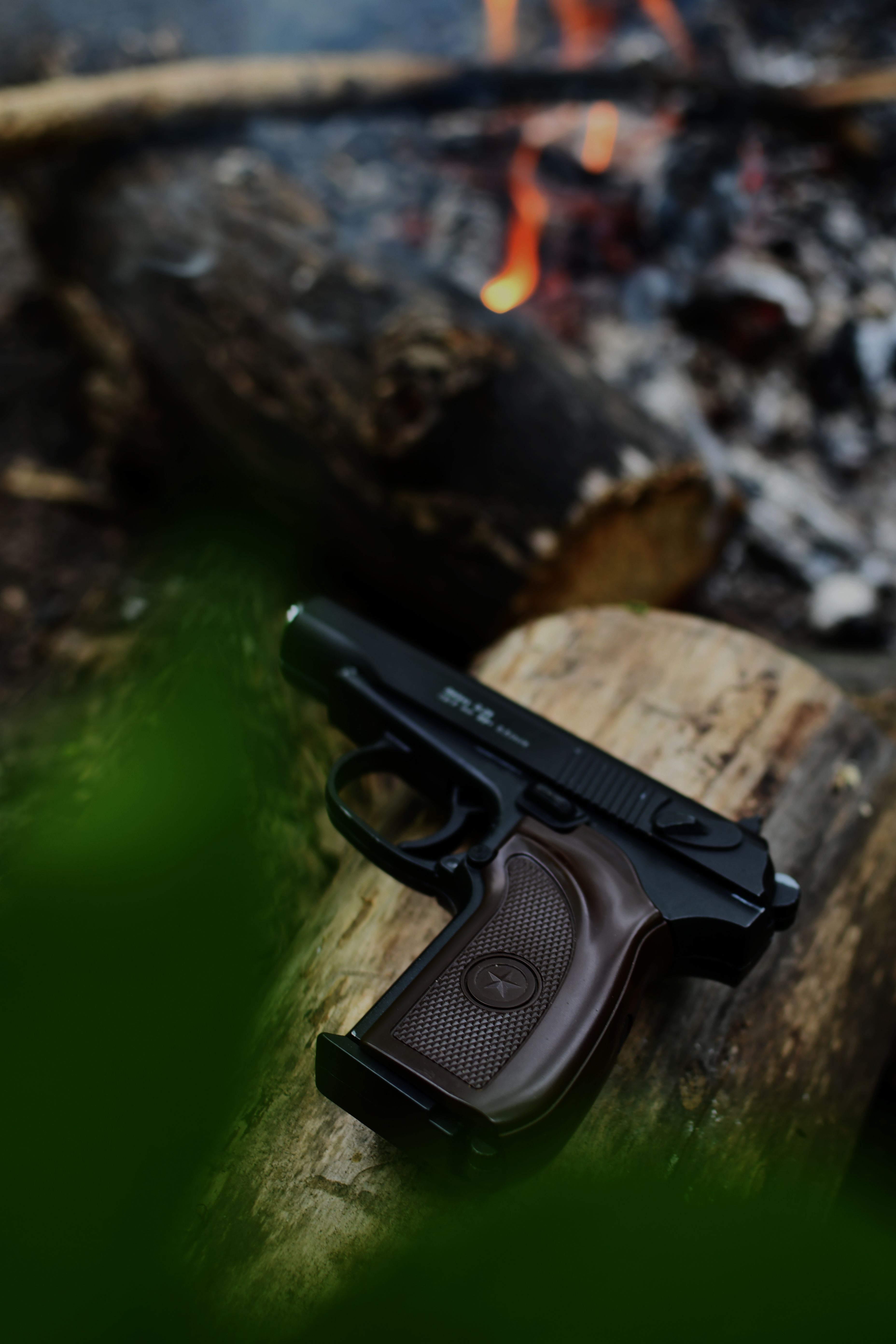
There is something strange about looking at a 7.62x25 Tokarev cartridge next to modern handgun ammunition.
It doesn’t really look like it belongs.
The long, narrow case has a pronounced bottleneck more reminiscent of a miniature rifle cartridge than the straight or slightly tapered cases most shooters associate with handgun ammunition. Then you look at the ballistics and things get even more interesting. Depending on the load, an 85-grain bullet can leave a handgun-length barrel at well over 1,500 feet per second. Some published loads are faster still.
That's impressive performance for a pistol cartridge today.
The surprising part is that 7.62x25 Tokarev entered production in 1930.
So why does a cartridge approaching its hundredth birthday produce the kind of velocity that still gets shooters' attention?
And if it really is that good, why did cartridges like 9mm become enormously popular while 7.62x25 Tokarev became something many American shooters encounter mostly through surplus pistols and ammunition listings?
That's where the story gets interesting.
Why Is 7.62x25 Tokarev So Fast?
The easiest way to understand 7.62x25 is to stop thinking about it like a conventional pistol cartridge.
Its basic formula is relatively simple: a light bullet driven quickly from a relatively long bottleneck case.
Common 7.62x25 ammunition is often loaded with bullets around 85 to 90 grains, although loads vary considerably. That is significantly lighter than the 115-, 124- and 147-grain bullets commonly encountered in 9mm ammunition.
Less bullet mass makes it possible to accelerate the projectile to considerably higher velocity.
And 7.62x25 takes advantage of that.
Published ballistic figures vary quite a bit depending on ammunition and barrel length, which is important with this cartridge. Representative data includes 85-grain loads ranging from roughly the mid-1,500s to beyond 1,600 fps from pistol-length test barrels, while other ammunition can be considerably slower.
That variation is one reason I wouldn't describe 7.62x25 with a single velocity number.
There has been military ammunition, commercial ammunition, surplus ammunition and ammunition originally intended for different firearms. The number printed for one particular 7.62x25 load doesn't describe everything bearing the Tokarev name.
But the general characteristic remains the same.
This is a fast handgun cartridge.
And velocity is a huge part of what gives 7.62x25 its personality.
That Bottleneck Case Is Part of the Story
The distinctive shape wasn't something the Soviets invented from scratch.
The 7.62x25 Tokarev traces its ancestry to the 7.63x25 Mauser, itself descended from the earlier 7.65x25 Borchardt. The Mauser cartridge became famous through guns such as the C96, and the Soviets ultimately developed their own cartridge around the same general concept.
By 1930, the resulting 7.62x25 cartridge had been adopted for Soviet use.
It would eventually become associated not only with the TT-30 and TT-33 pistols, but with famous Soviet submachine guns including the PPSh-41 and PPS-43.
That background helps explain something important about the cartridge.
It wasn't developed solely around what we'd now think of as an ordinary civilian semiautomatic pistol.
It became ammunition for both pistols and submachine guns.
That helps explain why old military 7.62x25 ammunition deserves more caution than its dimensions might suggest. Some historical submachine-gun-oriented loads were considerably hotter than others. Ammunition should always be appropriate for the specific firearm being used rather than assuming every cartridge labeled 7.62x25 is interchangeable with every old gun that can physically chamber it.
There's another important historical relationship here.
The 7.62x25 Tokarev and 7.63x25 Mauser are extremely similar dimensionally, but they should not simply be treated as identical ammunition. Tokarev ammunition can be loaded to higher pressures than ammunition intended for older Mauser firearms.
Nearly identical dimensions don't necessarily mean identical ammunition.
Is 7.62x25 Actually More Powerful Than 9mm?
This is where things get messy because “powerful” isn't a ballistic measurement.
If we're asking which one is faster, 7.62x25 has an easy argument.
Ammo.com's recent comparison, for example, uses an 85-grain 7.62x25 load at 1,525 fps and a 115-grain 9mm load at 1,190 fps. That's a substantial velocity difference.
But velocity isn't the only thing happening.
The 9mm projectile in that comparison is 30 grains heavier.
That's why simply looking at velocity and declaring a winner doesn't tell the entire story.
Depending on the particular ammunition being compared, 7.62x25 can produce muzzle-energy figures that are very impressive for a handgun cartridge. Published 85-grain examples span a surprisingly broad range, with some loads exceeding 500 foot-pounds of muzzle energy.
But again, the load matters.
And that's one of the biggest differences between discussing 7.62x25 and discussing something like modern 9mm.
There is an enormous modern 9mm ammunition market. You can compare inexpensive FMJ range ammunition, premium defensive loads, heavier bullets, lighter bullets and numerous specialty designs.
7.62x25 doesn't have anything approaching that breadth of modern ammunition selection.
So the answer to “Is 7.62x25 stronger than 9mm?” is:
It depends on what you mean by stronger.
If you mean velocity, 7.62x25 is generally the much faster cartridge when comparing representative loads.
If you mean muzzle energy, particular 7.62x25 loads can also be extremely impressive.
If you mean which is the better all-around modern handgun cartridge, however, we're asking a completely different question.
And that's where 9mm starts fighting back.
Why 7.62x25 Feels So Different From 9mm
This is one of the reasons I think people remain fascinated by Tokarev ammunition.
It's not simply an old alternative to 9mm.
It has a completely different character.
The light bullet and high velocity give 7.62x25 a reputation for a relatively flat trajectory for a traditional handgun cartridge. The combination also contributes to its well-known penetration characteristics, particularly with some historical military ammunition.
But there are tradeoffs.
That velocity can come with substantial muzzle blast and a sharp report, especially from a handgun. And the cartridge's reputation for penetration isn't automatically an advantage in every application.
That's an important distinction because more penetration doesn't simply mean “better ammunition.”
Different ammunition is designed for different purposes.
This is also where comparing an old military FMJ Tokarev load against a modern expanding 9mm load becomes increasingly meaningless. Projectile construction has changed enormously since the 7.62x25 was adopted.
The cartridge itself can generate impressive numbers.
What the bullet does with that velocity depends on the bullet.
So Why Did 9mm Win?
This might be the most interesting question of all.
If 7.62x25 is fast, energetic and capable of impressive ballistic performance, why isn't it one of the dominant handgun cartridges today?
Because the cartridge with the most impressive velocity doesn't automatically become the most successful cartridge.
The Soviet Union itself eventually moved away from 7.62x25 as its standard pistol cartridge, replacing it with the 9x18mm Makarov.
Meanwhile, 9x19mm became a global giant.
Today, the difference in ecosystem is enormous.
There are countless modern pistols chambered in 9mm. There is an enormous variety of inexpensive practice ammunition, premium ammunition and specialty loads. Magazines, replacement parts and accessories are everywhere.
With 7.62x25, the firearm selection is much narrower and much of the cartridge's American appeal has historically been connected to military-surplus firearms.
That's a difficult disadvantage for better ballistics to overcome.
Imagine two cartridges where one gives you substantially more velocity, but the other gives you far more firearms, far more ammunition choices, easier availability and decades of modern development.
For most shooters, the second cartridge is going to be more practical.
That's exactly why I don't think 7.62x25 vs. 9mm needs a simple winner.
They aren't really competing for the same job anymore.
The Part People Love — And the Part They Don't
The reasons enthusiasts like 7.62x25 are almost the same reasons it never became an obvious modern replacement for 9mm.
It's unusual.
It's fast.
It's historically significant.
It has distinctive firearms associated with it.
And shooting one gives you something completely different from buying another modern polymer-frame 9mm.
For someone interested in military firearms or unusual cartridges, that's part of the appeal.
But being interesting and being practical are two different things.
Ammunition availability can fluctuate. Firearm choices are limited compared with mainstream handgun cartridges. Some surplus ammunition may be corrosive, depending on its origin and primers, which means shooters need to know what they're buying and clean appropriately when using such ammunition.
Then there's price.
7.62x25 once had a strong reputation among American enthusiasts as inexpensive surplus ammunition. That's not necessarily something I'd assume today.
Surplus supplies don't last forever.
And once an old military cartridge becomes a niche commercial product, the economics can change considerably.
That's why I'd look at current 7.62x25 ammunition listings rather than relying on somebody's forum post from 15 years ago about what a spam can used to cost.
Is 7.62x25 Tokarev Still Worth Shooting Today?
I think it absolutely can be.
But probably not for the reason someone would choose 9mm.
If I wanted one handgun cartridge that was inexpensive, readily available, supported by an enormous selection of modern firearms and offered in almost every conceivable load, I'd choose 9mm without much hesitation.
That's not where 7.62x25 wins.
I'd want a Tokarev because 7.62x25 is interesting.
It's a cartridge from another era that still produces performance capable of making a modern shooter look twice at the chronograph.
The bottleneck case looks unusual.
The light bullet moves fast.
The firearms have history.
And the cartridge represents a very different approach to handgun performance than the larger, slower projectiles commonly associated with many military pistols of its era.
That's enough reason for it to still have an audience.
There is also something refreshing about a cartridge that doesn't need to pretend it's going to replace anything.
7.62x25 doesn't need to beat 9mm.
9mm already won the popularity contest.
The Tokarev's appeal today is that nearly a century after its introduction, you can fire one and immediately understand why people are still talking about it.
Finding 7.62x25 Ammo Today
This is where the experience is very different from shopping for 9mm.
You can't necessarily walk into every ammunition retailer and expect multiple shelves of 7.62x25 options. Availability can vary, and prices can differ substantially between sellers.
That's exactly the kind of cartridge where comparing retailers makes sense.
Rather than assuming the first box you find is a good price, search current 7.62x25 Tokarev ammo listings on AmmoBrowser and compare prices from multiple online retailers in one place.
For a niche cartridge, availability can sometimes matter just as much as price.
And that's part of what makes 7.62x25 interesting today.
It survived.
Not as the dominant handgun cartridge.
Not as the obvious alternative to 9mm.
But as a fast, strange-looking little bottleneck cartridge from 1930 that shooters are still searching for almost a century later.
That's a pretty good legacy.
Quick FAQ
Is 7.62x25 stronger than 9mm?
It depends on the loads and what you mean by “stronger.” Representative 7.62x25 ammunition can produce substantially higher muzzle velocity than typical 9mm loads, and some loads also generate impressive muzzle energy. However, 9mm has a far larger selection of modern ammunition and projectile designs.
Is 7.62 TT the same as 7.62x25 Tokarev?
Generally, 7.62 TT refers to 7.62x25 Tokarev; “TT” is associated with the Tula Tokarev pistol family. Don't confuse it with the closely related 7.63x25 Mauser, which is a different cartridge despite very similar dimensions.
Is 7.62x25 a powerful round?
For a traditional handgun cartridge firing an approximately 85- to 90-grain projectile, 7.62x25 can produce impressive velocity and energy. Exact performance varies considerably with the specific load and firearm.
Can you still buy 7.62x25 Tokarev ammo?
Yes. Commercial 7.62x25 ammunition is still available, although selection is considerably smaller than mainstream cartridges such as 9mm. Availability and pricing can vary, making it worthwhile to compare current listings.