
 Wishlist

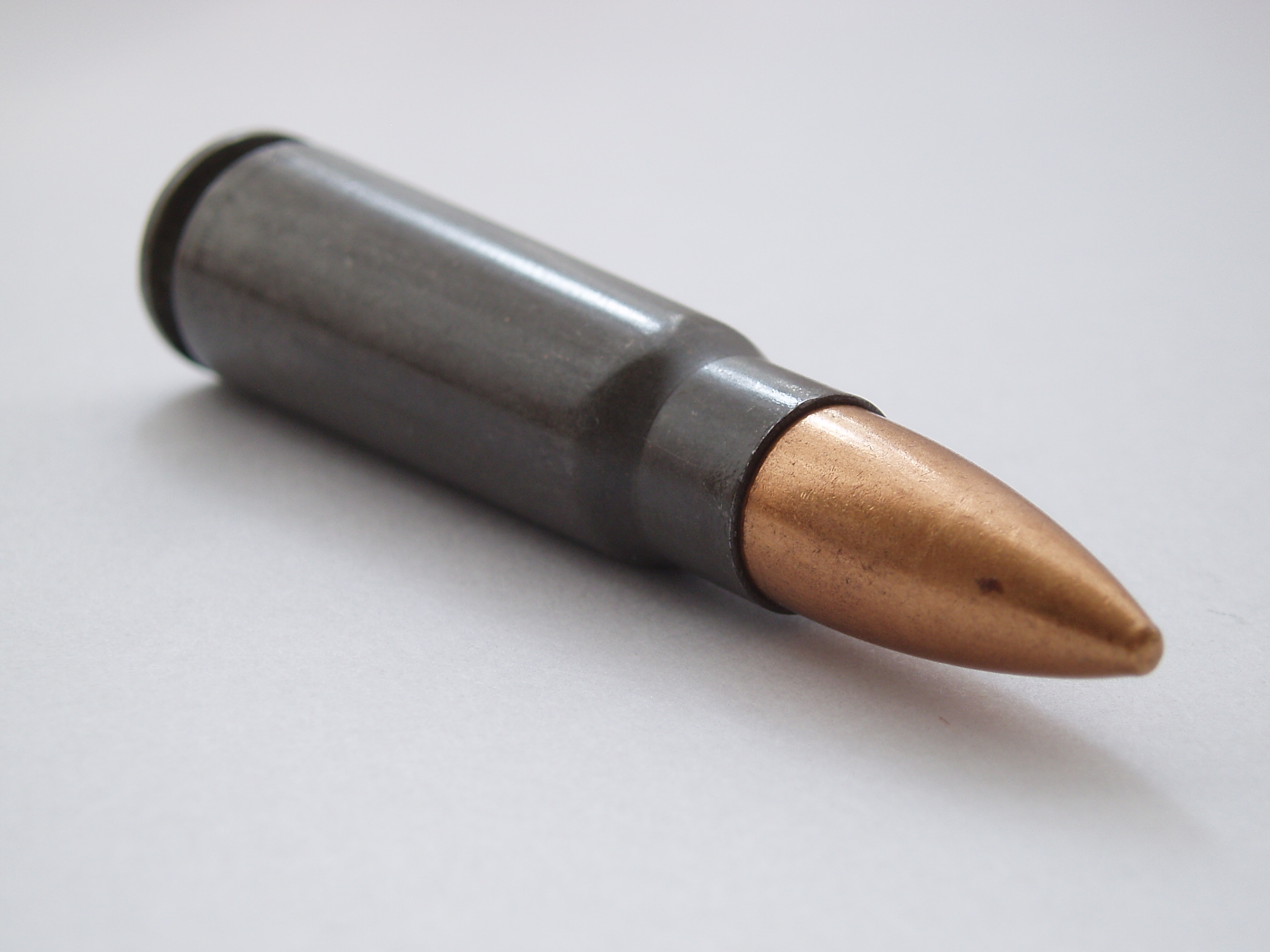
The 7.62x39 is the cartridge behind the AK-47 and the SKS, and it is one of the most widely fired rifle rounds in the world. It is also one of the most argued-about. Fans say it hits harder than a .223 and runs in any rifle. Critics say it drops like a rock past 200 yards. Both sides are partly right.
So how far does the 7.62x39 really shoot? This guide pulls together published factory ballistics for the most popular loads, including velocity, energy and bullet drop out to 500 yards. It also covers barrel length, steel versus brass ammo, hunting performance, and how the cartridge compares to the 5.56 and the .30-30. If you are already shopping, you can check out current 7.62x39 ammo prices across retailers on Ammo Browser while you read.
The Short Answer
- Practical range is about 200 yards. Most hunting and everyday shooting with the 7.62x39 happens inside that distance, and many shooters stretch to 300 yards when they know the range.
- Typical factory loads leave the muzzle at about 2,350 fps with about 1,500 ft-lbs of energy.
- Energy drops below 1,000 ft-lbs at roughly 150 to 185 yards, depending on the load.
- Bullet drop is real. With a 200-yard zero, expect about 14 inches of drop at 300 yards and 40 to 48 inches at 400.
- Past 400 yards, the bullet is slow, low on energy and close to the speed of sound by about 500 yards.
The rest of this article shows the numbers behind those claims.
What Is the 7.62x39?
The 7.62x39, also called the 7.62x39 Soviet, is an intermediate rifle cartridge developed in the Soviet Union near the end of World War II. It was designed to work in semi-automatic and selective-fire rifles as well as light machine guns. Mikhail Kalashnikov began work on the AK-47 in 1945, and rifles chambered for this cartridge are now made in nearly 100 countries.
It is not the same as the 7.62 NATO, which is the .308 Winchester. The 7.62x39 is a shorter, lower-powered round that fires a bullet of about .31 inch in diameter. A typical bullet weighs about 123 grains, which gives it a sectional density of about 0.182. That is a lower number than the 5.56 has, but the wider bullet makes a bigger wound channel.
Ammo.com places the 7.62x39 in a middle ground among the .223 Remington, .30-30 Winchester, 300 Blackout and 350 Legend. It is far more capable than a handgun cartridge such as the .45 ACP, and it cannot compete with long-range rounds like the 6.5 Creedmoor.
7.62x39 Muzzle Velocity and Energy
Most factory 7.62x39 loads leave a 20-inch test barrel at about 2,350 fps. Some typical examples:
- Sellier & Bellot 123 gr FMJ: about 2,421 fps
- Winchester Deer Season XP 123 gr: about 2,380 fps
- Hornady BLACK 123 gr SST: about 2,350 fps
- TulAmmo 154 gr SP: about 2,329 fps
Muzzle energy for most factory loads runs between about 1,400 and 1,700 ft-lbs. The Igman 123-grain FMJ sits near the top of that range at 1,776 ft-lbs. Subsonic loads sit at the opposite end: ammo.com lists the Atomic Tactical Cycling Subsonic 220-grain HPBT at just 539 ft-lbs at the muzzle, and Hornady makes a heavy 255-grain Sub-X subsonic load as well.
Compared to the 5.56, a typical 7.62x39 load is about 750 fps slower at the muzzle, but its heavier bullet carries about 200 ft-lbs more muzzle energy. One comparison from Gunvera puts a 123-grain SST at 1,508 ft-lbs against 1,265 ft-lbs for a 77-grain 5.56 match bullet.
Keep in mind that these are lab numbers. Ammo.com notes that real-world results vary with your rifle, the ammo lot and the weather, and ballistics can differ from lot to lot with the same brand and load.
7.62x39 Ballistics Data to 500 Yards
The numbers below come from manufacturer data published by AmmoToGo and Gunvera, measured from 20-inch test barrels with a 200-yard zero. A positive drop number means the bullet is above your line of sight, and a negative number means it is below. Small differences between sources are normal.
Hornady BLACK 123 gr SST (premium hunting load)
- Muzzle: 2,350 fps, 1,508 ft-lbs
- 100 yards: 2,040 fps, 1,136 ft-lbs, +3.5 inches
- 200 yards: 1,755 fps, 841 ft-lbs, on zero
- 300 yards: 1,502 fps, 616 ft-lbs, -14.8 inches
- 400 yards: 1,289 fps, 454 ft-lbs, -45.2 inches
- 500 yards: 1,129 fps, 348 ft-lbs, -96.6 inches
Federal American Eagle 124 gr FMJ (brass-case practice load)
- Muzzle: 2,350 fps, 1,520 ft-lbs
- 100 yards: 2,078 fps, 1,189 ft-lbs, +3.3 inches
- 200 yards: 1,824 fps, 916 ft-lbs, on zero
- 300 yards: 1,595 fps, 701 ft-lbs, -14.0 inches
- 400 yards: 1,392 fps, 533 ft-lbs, -41.5 inches
- 500 yards: 1,224 fps, 412 ft-lbs, -87.5 inches
Winchester Deer Season XP 123 gr (best ballistic coefficient of the group)
- Muzzle: 2,380 fps, 1,547 ft-lbs
- 100 yards: 2,112 fps, 1,218 ft-lbs, +3.2 inches
- 200 yards: 1,862 fps, 947 ft-lbs, on zero
- 300 yards: 1,633 fps, 728 ft-lbs, -14.0 inches
- 400 yards: 1,429 fps, 557 ft-lbs, -39.7 inches
- 500 yards: 1,257 fps, 431 ft-lbs, -83.3 inches
Winchester USA 123 gr FMJ (weakest of the group)
- Muzzle: 2,355 fps, 1,515 ft-lbs
- 100 yards: 2,026 fps, 1,121 ft-lbs, +3.6 inches
- 200 yards: 1,726 fps, 814 ft-lbs, on zero
- 300 yards: 1,463 fps, 585 ft-lbs, -15.5 inches
- 400 yards: 1,247 fps, 425 ft-lbs, -48.0 inches
- 500 yards: 1,093 fps, 326 ft-lbs
What the data shows
- The bullet sheds speed quickly. The SST loses about 1,200 fps over 500 yards and arrives at about 1,129 fps, close to the speed of sound.
- Load choice matters at distance. At 400 yards, the Winchester XP is still moving at 1,429 fps while the Winchester USA FMJ has slowed to 1,247 fps. Same cartridge, same maker, a 182 fps gap.
- Inside 200 yards, the loads are nearly identical. The difference only grows as the distance does.
Bullet Drop: Why 300 Yards Is the Real Limit
Ammo.com describes the 7.62x39 as flat shooting at close range, then falling steeply after about 300 yards. The cause is a low ballistic coefficient, which ammo.com puts at about 0.27 for a typical Winchester load.
With a 200-yard zero, here is how that plays out:
- Inside 200 yards: the bullet stays within about 3.5 inches of your line of sight at 100 yards. That is easy to hold with any reasonable target, so no holdover math is needed.
- At 300 yards: drop is about 14 to 16 inches depending on the load. It is workable if you know the exact distance, and a range error of 25 yards costs about 4 inches of vertical miss, according to Gunvera.
- At 400 yards: drop is about 40 to 48 inches. That is nearly four feet of holdover, which is not realistic without a ballistic turret or a reticle built for the cartridge.
- At 500 yards: drop is 83 to 97 inches, and the bullet is barely supersonic.
Ammo.com lists the drop of a 7.62x39 bullet at 300 yards at about 14 inches, which matches the factory data above.
Energy: How Far Does It Hit Hard Enough?
Many hunters use 1,000 ft-lbs of impact energy as a rough minimum for deer-sized game. It is only a rule of thumb, but it is a useful way to compare loads. Every load in the data above falls below 1,000 ft-lbs between about 150 and 185 yards:
- Winchester Deer Season XP holds out the longest, reaching close to 200 yards.
- Federal American Eagle and Federal Fusion hold 1,000 ft-lbs to about 175 yards.
- Winchester USA FMJ falls below 1,000 ft-lbs at about 140 yards.
By 300 yards, energy is down to about 585 to 728 ft-lbs. At 400 yards it is about 425 to 557 ft-lbs. Ammo.com puts the lethal distance of the 7.62x39 for deer at about 200 yards, and about 400 yards for military use, which lines up with the energy numbers.
Energy is not everything. Shot placement and bullet performance matter more than any single figure, and you should check your state’s rules on legal cartridges for the game you hunt.
Ballistic Coefficient: Steel vs. Brass
The biggest difference between 7.62x39 loads is the ballistic coefficient, which measures how well a bullet holds its speed. According to Gunvera’s data, brass-case loads with pointed bullets range from about 0.250 to 0.310. Steel-case loads such as Wolf and Tula come in at roughly 0.180 to 0.183, which is about 40 percent worse.
Those steel-case loads use bi-metal jackets and flat-base bullets that lose velocity quickly. No reliable downrange data is published for them past 100 yards. They are fine for plinking at close range, but if you are shooting past 150 yards, a brass-case load with a proper spitzer bullet is the better choice.
There are other trade-offs between the two:
- Steel-case ammo is usually cheaper, but it is not reloadable and tends to cause more chamber fouling, according to AmmoToGo.
- Brass-case ammo is reloadable, gentler on extractors and accepted at nearly every range.
- Range rules: many indoor ranges do not allow bi-metal jackets. A magnet that sticks to the bullet is a quick way to check.
Barrel Length: The AK Barrel Loses Very Little
The 7.62x39 is unusually forgiving of short barrels. In a cut-down barrel test reported by Gunvera, a 123-grain hollow-point load produced these velocities:
- 24 inches: about 2,357 fps
- 23 inches (peak): about 2,454 fps
- 20 inches: about 2,415 fps
- 18 inches: about 2,389 fps
- 16.5 inches: about 2,357 fps
- 10.5 inches: about 2,000 fps
Going from a 20-inch barrel to a standard 16.5-inch AK barrel costs only about 58 fps. Most rifle cartridges lose 25 to 50 fps per inch of barrel, so that is very little. Ammo.com agrees that barrel length affects this cartridge less than most, and recommends a 16-inch barrel for most hunting situations. Gunvera suggests subtracting roughly 50 to 100 fps from the 20-inch figures if you shoot a 16-inch AK.
How Far Can You Shoot It? Distance by Use
The answer depends on what you are doing.
- Plinking and steel targets: easy inside 200 yards. With a known range and a good zero, 300 yards is possible.
- Hunting deer and hogs: about 150 to 200 yards with an expanding bullet. Ammo.com puts it at about 200 yards for deer, and calls the cartridge well suited to medium game such as whitetail.
- Rifle-shooting practice with an AK: ammo.com puts the effective range of the 7.62x39 from an AK-47 at about 300 yards.
- Military or tactical use: about 400 yards for maximum effective range, according to ammo.com.
- Beyond 400 yards: not a good match. The bullet goes subsonic at roughly 500 to 575 yards depending on the load, according to Gunvera.
Terminal Performance: Hunting Loads vs. FMJ
Because the 7.62x39 is a moderate-energy cartridge, the bullet matters. A Firearms News gel test, as reported by Gunvera, fired seven loads from a Polish AKM into calibrated 10 percent ballistic gelatin:
- Hornady SST 123 gr: about 21.75 inches of penetration, expanded to about 0.70 inch, kept about 89 percent of its weight. The best expanding load in the test.
- Federal American Eagle 124 gr FMJ: about 31 inches of penetration with no expansion, which is the expected result for a full metal jacket.
- Wolf and Barnaul soft points (125 gr): expanded to about 0.62 to 0.64 inch, penetrated about 17.5 to 18 inches, and kept more than 90 percent of their weight. Good budget expanding loads.
- Wolf hollow point 124 gr: expanded only to about 0.46 inch and kept about 58 percent of its weight.
- Barnaul hollow point 123 gr: penetration was inconsistent at roughly 12.75 to 13.5 inches.
- Winchester PDX1 120 gr: fragmented, keeping about 66 percent of its weight.
AmmoToGo makes a related point: hollow-point 7.62x39 loads are common, but they do not generally expand like a handgun hollow point. For deer and hog hunting, bullets designed for it, such as the Hornady SST or Winchester’s Extreme Point, are the better choice. Gunvera also lists the Federal Fusion as a strong performer, with about 15.1 inches of penetration and 0.759 inch of peak expansion in independent testing.
7.62x39 vs. 5.56 and .223
This is the old AK versus AR debate. Using Gunvera’s comparison of a 123-grain SST against a 77-grain 5.56 match load:
- Muzzle energy: 1,508 ft-lbs for the 7.62x39 versus 1,265 ft-lbs for the 5.56.
- 200-yard energy: 842 ft-lbs versus 871 ft-lbs. The gap has already closed.
- 300-yard energy: 617 ft-lbs versus 713 ft-lbs. The 5.56 pulls ahead.
- 300-yard drop (200-yard zero): about 14.8 inches versus about 8.6 inches.
- Supersonic range: about 575 yards for the 7.62x39 versus about 1,000 yards for the 5.56.
Inside about 150 yards, the 7.62x39 hits harder. Beyond 200 yards, the 5.56 shoots flatter, retains more energy and drifts less in the wind. Ammo.com also covers this matchup in more detail, with trajectory charts against the .223, 5.56, 300 Blackout and 350 Legend.
The rifles differ too. AmmoToGo notes that the AK is about 2.5 pounds heavier than an AR-15, less customizable and typically less accurate downrange, though its sights and sturdiness are strengths. It also argues that the 7.62x39’s reputation for poor accuracy comes mostly from cheap rifles and ammo rather than the cartridge itself.
7.62x39 vs. .30-30 Winchester
The 7.62x39 and the .30-30 fill a similar role. Averages from AmmoToGo’s comparison data, as reported by Gunvera:
- Muzzle velocity: about 2,358 fps for the 7.62x39 versus about 2,391 fps for the .30-30.
- Muzzle energy: about 1,524 ft-lbs versus about 1,867 ft-lbs.
- 200-yard velocity: about 1,763 fps versus about 1,693 fps. The 7.62x39 actually keeps its speed better.
- 200-yard energy: about 852 ft-lbs versus about 930 ft-lbs.
- Holds 1,000 ft-lbs to: about 163 yards versus about 211 yards.
- 200-yard drop (100-yard zero): about 8.7 inches versus about 6.9 inches.
The .30-30 wins on energy because it uses heavier bullets and more powder. The 7.62x39 retains velocity well because it fires pointed bullets, while many .30-30 lever-action loads use flat-nose bullets for tube-magazine safety. The 7.62x39 also tends to win on ammo cost, magazine capacity and the number of rifles available. Ammo.com agrees the two are comparable cartridges.
Steel Case, AKs and ARs
The 7.62x39 was built around the AK platform, and steel-case ammo runs reliably in AK and SKS rifles. AR-15s chambered in 7.62x39 are a different story. According to Gunvera, steel cases can cause extraction problems in the tighter chambers of an AR, and brass-case ammo is the safer choice there.
Common rifles for the cartridge include:
- AK-47 and AKM variants: the defining platform, with a huge aftermarket.
- SKS: a fixed 10-round magazine fed by stripper clips, and one of the cheapest ways into the cartridge.
- Ruger Mini-30: an American-made semi-auto that tends to shoot softer than most AKs.
- Ruger American Ranch: a bolt-action option that takes Mini-30 magazines and is typically more accurate than semi-autos in this caliber.
- AR-15 pattern uppers and rifles: these need a different bolt, barrel and magazines.
Best 7.62x39 Ammo by Use
- Range practice: brass-case FMJ from Federal American Eagle, Sellier & Bellot, PMC or Winchester USA, or steel-case from Wolf and Tula if your range allows it and your rifle is an AK or SKS.
- Hunting deer and hogs: expanding loads such as the Hornady BLACK SST, Winchester Deer Season XP, Federal Fusion or Federal Power-Shok.
- Shooting past 150 yards: a brass-case load with a high ballistic coefficient, such as the Winchester XP or Federal Fusion, keeps more speed and energy than steel-case FMJ.
- Subsonic use: specialty loads such as the Hornady 255 gr Sub-X and the Atomic 220 gr HPBT exist, but they carry far less energy than standard loads.
Prices for 7.62x39 ammo change often and vary a lot by brand, case material and quantity. You can compare 7.62x39 ammo prices by load and price per round on Ammo Browser before buying a case.
Verdict: How Far Does the 7.62x39 Really Shoot?
The 7.62x39 is a close-to-mid-range cartridge, and it is honest about it. Inside about 200 yards, it is flat enough to need no holdover, carries enough energy for medium game with the right bullet, and runs in some of the cheapest, most plentiful rifles in the world. Out to 300 yards it is still workable if you know your distance. Past 400 yards, it is slow, steeply dropping and close to subsonic.
That is not a flaw. It is what the cartridge was designed to do. If your shooting stays inside 200 to 300 yards, the 7.62x39 gives you a lot for the money. If you regularly shoot farther, a flatter-shooting round such as the .223 or a cartridge with a higher ballistic coefficient is the better tool.
When you are ready to stock up, compare current 7.62x39 ammo prices and find the right load for your rifle.
7.62x39 Ballistics FAQ
What is the bullet drop of a 7.62x39 at 300 yards?
About 14 to 16 inches with a 200-yard zero, depending on the load. Ammo.com lists about 14 inches.
What is the effective range of the 7.62x39?
About 200 yards for most hunting and practical use, about 300 yards from an AK-47 according to ammo.com, and about 400 yards as a maximum for military use.
Is the 7.62x39 good for deer?
With an expanding bullet such as the Hornady SST or Winchester Extreme Point, yes, out to about 150 to 200 yards. FMJ ammo does not expand and is not a good hunting choice. Check your state’s regulations before you hunt.
How fast is a 7.62x39 bullet?
About 2,350 fps from a 20-inch barrel for most 123-grain factory loads. Some brass-case loads run up to about 2,420 fps.
Is the 7.62x39 more powerful than the 5.56?
At the muzzle and inside about 150 yards, yes. A 123-grain 7.62x39 carries about 1,500 ft-lbs versus about 1,265 for a 77-grain 5.56. By about 200 to 300 yards, the 5.56 catches up and then passes it.
Does barrel length matter for the 7.62x39?
Very little. Going from 20 inches to 16.5 inches costs only about 58 fps in a cut-down barrel test, and even a 10.5-inch barrel still reaches about 2,000 fps.
Is steel-case ammo okay to shoot?
In AK and SKS rifles, yes. It is cheaper, but it is not reloadable, foul more and has a much lower ballistic coefficient. In AR-15s, brass-case ammo is the safer choice because steel cases can cause extraction problems. Many indoor ranges also ban bi-metal jackets.
Is the 7.62x39 the same as the 7.62 NATO?
No. The 7.62 NATO is the .308 Winchester, a longer and more powerful cartridge. The two are not interchangeable.
Ballistic figures are based on representative published factory ammunition specifications and calculated muzzle-energy values. Actual velocities and trajectories vary with barrel length, rifle, ammunition lot, and environmental conditions. Always follow firearm and ammunition manufacturer guidance, confirm your rifle's compatibility with the ammunition selected, and comply with applicable hunting regulations.