
 Wishlist

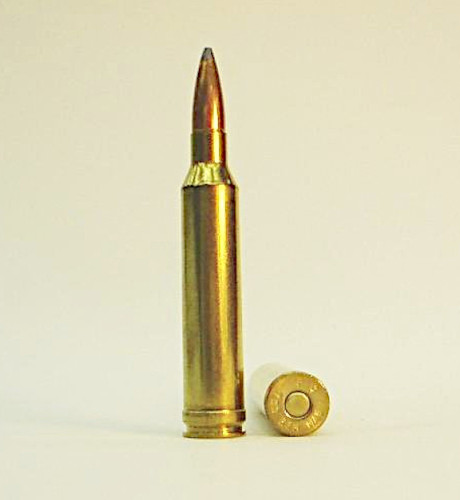
The 7mm Rem Mag has been a fixture in American deer camps and elk camps for more than sixty years. Introduced as the 7mm Remington Magnum in 1962 alongside the Remington Model 700, it earned a reputation as the cartridge that does nearly everything: flatter shooting than a .30-06, easier on the shoulder than the big .30-caliber magnums, and powerful enough for elk, moose and bear when it is loaded with the right bullet.
But the field has changed. The 6.5 PRC and 7mm PRC have arrived with modern case designs, laser rangefinders have taken much of the guesswork out of long shots, and some respected writers have called the 7mm Rem Mag overrated. So is it still the king of long-range hunting cartridges?
This guide covers 7mm Rem Mag ballistics, bullet weights, recoil and the best ammo for hunting, then puts the cartridge up against the 300 Win Mag, the .30-06 and the PRC newcomers. If you are already shopping, you can check out current 7mm Rem Mag ammo prices across retailers on Ammo Browser while you read.
The Short Answer
- Yes, if “king” means the most proven all-around magnum for hunting out to roughly 500 yards with widely available factory ammo.
- No, if “king” means the best at everything. The .30-06 wins on ammo variety and barrel life, the 300 Win Mag wins on heavy-bullet options, and the newer PRC cartridges are built around today’s longest, highest-BC bullets.
- Best fit: western big-game hunters who want one rifle for deer, antelope and elk, and who can handle about 20 to 25 ft-lbs of recoil.
The rest of this article shows the numbers behind that verdict.
7mm Remington Magnum History: Where It Came From
Remington launched the 7mm Remington Magnum in 1962 with the new Model 700 bolt-action rifle. It is a belted magnum built on the .375 H&H Magnum case, shortened to 2.5 inches so it fits a standard .30-06-length action. The shorter, fatter case with a sharper shoulder gave plenty of powder room and became a template for many magnums that followed. Interestingly, the idea was not entirely new: Holland & Holland had offered a similar 2.5-inch 7mm magnum, the .275 H&H Magnum, decades earlier. It simply took Remington’s marketing and the Model 700 to make the concept catch on.
The timing mattered. The 7mm Rem Mag quickly overtook the .264 Winchester Magnum, which fell into near-obscurity, and Winchester answered in 1963 with the .300 Winchester Magnum. The two have been the most popular magnums among American hunters ever since. The appeal was straightforward: a hunter could reach farther than with a .270 Winchester, with bullets that carried well downrange, and without the recoil of the larger .30-caliber magnums.
It has held up commercially, too. American Rifleman’s Bryce Towsley cited an older ammo-industry survey that ranked it sixth in big-game cartridge sales, and American Hunter has noted that it still ranks high in most ammunition makers’ sales records. One reason is bullet choice: apart from .30 caliber, few bore sizes offer as many hunting bullets as 7mm.
7mm Rem Mag Specs and Cartridge Basics
- Introduced: 1962, with the Remington Model 700
- Parent case: .375 H&H Magnum (belted)
- Bullet diameter: .284 inch
- Case length: 2.500 inches
- Overall length: 3.29 inches
- Case capacity: about 82 grains of water
- Primer: large rifle magnum
- SAAMI max average pressure: 61,000 psi
- Common twist rates: 1:9 to 1:10
- Action length: standard (.30-06 length)
7mm Rem Mag Ballistics: What the Numbers Look Like
Ballistics tables mean little without context, so here is a real factory load. The figures below use Hornady’s published data for its 162-grain ELD-X Precision Hunter load, fired from a 24-inch test barrel and zeroed at 200 yards.
- Muzzle: 2,975 fps, 3,183 ft-lbs, 1.5 inches below the line of sight
- 100 yards: 2,827 fps, 2,874 ft-lbs, 1.4 inches high
- 200 yards: 2,682 fps, 2,588 ft-lbs, on zero
- 300 yards: 2,542 fps, 2,324 ft-lbs, 6.3 inches low
- 400 yards: 2,406 fps, 2,082 ft-lbs, 17.9 inches low
- 500 yards: 2,274 fps, 1,860 ft-lbs, 35.6 inches low
Source: Hornady factory data. Your results will vary with barrel length, rifle, temperature and altitude.
A few things stand out:
- The bullet stays fast. It sheds about 700 fps over 500 yards but is still moving at more than 2,200 fps.
- Energy holds up. The load still carries about 1,860 ft-lbs at 500 yards, above the roughly 1,500 ft-lbs many hunters treat as a guideline for elk.
- Drop is manageable. About three feet of drop at 500 yards is easy to handle with a rangefinder and a turret or a ballistic reticle.
How modern bullets changed the picture
The cartridge has not changed, but bullets have. Backfire published numbers for an older-generation 175-grain Remington Core-Lokt load (ballistic coefficient of about 0.428, 200-yard zero). It drops roughly 39 inches at 500 yards, drifts about 21 inches in a 10 mph crosswind at that distance, and carries about 1,378 ft-lbs. That was a good elk load decades ago, and Backfire’s view is that modern loads beat it in almost every category. Hornady’s Heat Shield tip and ELD-X design are a good example, with a much higher published ballistic coefficient. The ELD-X is also designed to expand at both close range and long range, with Hornady claiming about 50 to 60 percent weight retention at high-velocity impacts and 85 to 90 percent at low-velocity, long-range impacts.
Barrel length matters
The 7mm Rem Mag is sensitive to barrel length. Many sources consider 24 inches a practical minimum for the cartridge, with 26 to 27 inches needed to get its full velocity. A common rule of thumb is that you lose roughly 25 to 30 fps per inch of barrel. That is not a reason to avoid a lighter 22-inch mountain rifle, since a turret adjustment makes up for a few extra inches of drop, but it explains why velocities vary so much from one source to another.
7mm Rem Mag Bullet Weights: 140 vs. 150 vs. 160 vs. 175 Grains
Factory loads for the 7mm Rem Mag mostly run from about 139 to 175 grains, and some commercial loads go as high as 195. Typical velocities for common weights:
- 140 grain: about 3,100 fps and 3,000 ft-lbs at the muzzle. Best for deer, antelope and longer open shots.
- 150 grain: about 3,100 fps and 3,200 ft-lbs. Best for deer, antelope and black bear.
- 160 to 165 grain: about 2,900 to 2,950 fps and 3,100 to 3,200 ft-lbs. Best for all-around hunting and elk.
- 175 grain: about 2,750 to 2,860 fps and 3,100 to 3,200 ft-lbs. Best for elk, moose and long range.
Velocities and energies are representative figures from published load data and hunting-media sources and vary by manufacturer and barrel length.
A few practical notes:
- 160 to 162 grains is the sweet spot for many hunters. Hunters on the Rokslide forum who chase game across the West report that 160- to 162-grain bullets often shoot most accurately in their 7mm Rem Mags, and Hornady’s 162-grain ELD-X is a popular choice.
- Light bullets can be too fast up close. Field & Stream’s David Petzal warns that very light, high-velocity bullets can wreck meat at short range, and he prefers the 175-grain weight when shooting long distances because heavier, high-BC bullets arrive with more force. That is one writer’s opinion, but it reflects a common concern.
- Check your twist rate. Most factory rifles use a 1:9 to 1:10 twist, which handles common hunting weights well. If you plan to shoot very long, heavy bullets, check the bullet maker’s twist recommendation first.
Best 7mm Rem Mag Ammo for Hunting
The best 7mm Rem Mag ammo depends on what you hunt and how far you shoot. Bullet construction matters more than any single number on a ballistics chart.
By bullet type:
- Tough bonded or monolithic bullets such as the Swift A-Frame, Norma Oryx, Federal Trophy Bonded Bear Claw, Nosler Partition and Barnes TSX are built to punch through heavy shoulder bone on large elk, moose or bear.
- Bonded boat-tails such as the Nosler AccuBond, Hornady InterBond and Swift Scirocco II flatten trajectory and resist wind while staying tough.
- Cup-and-core designs such as the Hornady ELD-X and Sierra GameKing are popular for long-range deer and antelope.
Popular factory loads worth a look:
- Hornady Precision Hunter 162 gr ELD-X: a high-BC load that Backfire recommends for elk and rates well out to about 400 yards, with the ability to stretch toward 500.
- Nosler Trophy Grade 160 gr AccuBond: a bonded bullet that Backfire says can extend the effective range of an older 7mm Rem Mag elk load by another 100 to 150 yards.
- Federal Fusion 175 gr: a more affordable load that sits in the sweet spot for elk and is a good option for older rifles with slower twists.
- Other well-known options: Federal Trophy Bonded Tip, Barnes VOR-TX and Hornady Superformance.
Matching ammo to game:
- Deer and antelope inside 300 yards: a controlled-expansion bullet in the 140 to 160 grain range.
- Deer and antelope past 300 yards: a high-BC bullet such as an ELD-X or similar.
- Elk: a 160 to 175 grain bonded or high-BC bullet.
- Moose and bear: a tough bonded or monolithic bullet that holds together on bone.
Prices for 7mm Rem Mag ammo vary a lot between retailers and change from week to week, especially heading into hunting season. You can compare 7mm Rem Mag ammo prices by load, bullet weight and price per round on Ammo Browser before you buy a full case.
7mm Rem Mag Recoil
Recoil is one of the main reasons hunters pick the 7mm Rem Mag over bigger magnums, but numbers vary depending on rifle weight and load. Here is what several sources report for free recoil energy:
- 7mm Rem Mag: about 20 ft-lbs
- .30-06: about 17 to 21 ft-lbs
- 300 Win Mag: about 30 ft-lbs
In plain terms, expect roughly 20 to 25 ft-lbs from a typical hunting rifle. That is a bit more than a .30-06 and noticeably less than a 300 Win Mag. Most experienced shooters handle it fine with a properly fitted rifle and a good recoil pad. A heavier rifle, a quality pad and plenty of practice from field positions will do more for your accuracy than switching cartridges. A muzzle brake cuts recoil further but adds blast, so many hunters skip it.
7mm Rem Mag vs. 300 Win Mag
This is the classic magnum debate, and it has been running since Winchester introduced the 300 Win Mag in 1963. Both cartridges are based on the .375 H&H case and fit standard-length actions, and both will cleanly kill elk and other big game with the right bullet in the right place.
Ron Spomer ran a comparison with both rifles at 8 pounds, zeroed at 250 yards, with maximum-velocity loads in a 10 mph crosswind. His findings:
- The 7mm Rem Mag shoots flatter because its bullet leaves the muzzle about 200 fps faster.
- It drifts less in the wind. Wind drift depends on ballistic coefficient and velocity together, not just bullet weight.
- The 300 Win Mag delivers more energy at every range thanks to its heavier .308 bullet.
- The 7mm kicks less: about 24.6 ft-lbs versus about 30.4 ft-lbs for the 300 Win Mag.
- The energy gap rarely matters. Spomer points out that roughly 150 ft-lbs of extra impact energy will not decide whether an elk drops or runs.
He also notes a factory-ammo twist: most 7mm Rem Mag brands offer 170 to 175 grain bullets, while factory 300 Win Mag loads rarely go heavier than 180 grains. That narrows the gap in favor of the 7mm if you do not handload. His conclusion was that he would pick the 7mm Rem Mag by a nose for all-around hunting, while saying he would happily hunt anything with either cartridge.
- Trajectory: the 7mm Rem Mag is flatter, and the 300 Win Mag has slightly more drop.
- Wind drift: the 7mm Rem Mag drifts less.
- Downrange energy: the 300 Win Mag is higher.
- Recoil: about 20 to 25 ft-lbs for the 7mm Rem Mag versus about 26 to 30 ft-lbs for the 300 Win Mag.
- Max pressure (SAAMI): 61,000 psi for the 7mm Rem Mag versus 64,000 psi for the 300 Win Mag.
- Bullet options: typically 140 to 175 grains for the 7mm Rem Mag, with heavier .30-caliber bullets available to 300 Win Mag handloaders.
Bottom line: if you hunt deer, antelope and elk and care about recoil, the 7mm Rem Mag is the easier cartridge to shoot well. If you regularly hunt the largest bears and moose and want extra bullet weight, the 300 Win Mag gives you more margin.
7mm Rem Mag vs. .30-06
The .30-06 is the benchmark all-around hunting cartridge, so the comparison is a fair one. On paper, the 7mm Rem Mag has the ballistic edge at every bullet weight, because it launches its bullets faster and .284 bullets generally have higher ballistic coefficients and sectional density than .308 bullets of similar weight.
Field & Stream’s Petzal scored the two across several categories and picked the .30-06 overall, but his scorecard is more nuanced than the headline:
- Recoil (about 20 vs. 17 ft-lbs): tie
- Accuracy potential: .30-06
- Ammo variety and price: .30-06
- Effectiveness on game: tie
- Barrel life: .30-06
- Ease of handloading: .30-06
- Long-range performance: 7mm Rem Mag on paper, tie in practice
His case for the .30-06 on barrel life is notable: roughly 5,000 rounds of top accuracy for the .30-06 versus about half that for the 7mm Rem Mag. For most hunters, who fire a few dozen rounds a year, that will not matter. For high-volume shooters, it will.
The practical takeaway is that the 7mm Rem Mag offers a modest ballistic advantage in exchange for a bit more recoil, more blast and a shorter barrel life. If you want maximum flexibility and the widest ammo selection, the .30-06 is hard to beat. If you want flatter trajectory and better wind performance, the 7mm Rem Mag earns its place.
7mm Rem Mag vs. 6.5 PRC and 7mm PRC
This is where the “still the king” question gets interesting.
7mm Rem Mag vs. 6.5 PRC
On a hunting forum thread comparing the two, one hunter pointed to factory Hornady ELD-X loads: a 143-grain 6.5 PRC at about 2,960 fps with a 0.625 ballistic coefficient, versus a 162-grain 7mm Rem Mag at about 2,940 fps with a 0.631 coefficient. By his numbers, both loads reach about 1,900 fps at 1,000 yards, but the 7mm carries roughly 1,300 ft-lbs there versus about 1,155 for the 6.5. Other posters called the two nearly twins ballistically and agreed that either will kill elk and that most shooters could not tell the difference in the field. These are forum figures, so verify them against Hornady’s data before relying on them.
Where the 6.5 PRC does win is recoil and blast, and some shooters feel it is more accurate at long range. Where the 7mm Rem Mag wins is bigger bullet diameter, heavier bullet options and, at least when that thread was written, easier ammo availability. One poster who built a 7mm Rem Mag after selling a 6.5 PRC said he went back to the 7 as his all-around choice partly because he doubted the 6.5’s power on a 600-yard cow elk.
7mm Rem Mag vs. 7mm PRC
The 7mm PRC is built for long, heavy, high-BC 7mm bullets in a modern beltless case that fits standard long-action magazines. In retailer comparisons, its 175-grain bullets have a higher ballistic coefficient than the 162-grain loads typical of the 7mm Rem Mag, which helps with wind drift and downrange energy. The advantages are small inside 500 yards and grow with distance.
The practical rule of thumb: if you are buying a new rifle and expect to shoot regularly beyond 500 to 600 yards, the 7mm PRC is worth a look. If you already own a 7mm Rem Mag, your rifle still does everything it has always done, and the performance difference at normal hunting ranges rarely justifies the cost of a new rifle and new brass.
How Far Can You Hunt With a 7mm Rem Mag?
Effective range depends on the bullet, the game and, most importantly, the shooter.
- Energy guidelines: many hunters use about 1,500 ft-lbs of impact energy as a minimum for elk and roughly 1,000 ft-lbs for deer-sized game. With Hornady’s 162-grain ELD-X load still carrying about 1,860 ft-lbs at 500 yards, the numbers support elk-sized game at that range with the right bullet.
- Practical limits: Backfire concluded that an older Core-Lokt load is solid on elk to about 400 yards, and that skilled shooters can stretch a 7mm Rem Mag to around 500. Modern high-BC loads add range beyond that.
- The shooter matters more than the cartridge. Energy figures are guidelines, not guarantees. Shot placement, bullet performance and wind-reading skill decide whether a shot is ethical. Practice at the ranges you plan to hunt, and pass on shots outside your proven ability.
For most western hunters, 300 yards is a typical shot and 500 yards is the outer edge. The 7mm Rem Mag is comfortable across that entire range.
The Case Against: Is the 7mm Rem Mag Underpowered?
Fairness requires the critics’ side. Field & Stream’s David Petzal has called the 7mm Rem Mag a weaker “magnum” than it should be. His argument: a 175-grain bullet at about 2,800 fps from a 24-inch barrel is modest next to cartridges like the 7mm STW or 7mm Remington Ultra Mag, which push that bullet to roughly 3,200 fps from a 26-inch barrel. He guesses Remington chose a smaller case to keep prices and recoil down, and he notes that, in his experience, the 7mm Rem Mag is only marginally better than a .270 Winchester or .280 Remington while kicking noticeably more.
Other points critics raise:
- Pressure ceiling. Bryce Towsley was puzzled that the 7mm Rem Mag’s 61,000 psi limit sits below the 300 Win Mag’s 64,000 psi, which seems to cap its performance without a clear reason.
- Barrel wear. Early rifles had throat erosion problems, and while modern materials have largely improved this, the cartridge is still hard on barrels.
- Rangefinders. Petzal argues that the original advantage, hitting distant targets with less guesswork, has mostly evaporated now that laser rangefinders and ballistic reticles exist.
These are valid points. But the 7mm Rem Mag’s defenders would answer that “magnum” was never about maximum velocity. It was about balance: serious downrange performance with recoil most hunters can shoot accurately. A cartridge that hunters shoot well beats a faster one they flinch from.
Verdict: Is the 7mm Rem Mag Still the King?
The fair answer is that the 7mm Rem Mag is still a king, but no longer the only one, and the crown depends on the job.
It earns the title if you want:
- One rifle for deer, antelope, elk and bear
- Flat trajectory and good wind performance out to about 500 yards
- Manageable recoil for a magnum
- A huge selection of bullets and a rifle chambered in almost every hunting model
It loses ground if you want:
- The lowest recoil possible (consider a 6.5 PRC or a .30-06)
- Maximum barrel life or the widest ammo selection (consider the .30-06)
- The heaviest bullets for the biggest game (consider a 300 Win Mag)
- The best performance beyond 600 to 700 yards (consider the 7mm PRC)
Sixty years after its introduction, the 7mm Rem Mag does not need to beat every newcomer to stay relevant. It needs to keep doing what it has always done: kill big game cleanly at the ranges most hunters actually shoot. By that measure, it has held its crown.
When you are ready to stock up, compare current 7mm Rem Mag ammo prices and find the load that fits your rifle and your hunt.
7mm Rem Mag FAQ
Is the 7mm Remington Magnum good for elk?
Yes. With a quality 160 to 175 grain bonded or high-BC bullet, the 7mm Remington Magnum is widely regarded as one of the best elk cartridges, with enough energy and penetration for typical hunting ranges out to around 500 yards.
How far can a 7mm Rem Mag shoot accurately?
The cartridge itself can reach well beyond 500 yards, and Hornady’s 162-grain ELD-X load still carries about 1,860 ft-lbs at that distance. The practical hunting limit depends on your skill, the bullet and the game. Most hunters should stay inside distances they have practiced and proven.
What is the best bullet weight for the 7mm Rem Mag?
For most all-around hunting, 160 to 162 grains is a popular choice. Choose 140 to 150 grains for lighter game and 175 grains for elk, moose and longer shots.
How much recoil does a 7mm Rem Mag have?
Expect roughly 20 to 25 ft-lbs of free recoil in a typical hunting rifle. That is more than a .30-06 and less than a 300 Win Mag.
Is the 7mm Rem Mag better than the 300 Win Mag?
It shoots flatter, drifts less and kicks less, while the 300 Win Mag delivers more downrange energy. For deer, antelope and elk, the 7mm is often the easier cartridge to shoot well. For the largest bears and moose, the 300 Win Mag offers more bullet-weight margin.
Is the 7mm Rem Mag better than the .30-06?
On paper it has a ballistic edge, but the .30-06 offers more ammo variety, longer barrel life and slightly less recoil. In real-world hunting, both are effective on the same game.
How does the 7mm Rem Mag compare to the 7mm PRC and 6.5 PRC?
The 7mm PRC has a modest advantage at extended range thanks to higher-BC bullets, and the 6.5 PRC has less recoil. Inside 500 yards, the difference in the field is small for most hunters.
What action length does the 7mm Rem Mag need?
It fits a standard .30-06-length long action.
How long does a 7mm Rem Mag barrel last?
Sources suggest accuracy-life of roughly 2,500 rounds, about half of what a .30-06 delivers. Most hunters shooting a few boxes a year will not wear one out.
Is the 7mm Rem Mag still popular?
Yes. It remains one of the best-selling big-game cartridges, with rifles and ammo offered by nearly every major manufacturer.
This article is intended for general educational purposes and does not constitute legal advice. Always use ammunition that matches the cartridge designation and specifications approved by your firearm manufacturer. Follow all shooting-range rules, wear appropriate eye and hearing protection, and comply with applicable local, state, and federal laws. Ammunition classifications, firearm compatibility, and hunting regulations can vary by jurisdiction and application.