
'%3e%3cpath%20d='M25.8906%2030.68L16.0006%2025L6.14062%2030.68V4.55C6.14063%203.75435%206.4567%202.99129%207.0193%202.42868C7.58191%201.86607%208.34498%201.55%209.14063%201.55H22.8906C23.6863%201.55%2024.4493%201.86607%2025.0119%202.42868C25.5746%202.99129%2025.8906%203.75435%2025.8906%204.55V30.68ZM9.14063%203.55C8.87541%203.55%208.62105%203.65536%208.43352%203.84289C8.24598%204.03043%208.14063%204.28478%208.14063%204.55V27.23L16.0006%2022.72L23.8806%2027.23V4.55C23.8806%204.28478%2023.7753%204.03043%2023.5877%203.84289C23.4002%203.65536%2023.1458%203.55%2022.8806%203.55H9.14063Z'%20fill='white'/%3e%3cpath%20d='M9.14063%202.55H22.8906C23.4211%202.55%2023.9298%202.76071%2024.3048%203.13579C24.6799%203.51086%2024.8906%204.01957%2024.8906%204.55V8.62H7.14062V4.55C7.14063%204.01957%207.35134%203.51086%207.72641%203.13579C8.10148%202.76071%208.61019%202.55%209.14063%202.55Z'%20fill='%238A3301'/%3e%3cpath%20d='M25.8906%209.62H6.14062V4.55C6.14063%203.75435%206.4567%202.99129%207.0193%202.42868C7.58191%201.86607%208.34498%201.55%209.14063%201.55H22.8906C23.6863%201.55%2024.4493%201.86607%2025.0119%202.42868C25.5746%202.99129%2025.8906%203.75435%2025.8906%204.55V9.62ZM8.14063%207.62H23.8906V4.55C23.8906%204.28478%2023.7853%204.03043%2023.5977%203.84289C23.4102%203.65536%2023.1558%203.55%2022.8906%203.55H9.14063C8.87541%203.55%208.62105%203.65536%208.43352%203.84289C8.24598%204.03043%208.14063%204.28478%208.14063%204.55V7.62Z'%20fill='white'/%3e%3cpath%20d='M16%2020.25C15.7348%2020.25%2015.4804%2020.1446%2015.2929%2019.9571C15.1054%2019.7696%2015%2019.5152%2015%2019.25V14.07C15%2013.8048%2015.1054%2013.5504%2015.2929%2013.3629C15.4804%2013.1754%2015.7348%2013.07%2016%2013.07C16.2652%2013.07%2016.5196%2013.1754%2016.7071%2013.3629C16.8946%2013.5504%2017%2013.8048%2017%2014.07V19.25C17%2019.5152%2016.8946%2019.7696%2016.7071%2019.9571C16.5196%2020.1446%2016.2652%2020.25%2016%2020.25Z'%20fill='white'/%3e%3cpath%20d='M18.5999%2017.66H13.4199C13.1547%2017.66%2012.9004%2017.5546%2012.7128%2017.3671C12.5253%2017.1796%2012.4199%2016.9252%2012.4199%2016.66C12.4199%2016.3948%2012.5253%2016.1404%2012.7128%2015.9529C12.9004%2015.7654%2013.1547%2015.66%2013.4199%2015.66H18.5999C18.8651%2015.66%2019.1195%2015.7654%2019.307%2015.9529C19.4946%2016.1404%2019.5999%2016.3948%2019.5999%2016.66C19.5999%2016.9252%2019.4946%2017.1796%2019.307%2017.3671C19.1195%2017.5546%2018.8651%2017.66%2018.5999%2017.66Z'%20fill='white'/%3e%3c/g%3e%3cdefs%3e%3cclipPath%20id='clip0_29353_35'%3e%3crect%20width='32'%20height='32'%20fill='white'/%3e%3c/clipPath%3e%3c/defs%3e%3c/svg%3e) Wishlist
Wishlist
9mm Ammo Explained: 115 vs 124 vs 147 Grain, FMJ vs Hollow Point & More
Walk into almost any gun store and you'll find dozens of different boxes of 9mm ammunition. Some are labeled 115 grain, others 124 grain or 147 grain. Some are FMJ, while others are Jacketed Hollow Point (JHP) or marked +P.
If you're new to shooting or even if you've been shooting for years it can be difficult to know which one is right for your needs.
The truth is there isn't one "best" 9mm load for every situation. The ideal ammunition depends on whether you're practicing at the range, carrying for self-defense, competing, or simply becoming more familiar with your handgun.
This guide explains the different types of 9mm ammunition, what the various grain weights mean, and how to choose the right load for your specific purpose.
The Quick Answer
If you're looking for the simplest recommendations:
For Range Practice
- 115 Grain FMJ
- 124 Grain FMJ
For Self-Defense
- 124 Grain Jacketed Hollow Point
- 147 Grain Jacketed Hollow Point
For First-Time Buyers
124 Grain FMJ is an excellent starting point because it offers manageable recoil, good availability, and affordable pricing for practice.
Understanding Bullet Types
One of the biggest differences between boxes of 9mm ammunition isn't the bullet weight it's the bullet design.
Each type was created for a different purpose.
Full Metal Jacket (FMJ)
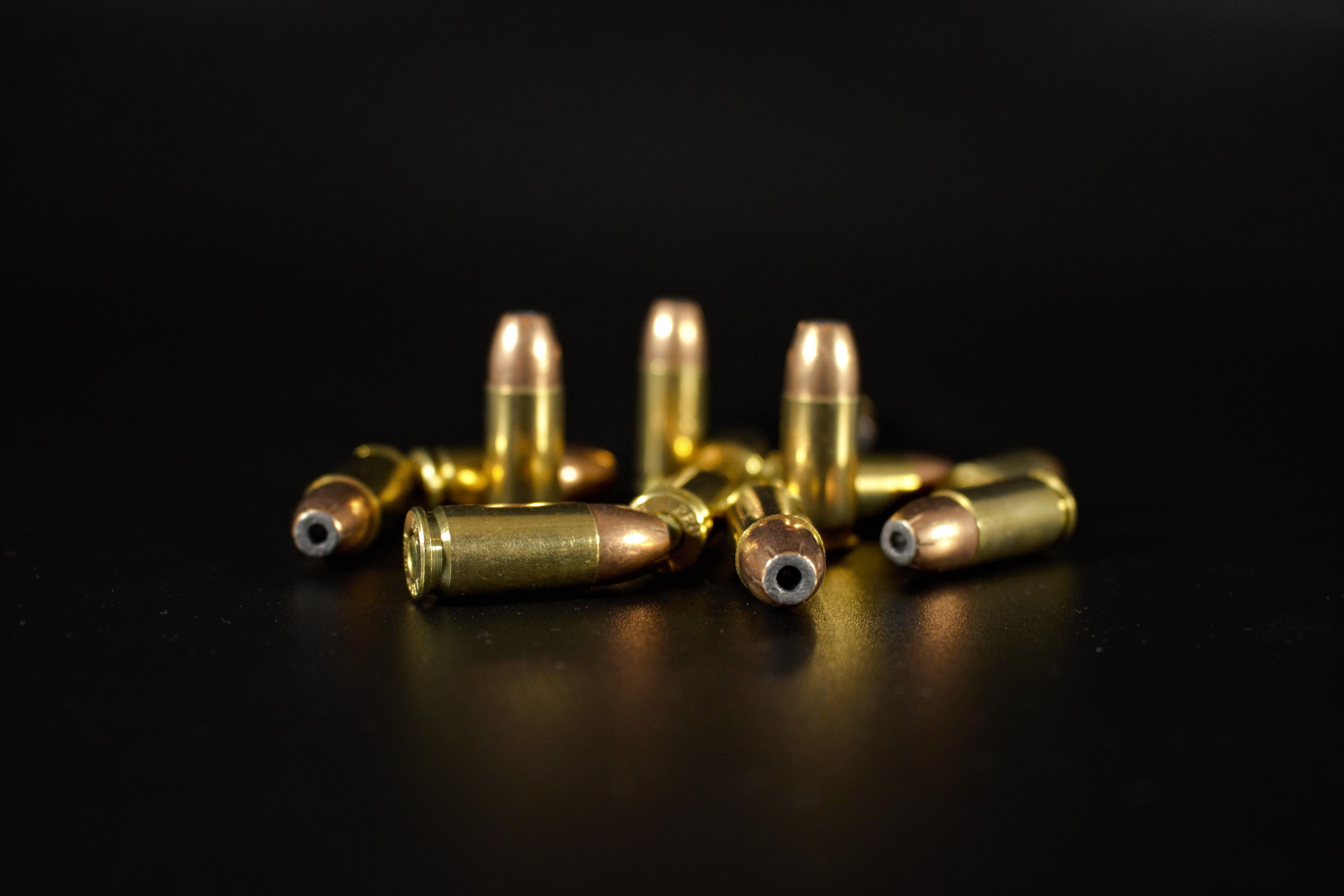
FMJ ammunition is the most common type of 9mm ammunition sold today.
The lead core is completely enclosed in a harder metal jacket, helping the bullet maintain its shape during penetration.
Best For
- Target shooting
- Training
- Recreational shooting
- High volume practice
Advantages
- Affordable
- Reliable feeding
- Widely available
- Excellent for range use
Disadvantages
- Designed primarily for training rather than personal defense
- Does not expand on impact
For most shooters, FMJ is the ammunition they'll fire most often during practice.
Jacketed Hollow Point (JHP)
Jacketed Hollow Point ammunition is specifically designed for personal protection.
The cavity in the front of the bullet is engineered to expand under appropriate conditions, increasing the bullet's diameter while helping reduce excessive penetration compared to non-expanding designs.
Best For
- Concealed carry
- Home defense
- Personal protection
Advantages
- Designed for controlled expansion
- Effective energy transfer
- Reduced risk of over-penetration compared to FMJ
Disadvantages
- More expensive than FMJ
- Not practical for high-volume practice
Many experienced shooters carry JHP ammunition for defense while using FMJ ammunition for training.
Soft Point (SP)
Soft point bullets expose a small amount of lead at the tip while retaining a jacket around the rest of the projectile.
Although common in many rifle calibers, soft point ammunition is relatively uncommon in 9mm handguns.
Some shooters choose soft points for specific applications, but they are not nearly as popular as FMJ or hollow points.
Frangible Ammunition
Frangible ammunition is designed to break apart when striking hard surfaces, reducing the likelihood of ricochets.
It is primarily used for:
- Indoor ranges
- Specialized training
- Steel target shooting where appropriate
Most everyday shooters will rarely use frangible ammunition outside specialized environments.
What Does +P Mean?
Some boxes of defensive ammunition are marked +P.
This indicates the ammunition is loaded to a higher pressure than standard 9mm ammunition.
Potential benefits include:
- Higher velocity
- Increased energy
- Improved expansion in some bullet designs
Potential drawbacks include:
- Increased recoil
- More muzzle blast
- Additional wear on firearms over time
Before using +P ammunition, verify that your handgun is rated to safely fire it according to the manufacturer's recommendations.
Understanding Bullet Weight
Bullet weight is measured in grains.
The three most common 9mm bullet weights are 115, 124, and 147 grains.
Each has advantages depending on how you plan to use your firearm.
115 Grain
115-grain ammunition is one of the most common and affordable 9mm loads available.
Because it's lighter, it generally achieves higher velocities than heavier bullets.
Best For
- Target shooting
- Recreational range use
- New shooters
- Budget-conscious practice
Advantages
- Often the least expensive
- Higher velocity
- Widely available
- Great for practice
Considerations
While defensive 115-grain loads exist, many shooters prefer heavier bullets for everyday carry.
124 Grain
Many experienced shooters consider 124-grain ammunition the best all-around choice.
It provides an excellent balance between recoil, velocity, and terminal performance.
Best For
- Everyday carry
- Home defense
- Range practice
- General-purpose shooting
Advantages
- Balanced recoil
- Excellent availability
- Available in FMJ and premium hollow points
- Widely used by law enforcement agencies
If you only plan to buy one type of 9mm ammunition, 124 grain is difficult to beat.
147 Grain
147-grain ammunition uses a heavier bullet traveling at a lower velocity than 115- or 124-grain loads.
Modern bullet designs have made 147-grain hollow points increasingly popular among defensive shooters.
Best For
- Concealed carry
- Home defense
- Suppressed firearms
- Shooters who prefer a softer recoil impulse
Advantages
- Consistent penetration
- Lower muzzle blast
- Naturally subsonic in many standard-pressure loads
- Excellent modern defensive performance
Which Grain Weight Is Right for You?
If your primary goal is affordable practice:
Choose 115 Grain FMJ.
If you want one versatile load:
Choose 124 Grain.
If you're selecting defensive ammunition:
Choose a quality 124 or 147 Grain Jacketed Hollow Point that functions reliably in your firearm.
Popular Uses
115 Grain:
Best For:
- Target shooting
- Range practice
- New shooters
- Budget-friendly training
Pros:
- Higher velocity
- Usually the least expensive option
- Widely available
- Great for high-volume practice
Cons:
- Less commonly chosen for everyday carry than heavier bullet weights
124 Grain
Best For:
- Everyday carry
- Home defense
- General-purpose shooting
- Shooters wanting one versatile load
Pros:
- Excellent balance of recoil and velocity
- Available in both FMJ and Hollow Point
- Commonly used by law enforcement
- Excellent all-around performer
Cons:
- Usually costs slightly more than 115 grain FMJ
147 Grain
Best For:
- Concealed carry
- Home defense
- Suppressed pistols
- Shooters who prefer a softer recoil impulse
Pros:
- Excellent penetration with quality defensive loads
- Naturally subsonic in many standard-pressure loads
- Softer shooting feel
- Excellent modern hollow point performance
Cons:
- Usually the most expensive of the three
- Slightly slower velocity than lighter bullets
Quick Buying Guide
Buy 115 Grain FMJ if you:
- Want inexpensive practice ammunition
- Shoot at the range frequently
- Are learning the fundamentals
Buy 124 Grain FMJ if you:
- Want one load that does almost everything well
- Practice regularly
- Prefer balanced recoil and performance
Buy 124 Grain Hollow Point if you:
- Carry for self-defense
- Want an excellent all-around defensive load
- Prefer a balance of expansion and penetration
Buy 147 Grain Hollow Point if you:
- Carry every day
- Use a suppressor
- Prefer a softer recoil impulse
- Want deep, consistent penetration with modern defensive ammunition
Popular Defensive Loads
While many manufacturers produce excellent defensive ammunition, several loads have earned strong reputations for reliability and consistent performance.
Popular choices include:
- Federal HST
- Speer Gold Dot
- Hornady Critical Defense
- Hornady Critical Duty
- Winchester Defender
- SIG Sauer V-Crown
- Remington Golden Saber
The most important factor isn't choosing the "perfect" brand it's selecting quality ammunition that functions reliably in your handgun.
Common Buying Mistakes
Avoid these common mistakes:
- Carrying FMJ ammunition for personal defense.
- Buying defensive ammunition without testing it.
- Assuming all handguns shoot every load equally well.
- Purchasing ammunition based only on price.
- Mixing different defensive loads in the same magazine.
- Ignoring your firearm manufacturer's recommendations for +P ammunition.
Test Your Carry Ammunition
Before trusting any defensive load:
- Fire enough rounds to confirm reliable feeding.
- Verify your point of impact.
- Check that every magazine functions correctly.
- Make sure you're comfortable with the recoil.
Confidence comes from testing not assumptions.
Does More Expensive Ammo Shoot Better?
Not necessarily.
Premium ammunition often offers tighter quality control and advanced bullet designs, but every handgun is different.
Some pistols produce excellent groups with inexpensive range ammunition, while others clearly prefer specific brands or bullet weights.
Testing several quality loads is the best way to determine what performs best in your firearm.
AmmoBrowser makes it easy to compare prices from multiple online retailers, helping you try different brands while finding the best available deals.
Frequently Asked Questions:
Is 115 grain or 124 grain better?
For general-purpose shooting, many people prefer 124 grain because it offers an excellent balance of recoil and performance. For inexpensive practice, 115 grain remains an outstanding choice.
Is 147 grain better for self-defense?
Many modern defensive loads use 147-grain bullets successfully. A quality 124- or 147-grain hollow point can be an excellent defensive option when it functions reliably in your firearm.
Should I carry FMJ or Hollow Point?
Most shooters choose Jacketed Hollow Point ammunition for self-defense because it is specifically designed for personal protection.
Can I practice with Hollow Points?
Yes, but because hollow points are more expensive, many shooters practice primarily with FMJ ammunition while occasionally testing their chosen defensive load.
Is +P ammunition better?
Not necessarily. +P ammunition provides higher velocity but also increases recoil and should only be used in firearms rated for it.
Final Thoughts
Understanding the differences between 115, 124, and 147 grain ammunition, as well as FMJ, Jacketed Hollow Point, Soft Point, Frangible, and +P loads, makes choosing the right 9mm ammunition much easier.
For most shooters, 115 or 124 Grain FMJ is an excellent choice for regular practice, while a quality 124 or 147 Grain Jacketed Hollow Point remains the preferred option for concealed carry and home defense.
No matter which ammunition you choose, reliability testing and regular practice are far more important than chasing the latest marketing claims or the newest bullet design.
Before making your next purchase, compare current 9mm ammunition prices from multiple online retailers with AmmoBrowser and find the best available deal.