
'%3e%3cpath%20d='M25.8906%2030.68L16.0006%2025L6.14062%2030.68V4.55C6.14063%203.75435%206.4567%202.99129%207.0193%202.42868C7.58191%201.86607%208.34498%201.55%209.14063%201.55H22.8906C23.6863%201.55%2024.4493%201.86607%2025.0119%202.42868C25.5746%202.99129%2025.8906%203.75435%2025.8906%204.55V30.68ZM9.14063%203.55C8.87541%203.55%208.62105%203.65536%208.43352%203.84289C8.24598%204.03043%208.14063%204.28478%208.14063%204.55V27.23L16.0006%2022.72L23.8806%2027.23V4.55C23.8806%204.28478%2023.7753%204.03043%2023.5877%203.84289C23.4002%203.65536%2023.1458%203.55%2022.8806%203.55H9.14063Z'%20fill='white'/%3e%3cpath%20d='M9.14063%202.55H22.8906C23.4211%202.55%2023.9298%202.76071%2024.3048%203.13579C24.6799%203.51086%2024.8906%204.01957%2024.8906%204.55V8.62H7.14062V4.55C7.14063%204.01957%207.35134%203.51086%207.72641%203.13579C8.10148%202.76071%208.61019%202.55%209.14063%202.55Z'%20fill='%238A3301'/%3e%3cpath%20d='M25.8906%209.62H6.14062V4.55C6.14063%203.75435%206.4567%202.99129%207.0193%202.42868C7.58191%201.86607%208.34498%201.55%209.14063%201.55H22.8906C23.6863%201.55%2024.4493%201.86607%2025.0119%202.42868C25.5746%202.99129%2025.8906%203.75435%2025.8906%204.55V9.62ZM8.14063%207.62H23.8906V4.55C23.8906%204.28478%2023.7853%204.03043%2023.5977%203.84289C23.4102%203.65536%2023.1558%203.55%2022.8906%203.55H9.14063C8.87541%203.55%208.62105%203.65536%208.43352%203.84289C8.24598%204.03043%208.14063%204.28478%208.14063%204.55V7.62Z'%20fill='white'/%3e%3cpath%20d='M16%2020.25C15.7348%2020.25%2015.4804%2020.1446%2015.2929%2019.9571C15.1054%2019.7696%2015%2019.5152%2015%2019.25V14.07C15%2013.8048%2015.1054%2013.5504%2015.2929%2013.3629C15.4804%2013.1754%2015.7348%2013.07%2016%2013.07C16.2652%2013.07%2016.5196%2013.1754%2016.7071%2013.3629C16.8946%2013.5504%2017%2013.8048%2017%2014.07V19.25C17%2019.5152%2016.8946%2019.7696%2016.7071%2019.9571C16.5196%2020.1446%2016.2652%2020.25%2016%2020.25Z'%20fill='white'/%3e%3cpath%20d='M18.5999%2017.66H13.4199C13.1547%2017.66%2012.9004%2017.5546%2012.7128%2017.3671C12.5253%2017.1796%2012.4199%2016.9252%2012.4199%2016.66C12.4199%2016.3948%2012.5253%2016.1404%2012.7128%2015.9529C12.9004%2015.7654%2013.1547%2015.66%2013.4199%2015.66H18.5999C18.8651%2015.66%2019.1195%2015.7654%2019.307%2015.9529C19.4946%2016.1404%2019.5999%2016.3948%2019.5999%2016.66C19.5999%2016.9252%2019.4946%2017.1796%2019.307%2017.3671C19.1195%2017.5546%2018.8651%2017.66%2018.5999%2017.66Z'%20fill='white'/%3e%3c/g%3e%3cdefs%3e%3cclipPath%20id='clip0_29353_35'%3e%3crect%20width='32'%20height='32'%20fill='white'/%3e%3c/clipPath%3e%3c/defs%3e%3c/svg%3e) Wishlist
Wishlist
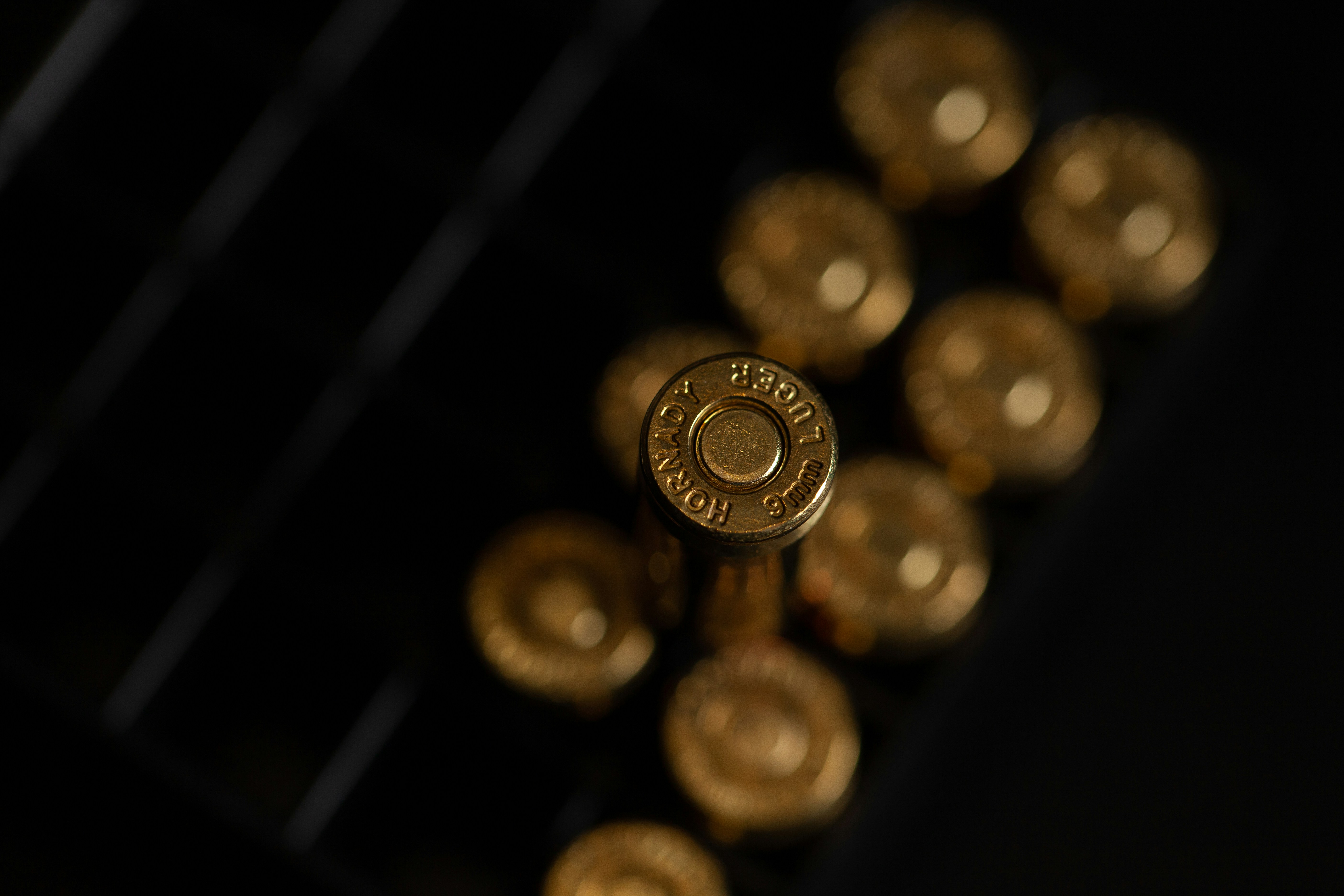
Looking for subsonic 9mm ammo? Compare current prices and available loads from multiple online retailers on AmmoBrowser.
Subsonic 9mm sounds simple enough. Take a 9mm cartridge, keep the bullet below the speed of sound, and you get a quieter shot.
Technically, that's true.
But it also leaves out most of what actually matters.
Subsonic ammunition doesn't magically turn a handgun quiet. A 147-grain bullet isn't guaranteed to remain subsonic from every firearm. Heavier ammunition isn't automatically quieter than every lighter load. And if you're shooting without a suppressor, the difference may be much less dramatic than the word subsonic makes it sound.
Where subsonic 9mm becomes genuinely interesting is when you understand what it's eliminating and what it's not.
The difference is real. Whether it's worth buying depends heavily on what you're trying to accomplish.
What Actually Makes 9mm Ammo Subsonic?
There's no special bullet material or case design that makes ammunition subsonic.
It's about velocity.
When a projectile exceeds the speed of sound, it creates a small shock wave. That's the familiar ballistic crack associated with a supersonic projectile.
Keep the projectile below that threshold and you eliminate that particular source of noise.
The exact speed of sound isn't a single universal number. It changes primarily with air temperature and other atmospheric conditions, which is one reason ammunition loaded right near the threshold shouldn't automatically be assumed to remain subsonic under every circumstance.
In practical terms, manufacturers usually give purpose built subsonic ammunition enough velocity margin that it isn't sitting right on the edge.
Target Barn's test of 15 subsonic and suppressor oriented 9mm loads illustrates the range. Advertised velocities stretched from just 800 fps to 1,140 fps, depending on the ammunition.
That's a pretty big spread.
And it brings us to the bullet weight most shooters immediately associate with subsonic 9mm.
Why Is 147-Grain 9mm So Common?
If you've shopped for subsonic 9mm, you've probably noticed a lot of 147-grain ammunition.
There's a straightforward reason.
With a heavier bullet, manufacturers can achieve useful 9mm performance at a lower velocity than they would with a much lighter projectile. That's why common 147-grain 9mm loads often run around 1,000 fps or less, while many lighter 115-grain loads are considerably faster.
Target Barn's testing provides some good real world examples. The 147-grain loads they tested carried advertised velocities including 900, 945, 950, 985 and 1,000 fps.
That's comfortably below typical supersonic 9mm territory.
But here's the part worth remembering:
147 grains does not mean subsonic by definition.
Bullet weight is only part of the equation.
The actual velocity of the load and the velocity it produces from your firearm is what determines whether the projectile remains below the speed of sound.
That distinction becomes especially important when barrel length changes.
A load that stays comfortably subsonic from a handgun may gain additional velocity from a longer barrel. Conversely, different ammunition can behave differently enough that you shouldn't assume every box marked 147 grain will produce identical results.
If staying subsonic actually matters to you, look at the specific ammunition's velocity specifications, not just the bullet weight printed on the box.
Does Subsonic 9mm Actually Sound Quieter?
Yes, but there's an important catch.
Subsonic ammunition eliminates the supersonic crack.
It does not eliminate the muzzle blast produced when the firearm is fired.
That distinction explains why subsonic ammunition becomes much more noticeable when paired with a suppressor.
A suppressor addresses much of the muzzle blast while subsonic ammunition prevents the projectile from producing a separate supersonic crack downrange. Those two things together can produce a substantially different sound signature.
Target Barn put this to the test rather than relying on impressions. They measured 15 loads through a suppressed pistol and a suppressed 9mm PDW. In the pistol, average readings ranged from about 124.6 to 130.6 dB among the tested loads.
That's also a useful reminder that “subsonic” doesn't mean every load is equally quiet.
Ammunition matters.
The firearm matters.
The suppressor matters.
And barrel length matters.
In Target Barn's testing, the quietest load from the suppressed pistol wasn't the quietest load from the PDW.
That's much more useful than simply saying:
Buy the heaviest 9mm you can find.
Real firearms don't always behave that neatly.
What About Subsonic 9mm Without a Suppressor?
This is where expectations need to be realistic.
If you're firing an unsuppressed handgun, switching to subsonic ammunition doesn't suddenly make the gun hearing safe.
You're still dealing with the muzzle blast.
Target Barn specifically concluded that they couldn't recommend shooting any unsuppressed 9mm without hearing protection. They also noted that while heavier, slower ammunition may be somewhat quieter, they weren't confident most shooters would notice a major difference when shooting unsuppressed.
That's probably the simplest answer to one of the biggest misconceptions about subsonic ammunition.
Subsonic does not mean silent.
It doesn't even mean quiet in the everyday sense of the word.
It means the projectile isn't producing the additional shock wave created by supersonic flight.
That's valuable in the right setup.
But without controlling the firearm's muzzle blast too, you're only addressing one source of the noise.
Hearing protection remains important.
Is Heavier 9mm Always Quieter?
Not necessarily.
It's easy to assume that if 147 grains is good, 158 grains must be better and 165 grains must be quieter still.
Real testing shows why that isn't a great rule.
Target Barn's quietest load through its suppressed pistol was a 165-grain load traveling at an advertised 800 fps, which makes intuitive sense.
But the quietest load through its suppressed PDW was a 150-grain load advertised at 890 fps.
That 150-grain ammunition beat the tested 158- and 165-grain loads in that particular setup.
So bullet weight can point you in the right direction, but it doesn't tell you everything.
This is one reason I wouldn't obsess over finding the heaviest 9mm load available.
A good 147- or 150-grain load that functions reliably and remains subsonic from your firearm may make far more sense than choosing ammunition based entirely on the number printed next to “grains.”
Does Subsonic 9mm Shoot Differently?
It can.
Changing bullet weight and velocity changes the way ammunition behaves, even though you're still shooting 9mm.
Heavier subsonic loads generally trade velocity for projectile mass. That can alter recoil feel, trajectory and point of impact compared with lighter, faster ammunition.
The difference may not be dramatic at ordinary handgun distances, but it exists.
Reliability matters too.
Firearms are mechanical systems, and different loads can produce different cycling characteristics. A particular firearm may love one subsonic load and be less enthusiastic about another.
Target Barn encountered feeding trouble with one of the 147-grain loads in its test pistol, despite that ammunition performing very well in the sound test.
That's an important point.
The quietest ammunition isn't automatically the best ammunition for your firearm.
If you're considering buying a large quantity of a particular subsonic load, it makes sense to try a smaller amount first and confirm that it functions properly and performs as expected in your firearm.
Is All 147-Grain 9mm Subsonic?
No, and this is probably the question I'd remember if you take only one thing from this article.
147 grain and subsonic are not synonyms.
Many 147-grain 9mm loads are subsonic from common handgun barrel lengths because their typical velocities fall comfortably below the speed of sound.
But what determines whether a bullet is subsonic is velocity, not weight.
Ammunition specifications vary. Firearms vary. Barrel lengths vary. Environmental conditions vary.
That's why ammunition specifically marketed as subsonic gives you a clearer indication of what the manufacturer intended than simply buying any 147-grain box on the shelf.
The same applies in reverse.
Subsonic 9mm doesn't have to be 147 grains.
Target Barn tested purpose-built or suppressor-oriented loads ranging from 130 grains all the way to 165 grains.
147 grain is popular.
It isn't a requirement.
So Why Would You Buy Subsonic 9mm?
This is where the answer gets much simpler.
If you're shooting suppressed and reducing the overall sound signature matters to you, subsonic 9mm makes a lot of sense.
You're removing the ballistic crack that accompanies supersonic ammunition, allowing the suppressor to address the muzzle blast without a supersonic projectile creating another major source of noise.
That's the use case where the difference is easiest to appreciate.
If you're shooting an ordinary unsuppressed handgun at the range while wearing hearing protection, the argument becomes weaker.
The ammunition will still work, of course. Plenty of shooters like heavier 9mm loads regardless of whether they're using a suppressor.
But if you're paying extra specifically because the box says SUBSONIC, you should understand what you're buying.
Without a suppressor, you're not suddenly getting a quiet handgun.
Is Subsonic 9mm Worth Paying More For?
Sometimes.
If you have a reason to keep the projectile below the speed of sound, then paying for ammunition designed to do exactly that makes sense.
If you're running a suppressed 9mm, it's easy to understand the appeal.
If you're simply buying ammunition for ordinary target shooting with an unsuppressed handgun, I'd be much less concerned about whether the box specifically says “subsonic.”
I'd focus first on ammunition that is reliable in the firearm, accurate enough for what I'm doing, and reasonably priced.
That's one reason comparing prices becomes particularly useful with specialty ammunition.
The price difference between ordinary 9mm and purpose-built subsonic loads can vary by manufacturer, bullet design and retailer. Rather than assuming subsonic ammunition is always dramatically more expensive—or assuming one retailer has the best deal—compare the actual cost of the loads currently available.
That's where AmmoBrowser can help.
The Bottom Line: Does Subsonic 9mm Make a Difference?
Yes.
But probably not in the way the word subsonic makes some people imagine.
Subsonic 9mm keeps the projectile below the speed of sound, eliminating the ballistic crack created by a supersonic bullet.
That's a real difference.
Pair it with a suppressor, and that difference becomes much more meaningful because you're addressing two major contributors to the firearm's sound signature.
Fire it from an unsuppressed handgun, however, and you're still dealing with a very loud gunshot. Subsonic ammunition doesn't change that.
And don't get too hung up on 147 grains.
It's popular for a reason, and many 147-grain loads are comfortably subsonic, but velocity is what matters. There are excellent subsonic loads above and below 147 grains, and testing shows that the heaviest load isn't automatically the quietest in every firearm.
So does 9mm subsonic ammo actually make a difference?
Absolutely when you're buying it for the reason it was designed for.
If you're expecting it to make an ordinary unsuppressed 9mm quiet, you'll probably be disappointed.
Quick FAQ
What is subsonic 9mm ammo?
Subsonic 9mm is ammunition designed to keep the projectile below the local speed of sound, preventing the ballistic crack associated with a supersonic projectile.
Is 147-grain 9mm always subsonic?
No. Many 147-grain loads are subsonic from common handgun barrels, but bullet weight alone doesn't determine whether ammunition is subsonic. Actual projectile velocity does.
Is subsonic 9mm quieter without a suppressor?
It eliminates the projectile's supersonic crack, but an unsuppressed firearm still produces substantial muzzle blast. Subsonic ammunition should not be treated as making an unsuppressed 9mm hearing-safe.
Is heavier 9mm quieter?
Often heavier 9mm is loaded to lower velocities, but heavier does not automatically mean quieter. In instrumented testing, different loads performed differently depending on the firearm used.
Is subsonic 9mm worth it?
It makes the most sense when keeping ammunition below the speed of sound is important, particularly with suppressed shooting. For ordinary unsuppressed range use, the advantage is considerably less significant.