
'%3e%3cpath%20d='M25.8906%2030.68L16.0006%2025L6.14062%2030.68V4.55C6.14063%203.75435%206.4567%202.99129%207.0193%202.42868C7.58191%201.86607%208.34498%201.55%209.14063%201.55H22.8906C23.6863%201.55%2024.4493%201.86607%2025.0119%202.42868C25.5746%202.99129%2025.8906%203.75435%2025.8906%204.55V30.68ZM9.14063%203.55C8.87541%203.55%208.62105%203.65536%208.43352%203.84289C8.24598%204.03043%208.14063%204.28478%208.14063%204.55V27.23L16.0006%2022.72L23.8806%2027.23V4.55C23.8806%204.28478%2023.7753%204.03043%2023.5877%203.84289C23.4002%203.65536%2023.1458%203.55%2022.8806%203.55H9.14063Z'%20fill='white'/%3e%3cpath%20d='M9.14063%202.55H22.8906C23.4211%202.55%2023.9298%202.76071%2024.3048%203.13579C24.6799%203.51086%2024.8906%204.01957%2024.8906%204.55V8.62H7.14062V4.55C7.14063%204.01957%207.35134%203.51086%207.72641%203.13579C8.10148%202.76071%208.61019%202.55%209.14063%202.55Z'%20fill='%238A3301'/%3e%3cpath%20d='M25.8906%209.62H6.14062V4.55C6.14063%203.75435%206.4567%202.99129%207.0193%202.42868C7.58191%201.86607%208.34498%201.55%209.14063%201.55H22.8906C23.6863%201.55%2024.4493%201.86607%2025.0119%202.42868C25.5746%202.99129%2025.8906%203.75435%2025.8906%204.55V9.62ZM8.14063%207.62H23.8906V4.55C23.8906%204.28478%2023.7853%204.03043%2023.5977%203.84289C23.4102%203.65536%2023.1558%203.55%2022.8906%203.55H9.14063C8.87541%203.55%208.62105%203.65536%208.43352%203.84289C8.24598%204.03043%208.14063%204.28478%208.14063%204.55V7.62Z'%20fill='white'/%3e%3cpath%20d='M16%2020.25C15.7348%2020.25%2015.4804%2020.1446%2015.2929%2019.9571C15.1054%2019.7696%2015%2019.5152%2015%2019.25V14.07C15%2013.8048%2015.1054%2013.5504%2015.2929%2013.3629C15.4804%2013.1754%2015.7348%2013.07%2016%2013.07C16.2652%2013.07%2016.5196%2013.1754%2016.7071%2013.3629C16.8946%2013.5504%2017%2013.8048%2017%2014.07V19.25C17%2019.5152%2016.8946%2019.7696%2016.7071%2019.9571C16.5196%2020.1446%2016.2652%2020.25%2016%2020.25Z'%20fill='white'/%3e%3cpath%20d='M18.5999%2017.66H13.4199C13.1547%2017.66%2012.9004%2017.5546%2012.7128%2017.3671C12.5253%2017.1796%2012.4199%2016.9252%2012.4199%2016.66C12.4199%2016.3948%2012.5253%2016.1404%2012.7128%2015.9529C12.9004%2015.7654%2013.1547%2015.66%2013.4199%2015.66H18.5999C18.8651%2015.66%2019.1195%2015.7654%2019.307%2015.9529C19.4946%2016.1404%2019.5999%2016.3948%2019.5999%2016.66C19.5999%2016.9252%2019.4946%2017.1796%2019.307%2017.3671C19.1195%2017.5546%2018.8651%2017.66%2018.5999%2017.66Z'%20fill='white'/%3e%3c/g%3e%3cdefs%3e%3cclipPath%20id='clip0_29353_35'%3e%3crect%20width='32'%20height='32'%20fill='white'/%3e%3c/clipPath%3e%3c/defs%3e%3c/svg%3e) Wishlist
Wishlist
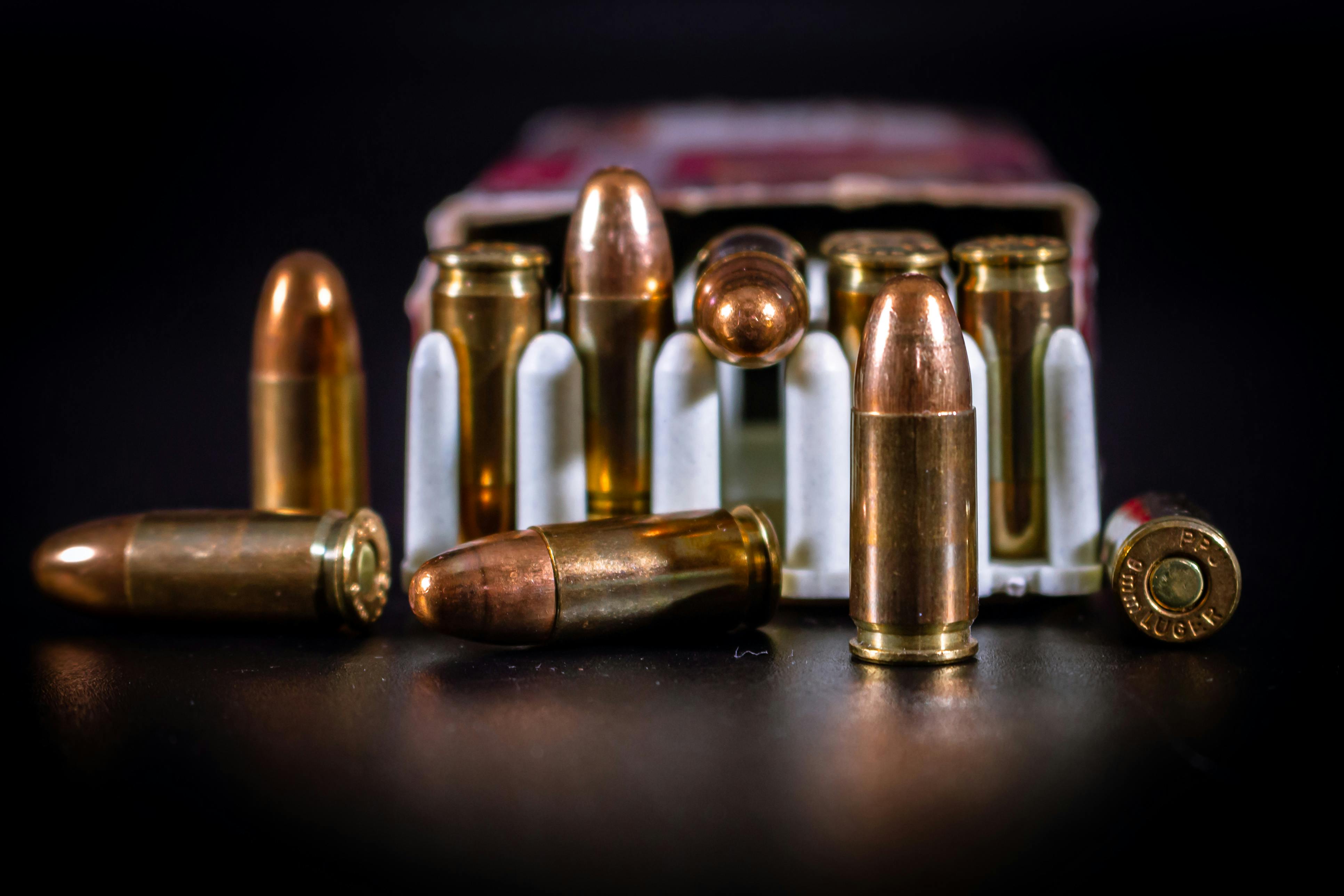
Best 9mm Ammo for Self Defense
The 9mm Luger has become the most popular handgun cartridge for personal protection, and for good reason. Modern defensive ammunition has made the 9mm one of the most effective choices for concealed carry, home defense, and everyday use.
But not all 9mm ammunition is designed for self-defense. Walk into any sporting goods store and you'll find full metal jacket rounds, hollow points, +P loads, and dozens of different bullet weights. Choosing the wrong ammunition can affect reliability, recoil, and terminal performance when it matters most.
This guide explains what to look for when buying defensive 9mm ammunition and how to choose the right load for your firearm.
The Quick Recommendation
If you're looking for the short answer, most experienced shooters choose quality jacketed hollow point (JHP) ammunition in either 124-grain or 147-grain bullet weights.
These loads generally offer an excellent balance of:
- Reliable expansion
- Consistent penetration
- Manageable recoil
- Proven defensive performance
While every handgun is different, these bullet weights remain among the most popular choices for personal protection.
What Makes Good Self-Defense Ammo?
Defensive ammunition has one job: perform reliably when you need it most.
Quality self-defense ammunition should provide:
- Reliable feeding in your firearm
- Consistent expansion
- Adequate penetration
- Good accuracy
- Low flash in low-light conditions
The best defensive load isn't necessarily the fastest or the most expensive. Reliability should always come first.
Hollow Point vs. Full Metal Jacket
One of the biggest decisions you'll make is choosing between hollow point and full metal jacket ammunition.
Jacketed Hollow Point (JHP)
Jacketed hollow point ammunition is specifically designed for personal defense.
When the bullet strikes its target, the hollow cavity is engineered to expand. This helps transfer energy efficiently while reducing the likelihood of excessive penetration.
Benefits include:
- Controlled expansion
- Improved energy transfer
- Reduced risk of over-penetration
- Designed specifically for defensive use
For most concealed carry and home defense situations, a quality JHP is the preferred choice.
Full Metal Jacket (FMJ)
Full metal jacket ammunition is primarily intended for training and recreational shooting.
Advantages include:
- Lower cost
- Reliable feeding
- Ideal for high-volume practice
However, FMJ bullets generally do not expand, making them less desirable for personal defense because they can penetrate more deeply than intended.
Most shooters practice with FMJ ammunition and carry JHP ammunition for protection.
Choosing the Right Bullet Weight
Bullet weight influences recoil, velocity, and terminal performance.
Here are the three most common defensive options.
115 Grain
A lighter bullet that typically produces higher velocity.
Best for:
- Range practice
- Shooters who prefer lighter recoil
- Some defensive loads
124 Grain
Many experts consider 124-grain hollow points the best all-around defensive choice.
They provide:
- Balanced recoil
- Excellent expansion
- Reliable penetration
- Broad ammunition availability
For many handgun owners, this is the safest recommendation.
147 Grain
Heavier bullets generally travel at lower velocities while maintaining strong penetration.
Many shooters choose 147-grain ammunition for:
- Everyday carry
- Suppressed firearms
- Reduced muzzle blast
- Consistent performance
Modern 147-grain hollow points have become increasingly popular as bullet technology has improved.
Should You Buy +P Ammunition?
Some defensive loads are labeled +P, which means they are loaded to higher pressure than standard ammunition.
Potential advantages include:
- Higher velocity
- Increased energy
- Improved expansion with certain bullet designs
However, +P ammunition also produces:
- More recoil
- Increased muzzle blast
- Greater wear on firearms over time
Before using +P ammunition, confirm that your handgun is rated to safely fire it.
Reliability Comes Before Everything Else
Even the highest-rated defensive ammunition is useless if it doesn't function reliably in your handgun.
Before trusting any carry ammunition:
- Fire enough rounds to confirm reliable feeding.
- Verify your point of impact.
- Check for malfunctions.
- Ensure magazines function properly.
Many experienced shooters recommend testing at least one full box of defensive ammunition before carrying it regularly.
Common Mistakes When Buying Defensive Ammo
Avoid these common mistakes:
- Carrying FMJ instead of hollow points.
- Choosing ammunition based only on price.
- Never testing defensive ammunition.
- Ignoring recoil when selecting a carry load.
- Mixing different ammunition types in the same magazine.
Your carry ammunition should inspire confidence every time you load your firearm.
How Often Should You Replace Carry Ammo?
Modern ammunition has a long shelf life when stored properly, but carry ammunition experiences more wear than ammunition kept in storage.
Consider replacing your carry ammunition if:
- The cartridges show corrosion.
- The bullets become pushed deeper into the case from repeated chambering.
- The ammunition has been exposed to moisture.
- You've been carrying the same rounds for an extended period.
Many firearm owners simply shoot their carry ammunition once or twice a year during practice and replace it with fresh ammunition.
Buying Tips
Before placing your order:
- Compare prices from multiple retailers.
- Buy enough ammunition to thoroughly test your handgun.
- Practice regularly with affordable FMJ ammunition.
- Carry the same defensive load you tested at the range.
- Watch for sales on premium defensive ammunition.
Frequently Asked Questions:
What is the best 9mm ammo for self-defense?
Most experienced shooters recommend quality jacketed hollow point ammunition in either 124-grain or 147-grain bullet weights because they offer an excellent balance of expansion, penetration, and controllability.
Should I carry FMJ or hollow points?
For personal defense, hollow points are generally preferred because they are designed to expand and reduce the risk of excessive penetration.
Is 124 grain or 147 grain better?
Both are excellent choices.
Many shooters prefer 124 grain for its balanced performance, while others choose 147 grain for its softer recoil impulse and deeper penetration.
Is +P ammunition worth it?
For many people, standard-pressure defensive ammunition performs exceptionally well. +P loads can provide additional velocity but also produce more recoil and should only be used in firearms rated for them.
How much defensive ammunition should I own?
You should have enough ammunition to thoroughly test your firearm, carry with confidence, and periodically replace your carry ammunition after practice.
Final Thoughts
Choosing the best 9mm ammo for self-defense isn't about finding a universally perfect load—it's about selecting reliable ammunition that performs consistently in your handgun.
Quality hollow point ammunition, proper testing, and regular practice are far more important than chasing the latest marketing claims or the highest advertised velocity.
Before trusting any defensive load, spend time at the range confirming reliability, accuracy, and confidence in your firearm.