
'%3e%3cpath%20d='M25.8906%2030.68L16.0006%2025L6.14062%2030.68V4.55C6.14063%203.75435%206.4567%202.99129%207.0193%202.42868C7.58191%201.86607%208.34498%201.55%209.14063%201.55H22.8906C23.6863%201.55%2024.4493%201.86607%2025.0119%202.42868C25.5746%202.99129%2025.8906%203.75435%2025.8906%204.55V30.68ZM9.14063%203.55C8.87541%203.55%208.62105%203.65536%208.43352%203.84289C8.24598%204.03043%208.14063%204.28478%208.14063%204.55V27.23L16.0006%2022.72L23.8806%2027.23V4.55C23.8806%204.28478%2023.7753%204.03043%2023.5877%203.84289C23.4002%203.65536%2023.1458%203.55%2022.8806%203.55H9.14063Z'%20fill='white'/%3e%3cpath%20d='M9.14063%202.55H22.8906C23.4211%202.55%2023.9298%202.76071%2024.3048%203.13579C24.6799%203.51086%2024.8906%204.01957%2024.8906%204.55V8.62H7.14062V4.55C7.14063%204.01957%207.35134%203.51086%207.72641%203.13579C8.10148%202.76071%208.61019%202.55%209.14063%202.55Z'%20fill='%238A3301'/%3e%3cpath%20d='M25.8906%209.62H6.14062V4.55C6.14063%203.75435%206.4567%202.99129%207.0193%202.42868C7.58191%201.86607%208.34498%201.55%209.14063%201.55H22.8906C23.6863%201.55%2024.4493%201.86607%2025.0119%202.42868C25.5746%202.99129%2025.8906%203.75435%2025.8906%204.55V9.62ZM8.14063%207.62H23.8906V4.55C23.8906%204.28478%2023.7853%204.03043%2023.5977%203.84289C23.4102%203.65536%2023.1558%203.55%2022.8906%203.55H9.14063C8.87541%203.55%208.62105%203.65536%208.43352%203.84289C8.24598%204.03043%208.14063%204.28478%208.14063%204.55V7.62Z'%20fill='white'/%3e%3cpath%20d='M16%2020.25C15.7348%2020.25%2015.4804%2020.1446%2015.2929%2019.9571C15.1054%2019.7696%2015%2019.5152%2015%2019.25V14.07C15%2013.8048%2015.1054%2013.5504%2015.2929%2013.3629C15.4804%2013.1754%2015.7348%2013.07%2016%2013.07C16.2652%2013.07%2016.5196%2013.1754%2016.7071%2013.3629C16.8946%2013.5504%2017%2013.8048%2017%2014.07V19.25C17%2019.5152%2016.8946%2019.7696%2016.7071%2019.9571C16.5196%2020.1446%2016.2652%2020.25%2016%2020.25Z'%20fill='white'/%3e%3cpath%20d='M18.5999%2017.66H13.4199C13.1547%2017.66%2012.9004%2017.5546%2012.7128%2017.3671C12.5253%2017.1796%2012.4199%2016.9252%2012.4199%2016.66C12.4199%2016.3948%2012.5253%2016.1404%2012.7128%2015.9529C12.9004%2015.7654%2013.1547%2015.66%2013.4199%2015.66H18.5999C18.8651%2015.66%2019.1195%2015.7654%2019.307%2015.9529C19.4946%2016.1404%2019.5999%2016.3948%2019.5999%2016.66C19.5999%2016.9252%2019.4946%2017.1796%2019.307%2017.3671C19.1195%2017.5546%2018.8651%2017.66%2018.5999%2017.66Z'%20fill='white'/%3e%3c/g%3e%3cdefs%3e%3cclipPath%20id='clip0_29353_35'%3e%3crect%20width='32'%20height='32'%20fill='white'/%3e%3c/clipPath%3e%3c/defs%3e%3c/svg%3e) Wishlist
Wishlist
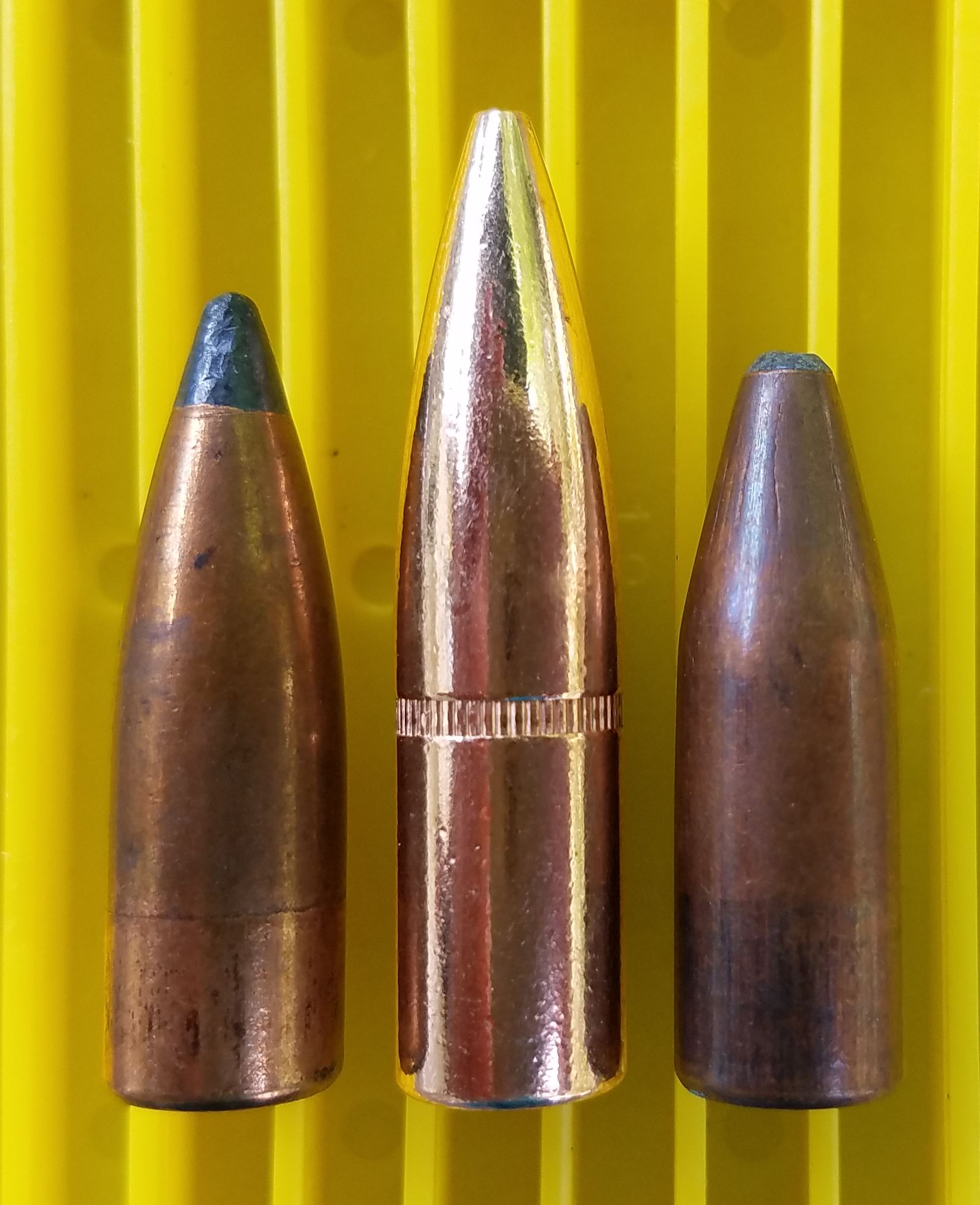
Frangible bullets are designed to come apart when they strike hard surfaces. That sounds like the exact opposite of what you would want from a bullet, but in the right situation, it is the entire point. Here is how frangible ammo works, why shooters use it, and where conventional ammunition still makes more sense.
A bullet that breaks apart on impact sounds like a defective bullet. We normally talk about ammunition in terms of penetration, expansion, weight retention and consistency. Intentionally designing a projectile to turn into tiny fragments seems to go against all of that. Yet frangible ammunition exists precisely because conventional bullets can sometimes stay together too well.
Shoot a traditional bullet into a hard steel surface and you have to think about ricochet, fragments and splash coming back from the target. That becomes especially important when training at relatively close distances or in specialized shooting environments. Frangible ammunition attacks the problem from the other direction. Instead of trying to make the projectile tougher, manufacturers make it brittle enough to break apart when it encounters a sufficiently hard surface.
That makes frangible ammo a specialized tool rather than a replacement for FMJ, hollow points or conventional hunting ammunition. And once you understand what problem it was designed to solve, the strange idea of deliberately making a bullet break suddenly makes a lot more sense.
Quick Answer: What Is Frangible Ammo?
Frangible ammunition uses a projectile designed to break into small particles when it strikes a hard object such as steel. Many modern frangible bullets are manufactured from compressed powdered metals, commonly copper combined with materials such as tin or a polymer binder. Instead of behaving like a conventional lead core bullet when it hits a hard target, the brittle projectile breaks apart.
The primary advantage is reduced risk from ricochet and backsplash when compared with conventional ammunition in applications for which the frangible load is designed. That is why frangible ammunition is closely associated with steel target shooting, specialized training and certain indoor range applications. Some designs are also lead free, which can be useful at facilities where reducing airborne lead exposure is a priority.
There is an important distinction, though. Frangible does not mean harmless. A frangible projectile fired from a firearm remains dangerous and lethal. Its unusual behavior against hard surfaces does not turn it into a safety round that can compensate for unsafe shooting practices.
Frangible Ammo Is Older Than You Might Think
Frangible bullets can sound like a fairly modern invention, but the basic idea goes back much further.
One of the problems faced by old shooting galleries was what happened when conventional bullets struck hard targets. Bullet fragments and ricochets created an obvious hazard in an environment where people were shooting repeatedly at relatively short distances. Specialized gallery ammunition was developed to address the problem.
Names such as Remington Spatter Less, Winchester SpatterProof, Peters Krumble Ball and Western Kant Splash appeared among early frangible or reduced ricochet gallery ammunition. Later, the concept expanded beyond recreational shooting galleries. Frangible projectiles were also used for specialized military training, including ammunition intended for firing at armored target aircraft.
Modern manufacturing has taken the concept much further. Rather than simply making a weak conventional bullet, manufacturers can use powder metallurgy and composite materials to engineer a projectile around a specific failure characteristic.
That is where today's frangible bullet becomes particularly interesting.
How Do Frangible Bullets Actually Work?
Imagine taking extremely fine metal powder, compressing it into the shape of a bullet and binding those particles together strongly enough that the projectile can survive normal handling and firing. It remains a solid projectile as it travels down the barrel and through the air, but its structure behaves very differently from a conventional lead core bullet when it encounters something sufficiently hard.
Many modern designs use powdered copper and tin. Others use powdered copper held together in a polymer matrix. Some rifle bullets use a frangible core inside a jacket rather than making the entire projectile frangible. There is therefore no single construction that describes every frangible load on the market.
When an appropriate frangible projectile strikes hard steel, the brittle structure fails and the bullet breaks into much smaller particles. Those tiny fragments shed energy much more quickly than a large intact projectile would.
This is the feature that separates frangible ammunition from ordinary FMJ.
An FMJ bullet is generally designed to remain structurally intact during feeding, firing and impact. A frangible bullet is deliberately engineered so that striking the right kind of hard surface causes it to fail.
That word deliberately is important. The bullet isn't malfunctioning. It is doing exactly what it was designed to do.
So Why Would Anyone Want a Bullet That Breaks?
Steel targets are probably the easiest way to understand the appeal.
Steel is fun to shoot because the shooter gets immediate feedback. Hit the target and you can hear it and often see it move. But shooting hard targets introduces hazards that paper targets do not. Conventional bullets can fragment or ricochet after impact, which is one reason steel target manufacturers and ranges establish rules governing target type, condition, angle, ammunition, caliber and minimum shooting distance.
Frangible ammunition can provide another layer of risk reduction in applications where it is appropriate.
Testing and training experience with frangible bullets have demonstrated their ability to break into fine particles against suitable steel rather than producing the larger fragments associated with conventional FMJ ammunition. That characteristic has made them particularly attractive for close quarter training and specialized steel target courses.
That does not mean you can buy a box of frangible ammunition and ignore the minimum distance specified by the target or ammunition manufacturer. Steel quality, target condition, target angle, projectile construction and impact velocity still matter.
In fact, very high impact velocity can damage steel even when frangible ammunition is being used. The ammunition changes one part of the equation. It doesn't repeal physics.
Frangible vs FMJ: They Solve Different Problems
For ordinary range practice on paper, FMJ has one enormous advantage: it is simple and usually economical.
There is little reason to pay more for a specialized projectile if you're standing at a conventional range shooting paper targets and the facility permits standard FMJ. Millions of shooters use FMJ for practice because it performs that job perfectly well.
Frangible starts becoming interesting when the target and training environment change.
If a course involves approved steel targets, particularly in a specialized close range training environment, reducing ricochet and splash becomes considerably more valuable. Some frangible loads also eliminate lead from the projectile, making them attractive for certain indoor facilities and training programs concerned about lead exposure.
So asking whether frangible is "better" than FMJ misses the point.
For inexpensive paper punching, FMJ generally makes more sense.
For an application specifically requiring reduced ricochet ammunition, frangible may make considerably more sense.
Neither bullet needs to be universally better for both statements to be true.
Frangible vs Hollow Point: This Is Where Things Get Confusing
A frangible bullet and a hollow point can both change dramatically after impact, but they should not be treated as interchangeable concepts.
A conventional jacketed hollow point is designed to expand in soft tissue under appropriate impact conditions. The nose opens, the frontal diameter increases and a properly designed load attempts to balance expansion with sufficient penetration.
A typical training oriented frangible bullet has a different job. Its defining feature is its tendency to break apart when striking sufficiently hard material.
There are specialty frangible loads designed specifically around terminal performance, so you cannot assume that every frangible projectile behaves identically. But the word frangible by itself should not be interpreted as another way of saying defensive hollow point. Even within the frangible category, construction and intended use can vary substantially.
That's why the intended purpose printed by the ammunition manufacturer matters.
If the box is designed and marketed as a training load for steel targets, judge it as a training load. Don't assume that its behavior against steel tells you exactly what it will do in soft tissue.
What Happens When Frangible Ammo Hits Something Soft?
This is probably the biggest misconception surrounding frangible ammunition.
People sometimes hear that a bullet "disintegrates on impact" and imagine that it immediately turns into dust after touching anything. That isn't how the concept works.
The material it strikes matters enormously.
A hard steel plate subjects the brittle projectile to conditions that encourage it to fracture. Soft material does not necessarily produce the same behavior. Depending on bullet construction, velocity and the material struck, a frangible projectile can penetrate soft material rather than instantly breaking apart.
This is also why frangible ammunition should never be described as incapable of penetrating walls or incapable of injuring someone beyond the intended target. Real buildings contain drywall, wood, glass, doors, furniture and many other materials. A projectile's performance against one material cannot safely be assumed to predict its performance against every other material.
That brings us to the most controversial use for frangible ammunition.
Is Frangible Ammo Good for Self Defense?
There isn't a responsible one word answer.
Specialized frangible defensive ammunition exists, and some projectiles are engineered specifically to produce terminal effects different from ordinary training frangibles. But that does not mean every frangible load is automatically a good defensive load.
This is an area where even experienced ammunition writers disagree. Some have argued that certain purpose built frangible designs can offer advantages where excessive penetration is a particular concern. Others strongly favor proven jacketed hollow points because defensive JHP ammunition is specifically engineered to combine expansion with sufficient penetration.
The important takeaway is much simpler:
Don't choose defensive ammunition merely because the word "frangible" is printed on the box.
A range oriented frangible round and a purpose built defensive projectile may share the same broad category while being designed for very different jobs. Anyone selecting ammunition for defensive use should evaluate the exact load, its manufacturer's intended application, reliability in the firearm and credible terminal performance testing.
The attraction of reduced penetration is understandable, particularly when people begin thinking about other occupants of a home. But no firearm projectile capable of defensive use should be assumed to become harmless after passing through common building materials.
What About Frangible Rifle Ammo?
Frangible ammunition isn't limited to handguns.
Rifle cartridges are available with frangible projectiles as well, including loads intended for specialized training. Some rifle designs place a powdered metal frangible core inside a jacket, which can improve durability and feeding characteristics compared with completely unjacketed frangible bullets. However, adding a jacket can also change what happens when the projectile strikes steel.
Rifle velocity adds another consideration. Even a projectile that fragments on impact can damage a steel target if impact velocity exceeds what the target is designed to withstand.
So this is another place where "frangible" should never be interpreted as permission to shoot any steel target from any distance.
Follow the ammunition manufacturer's guidance, the target manufacturer's minimum distance and caliber requirements, and the rules of the range you're using.
Are Frangible Bullets Lead Free?
Many modern frangible bullets are, and this is an advantage that sometimes gets overshadowed by the ricochet discussion.
Contemporary frangible designs commonly use copper and tin or copper combined with polymer rather than a conventional lead core. Some complete cartridges are also manufactured with lead free primers. That can make them useful for indoor facilities or training environments specifically trying to reduce lead exposure.
But again, don't assume.
"Frangible" describes a performance characteristic, not a universal ingredient list. Check the specifications of the particular ammunition if lead free construction matters to you.
The Downsides of Frangible Ammo
If frangible ammunition reduced ricochet risk, worked everywhere and cost the same as ordinary range ammunition, there wouldn't be much of a discussion.
But specialized ammunition comes with tradeoffs.
Cost is one of the obvious ones. For routine paper target practice, inexpensive FMJ is difficult to beat.
Availability is another. Walk into a store looking for common FMJ or defensive hollow points and you'll often have numerous choices. Frangible ammunition can be more limited depending on caliber and market conditions.
Then there is purpose. A feature that makes a bullet excellent for one application doesn't automatically make it better for another. A projectile engineered to break apart against hard steel isn't inherently superior for hunting, ordinary target shooting or defensive use.
There can also be differences in bullet weight and external ballistics. Powdered metal materials are less dense than lead, so frangible projectiles may use different weights or dimensions than conventional bullets. Modern frangible bullets are often lighter for caliber, which can result in higher velocities but lower ballistic coefficients.
None of these things makes frangible ammunition bad. They reinforce what it really is: specialized ammunition built around a specific set of problems.
When Frangible Ammo Makes the Most Sense
For most shooters, the strongest argument for frangible ammunition isn't mysterious terminal ballistics. It's training.
If you're shooting paper at a conventional range, ordinary range ammunition probably does everything you need.
If you're participating in a training program involving approved steel targets where the course, target and ammunition manufacturers permit frangible loads, the advantages become much easier to appreciate.
If your range requires lead free projectiles, certain frangible loads may solve that problem too.
And if you're considering frangible ammunition for another purpose, look beyond the category name. Find out exactly what that particular projectile was engineered to do.
That's the key to understanding this entire ammunition category.
The Bottom Line
At first, deliberately designing a bullet to break apart sounds backward.
It isn't.
Frangible ammunition exists because sometimes keeping a bullet intact after it strikes a hard surface is exactly what you don't want. By using brittle powdered metal projectiles that fragment against suitable hard targets, manufacturers can reduce hazards associated with ricochet and backsplash in certain shooting environments.
That doesn't make frangible ammunition the new FMJ. It doesn't automatically make it better than a hollow point. And it certainly doesn't make shooting steel inherently safe.
It simply gives shooters a specialized tool for situations where conventional bullet construction can create a problem.
And that is probably the best way to think about frangible ammunition:
It isn't trying to replace ordinary bullets. It's designed to do something ordinary bullets weren't designed to do.
Information provided by AmmoBrowser is for general informational and educational purposes only. Ammunition specifications, ballistics, performance, pricing, and availability can vary by manufacturer, load, firearm, barrel length, and other conditions. While we strive to provide accurate and current information, AmmoBrowser makes no guarantee regarding its completeness or accuracy. Always follow firearm and ammunition manufacturer instructions, verify that ammunition is compatible with your firearm, and follow all applicable laws and safe firearm handling practices.